
Commercial Locksmith Service for Safer Businesses
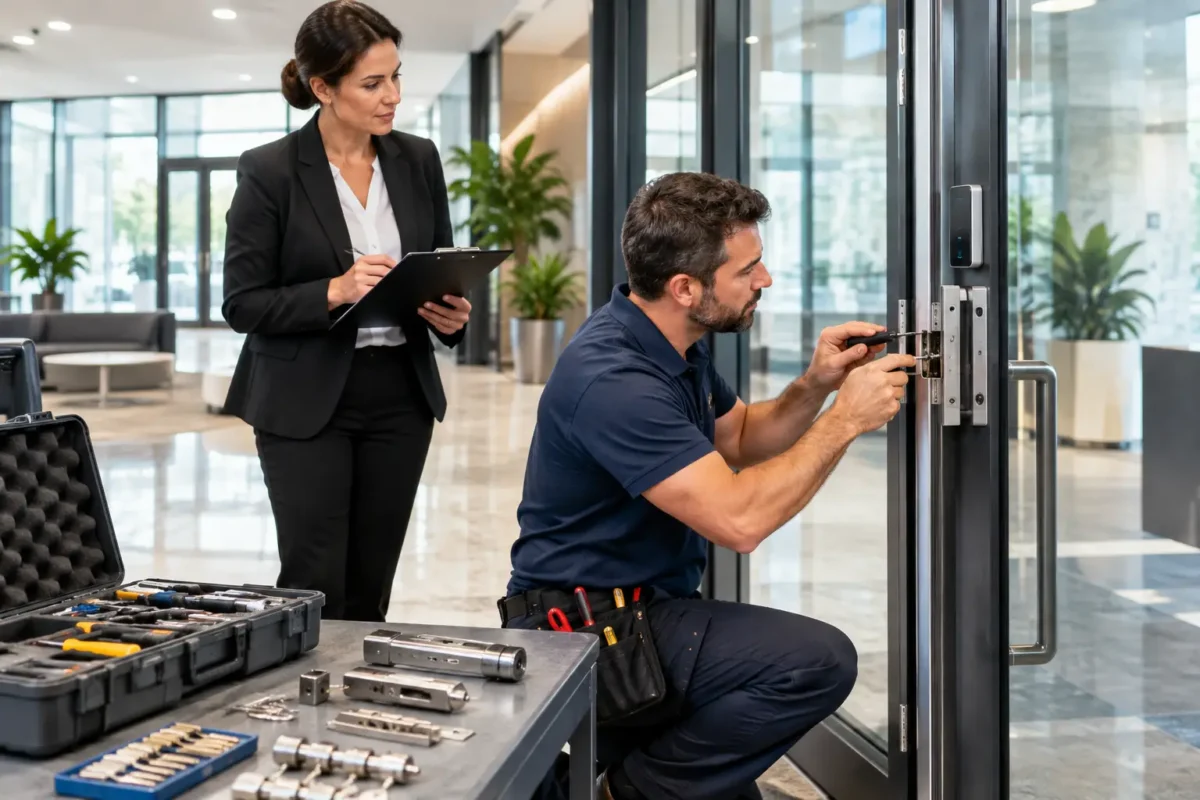
A lost master key, a former employee who still has a copy, or a front door that will not latch correctly can put a business in a difficult position fast. A commercial locksmith service addresses those problems where they happen, helping business owners, office managers, and property managers restore access and tighten security without turning a workday into a larger disruption.
For businesses in Aurora, Federal Heights, Denver, and nearby communities, the right solution is rarely just replacing one lock. It is about knowing who can enter, which doors need stronger hardware, and how employees, tenants, customers, and emergency personnel move through the building.
When a Commercial Locksmith Service Is Needed
Commercial locksmith work is often associated with emergencies, and emergency calls do matter. A key can break in a cylinder, an employee can be locked out before opening, or a damaged door lock can leave a business exposed after closing. In those situations, prompt on-site help gets the door operating again and lets the business get back to work.
But many of the most valuable locksmith visits are planned. A business should consider service after a staffing change, a tenant turnover, a move into a new suite, a break-in attempt, or a renovation. Even when all keys appear accounted for, rekeying is usually the practical move when the history of those keys is uncertain.
There are also quieter warning signs that deserve attention before they become an access problem:
- Keys that stick, turn roughly, or need to be wiggled to work
- Doors that do not close and latch consistently
- Too many copies of keys in circulation
- One key that opens more areas than the holder actually needs
- Old hardware that no longer matches how the business operates
Waiting for a complete failure can mean a lockout at the worst possible time. Addressing worn hardware and weak key control early is generally easier on the business and safer for the property.
Rekeying vs. Changing Commercial Locks
Business owners commonly ask whether they need new locks or simply need the locks rekeyed. The answer depends on the condition of the existing hardware and the level of security required.
Rekeying changes the internal pins of a lock so old keys no longer work. It is a strong option when the lock hardware is in good condition but keys may be in the hands of former staff, vendors, tenants, or unknown individuals. Rekeying is especially useful after employee turnover or when a business takes over a previously occupied space.
Changing a lock means replacing the hardware itself. That makes sense when a lock is damaged, worn out, outdated, or not appropriate for the door. A basic office lock may not be the right choice for a rear entrance, storage room, restricted records area, or exterior door that receives heavy daily use.
The trade-off is simple. Rekeying preserves serviceable hardware and changes access. Replacing locks allows an upgrade in durability, function, and security. A professional assessment should look at the door, frame, traffic level, existing hardware, and the area being protected rather than treating every door the same.
Key Control Is More Than Having Spare Keys
A business can have high-quality locks and still have a key-control problem. If nobody knows how many copies exist or who has them, the building is harder to secure.
A clear key policy helps. Assign keys to specific people, keep a record of who receives them, retrieve them when employment ends, and limit copies to authorized staff. For many small and mid-sized businesses, a master key system can simplify access without giving every employee a key to every door.
With a well-designed system, managers may have access to multiple areas while employees receive keys only for the spaces needed for their jobs. This reduces the number of keys carried, but it requires careful planning. A master key system should be designed around real responsibilities, not just convenience, because a poorly planned system can create more access than intended.
Choosing Hardware for the Door and the Job
Commercial doors work harder than most residential doors. They may be opened hundreds of times each day, exposed to weather, used by the public, or subject to building and fire-code requirements. The lock is only one part of the setup. The door closer, latch, strike plate, hinges, frame, and exit hardware all affect whether the entrance is secure and reliable.
For example, a retail front door may need commercial-grade hardware that stands up to frequent use. An office suite may benefit from restricted access to private rooms. A storage area with tools, inventory, or sensitive documents may call for stronger lock protection than a low-risk interior closet.
Exit doors require special care. People need to be able to leave safely and quickly, while the door must remain secure from the outside. This is where panic hardware and ADA-compliant door hardware can be important. The exact setup depends on the building use, occupancy, and local requirements. Installing the wrong hardware can create an operational problem and potentially affect safe egress.
A commercial locksmith can inspect how the door functions as a full system. That matters because installing a stronger lock on a misaligned door will not fix the underlying issue. If the latch does not meet the strike correctly, the door may continue to bind, fail to secure, or wear out new hardware prematurely.
When Access Control Makes More Sense Than Keys
Physical keys remain practical for many businesses. They are familiar, dependable, and often the right fit for a small office or low-traffic space. However, keys have limits. They can be copied, misplaced, and difficult to track once they leave the building.
Access control systems offer another option. Depending on the setup, employees can use key fobs, cards, codes, or mobile credentials. Access can be assigned by person, door, day, or time. When someone leaves the company, their credential can be removed without rekeying every affected door.
That does not mean electronic access is automatically the best choice for every building. It involves equipment, power considerations, door compatibility, and an ongoing process for managing users. A small business with one or two doors may be better served by improved mechanical locks and a disciplined key policy. A larger office, shared commercial property, clinic, warehouse, or business with frequent staffing changes may benefit more from controlled electronic access.
The goal is not to add technology for its own sake. The goal is to make access easier to manage while protecting areas that should stay restricted.
What to Do After a Lockout or Security Incident
If a business is locked out, avoid forcing the door, prying at the lock, or using improvised tools. Those attempts can damage the door, frame, glass, or hardware and can turn a straightforward access issue into a repair project. A mobile locksmith can assess the lock and use the proper method to regain entry.
After a lost key, break-in attempt, or suspected unauthorized access, think beyond getting the door open. Ask whether the locks should be rekeyed, whether other doors use the same key, and whether key records need to be updated. If the door was damaged, have the alignment and locking function checked before relying on it overnight.
For property managers, a short written record after each incident can help prevent repeat problems. Note which entrance was affected, who had access, what hardware was serviced, and whether keys or credentials were changed. That information makes future maintenance and turnover much easier to manage.
A Practical Security Check for Business Owners
Walk through the property as if you were closing it for the night. Check that exterior doors latch without force, rear and side entrances are not overlooked, and restricted rooms have access that matches their purpose. Review who holds keys or credentials, especially after staffing or tenant changes.
Then consider the day-to-day experience of the people using the building. Security should not require employees to fight with sticking locks, prop open doors, or share keys because the access system does not fit the workflow. Good commercial security supports the way a business actually operates.
BS Locksmith provides mobile commercial lock, rekeying, lockout, hardware, and access control support for local businesses that need practical answers on site. Whether the issue is urgent or part of a planned upgrade, the right fix starts with looking at the door, the people who use it, and the access the business needs to control.
A secure business is not built around one expensive lock. It is built around doors that work, access that makes sense, and a plan to act when circumstances change.