
Smart Lock Installation Example for a Denver Home
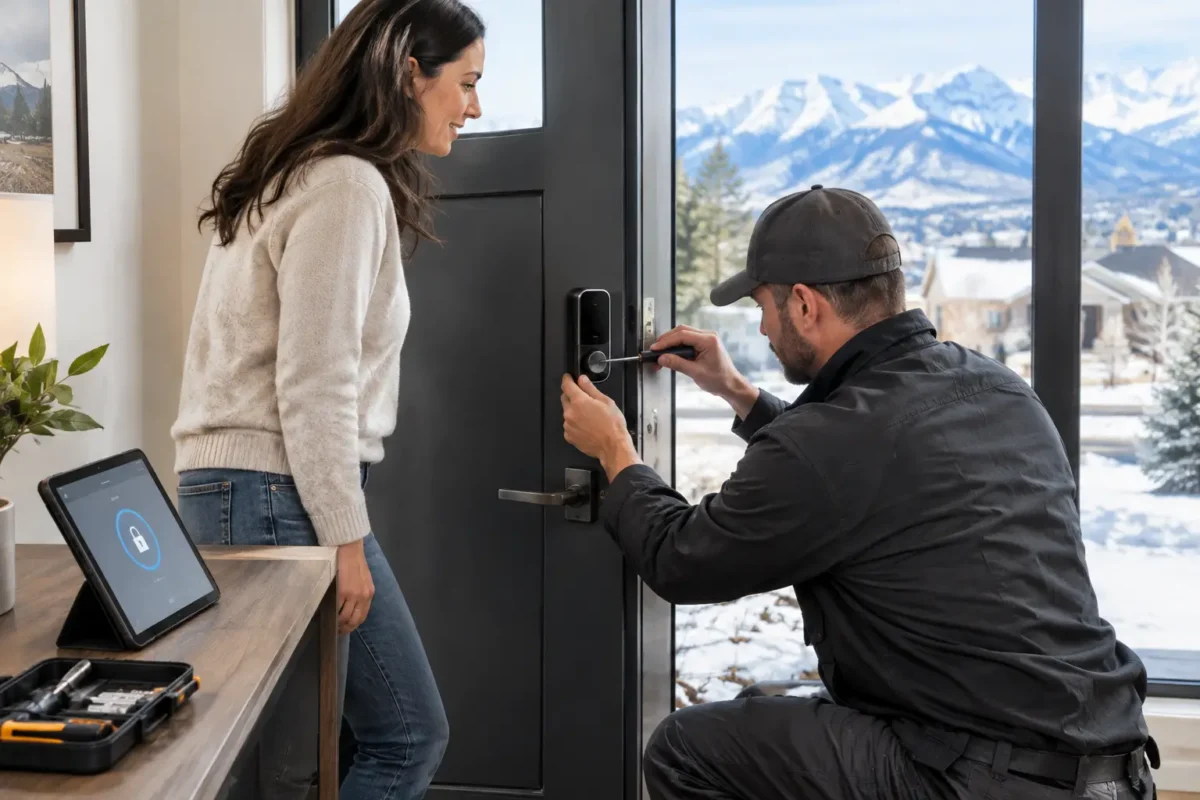
A smart lock installation example is most useful when it shows what happens at the door, not just what the lock app looks like on a phone. A homeowner may want keyless entry after moving into a new house, managing rental access, or replacing a worn deadbolt. The lock itself matters, but proper fit, door alignment, and testing are what determine whether it works reliably every day.
A practical smart lock installation example
Consider a homeowner in the Denver area who has a standard front door with a single-cylinder deadbolt above a separate handle. They want to stop handing out spare keys to family members and prefer a keypad lock that can also be controlled through an app. Their existing deadbolt is functional, but the key has started sticking and the door needs a firm push before it latches.
That last detail changes the job. A smart lock is not meant to force a misaligned door into place. Before installing anything, a locksmith checks whether the deadbolt extends smoothly into the strike plate when the door is open and when it is closed. If the bolt binds against the frame, the door or strike plate needs adjustment first. Installing a new electronic lock on a door that does not close correctly can lead to motor strain, drained batteries, and lockouts.
For this home, the door has the common measurements needed for many residential smart locks: a standard backset, a compatible door thickness, and a properly positioned deadbolt bore. The existing hole does not need to be enlarged. The locksmith can remove the old deadbolt, correct the strike plate alignment, and install the new unit without changing the door’s appearance.
Step 1: Check the door before choosing the lock
Smart locks are not one-size-fits-all, even when the packaging says they fit most doors. The first step is confirming the lock type and the condition of the door. A deadbolt smart lock is often a straightforward upgrade when there is already a separate deadbolt above the handle. Doors with integrated handle-and-deadbolt hardware may require a different model or additional drilling.
The locksmith checks the door thickness, backset distance, bore hole size, latch position, and handing of the door. They also inspect the frame and strike plate. On Colorado homes, seasonal temperature shifts can make a door swell, shift, or sit slightly out of alignment. A lock that worked fine in mild weather may start binding when the door frame moves.
The homeowner also needs to decide what kind of access is actually useful. A keypad is practical for family members, dog walkers, cleaners, or guests. App access can be helpful for checking lock status and assigning temporary codes. A physical key override is still a sensible backup for many homes, especially when a phone is lost or batteries run low.
Step 2: Remove the old hardware and prepare the opening
Once the lock is selected, the old deadbolt comes off from the inside and outside of the door. The latch and strike plate are removed as well if the new smart lock uses its own hardware. This is a good time to inspect the old opening for loose wood, stripped screws, or signs that the bolt has been rubbing the frame.
In this smart lock installation example, the old strike plate has a shallow, worn opening. The deadbolt catches on the upper edge unless the homeowner pushes the door inward. Rather than install the electronic lock and hope for the best, the locksmith repositions the strike plate and adjusts the opening so the bolt travels freely.
This small correction is one of the most valuable parts of a professional installation. The electronic motor should move the bolt with minimal resistance. If the bolt needs force to lock, the smart lock may give an error, fail to complete its locking cycle, or use more battery power than expected.
Step 3: Install and calibrate the smart lock
The exterior keypad or touchscreen assembly is placed on the outside of the door, with its cable routed through the bore hole. The interior mounting plate is attached on the inside, keeping the lock level and the cable clear of moving parts. The deadbolt tailpiece must sit in the correct position so the interior motor can turn it properly.
After the exterior and interior assemblies are secured, batteries are installed and the lock is calibrated. Calibration teaches the device the fully locked and unlocked positions. It should always be performed with the door open first. That allows the installer to confirm the bolt moves correctly without the risk of accidentally locking a door that has not been fully tested.
With the door closed, the locksmith then tests the lock several times. The bolt should extend into the strike plate without rubbing, retract fully, and report the correct status. If the lock says it is locked but the bolt has not entered the frame completely, the installation is not finished.
Step 4: Set up access without creating new security problems
A smart lock is only as useful as its access settings. In this example, the homeowner receives a primary owner code and creates separate codes for two family members. Instead of sharing one code with everyone, individual codes make it easier to remove access when circumstances change.
Temporary codes are useful for service providers, house guests, or short-term rental turnovers. However, they should have clear expiration dates or schedules. A code created for a contractor should not remain active indefinitely simply because it was convenient at the time.
If app control is enabled, the account should use a strong password and multi-factor authentication when the lock system offers it. The homeowner should also confirm who has administrative access. Someone with an administrator account may be able to add users, change settings, or review activity history.
For families, a simple routine helps: use the keypad for normal entry, keep one physical key in a secure backup location, and make sure at least two trusted adults know how to manage the app. Do not rely on a single phone as the only way to enter the home.
What can change the installation plan?
Some doors need more than a basic replacement. A thick custom door, a narrow stile, a metal frame, a multipoint lock, or a misaligned entry can affect which smart lock will work. So can an older door with a damaged bore hole or a deadbolt location too close to decorative glass.
Rental properties add another consideration. Property managers may need a lock that supports frequent code changes and clear access control, while still allowing emergency access and simple turnover between tenants. For a small office, a residential smart lock may be adequate for a low-traffic storage room, but a main employee entrance may need commercial-grade access control instead.
Connectivity also deserves an honest look. Bluetooth locks can work well for close-range control without depending on home Wi-Fi. Wi-Fi-enabled locks provide remote access, but they rely on a stable network and may consume battery power faster. The right option depends on whether remote management is a daily need or simply a nice feature.
Common mistakes to avoid after installation
The most common mistake is treating the smart lock like a cure for a door that sticks. Fix the door alignment first. Another is skipping the physical-key backup because app access feels more convenient. Batteries, phones, and internet connections can all fail at inconvenient times.
Homeowners should also avoid using obvious codes such as house numbers, birthdays, or repeated digits. Change codes when a roommate moves out, a key holder no longer needs access, or a service arrangement ends. Check batteries before they are critically low, and keep the lock firmware updated through the manufacturer’s app when updates are available.
A properly installed smart lock gives a household more control without making daily entry complicated. For homeowners and property managers in Aurora, Federal Heights, Denver, and nearby communities, BS Locksmith can inspect the door, install compatible hardware, and make sure the bolt, keypad, and backup access all work as they should. The best final test is simple: close the door, lock it normally, enter with the code, and confirm that every person who needs access can get in without needing a spare key.