
Best Office Key Cabinets for Safer Key Control
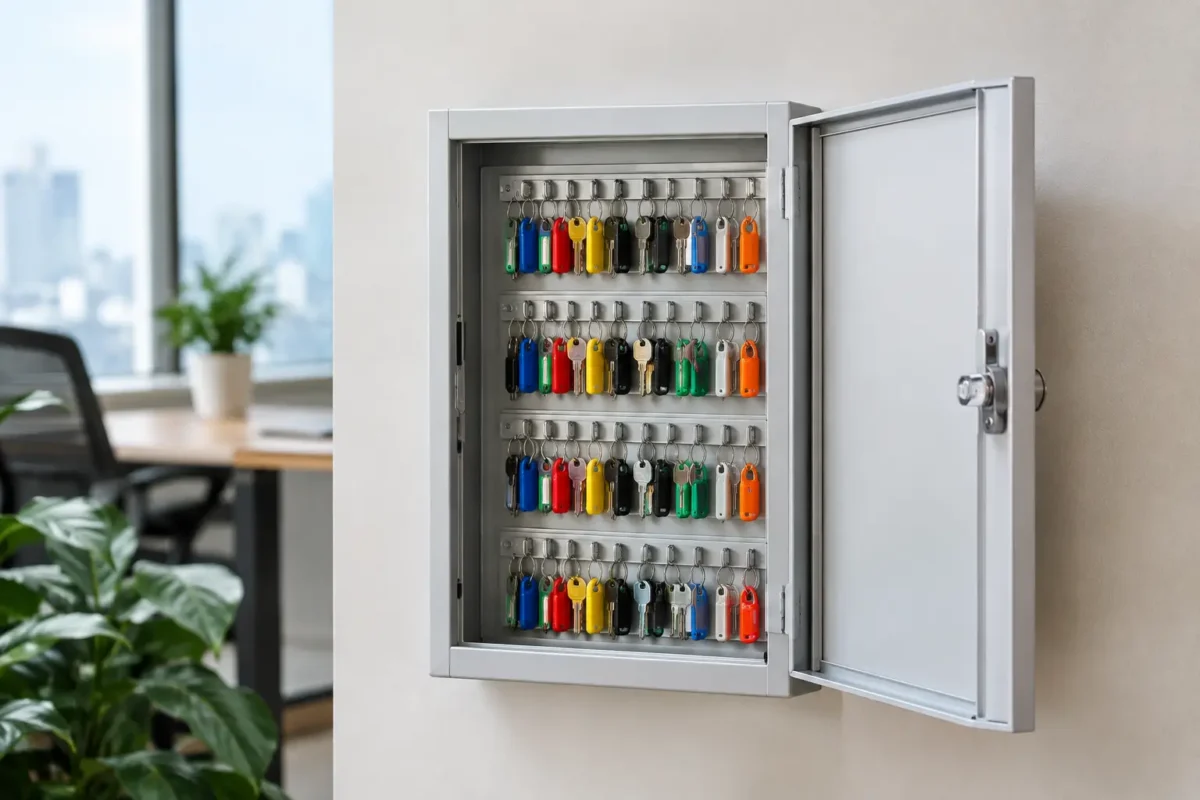
A missing master key can turn an ordinary workday into a security problem. Keys to offices, supply rooms, vehicles, gates, file storage, and mechanical rooms should not sit in an unlocked desk drawer or pass from person to person without a record. The best office key cabinets give your team one controlled place to store keys, assign responsibility, and act quickly when a key is missing.
The right cabinet is not always the biggest or the most technical option. A small office with a few interior keys may only need a locked wall cabinet with clear labels. A property manager, medical office, warehouse, or business with multiple shifts may need greater capacity, restricted access, and a way to document who removed each key. Start with how keys move through your business, then choose a cabinet that supports that process.
How to Choose the Best Office Key Cabinets
A key cabinet should make access easier for authorized people and harder for everyone else. Before choosing one, count more than the keys you have today. Include spare keys, emergency duplicates, vehicle keys, gate keys, storage keys, and keys that may be added as the business grows.
Leave room for expansion. A cabinet filled to capacity from day one becomes difficult to organize, and keys tend to end up outside the cabinet when there is no open hook available. For most offices, choosing a capacity at least 20% to 30% above the current key count is a practical starting point.
Also consider the size of each key set. A single house-style key takes little space, but a ring holding several keys, a vehicle fob, or a large plastic identification tag may need more clearance. Look at the cabinet’s usable interior layout, not just the number printed on the box.
Choose the right capacity for your operation
Small cabinets work well for offices with a limited number of controlled areas, such as a front office, break room, janitorial closet, and a few manager keys. Medium cabinets are often a better fit for small businesses with several employees, storage rooms, company vehicles, or multiple suites.
Large cabinets make sense when keys are distributed across a larger property or several locations. Apartment managers, schools, warehouses, contractors, and facilities teams can quickly outgrow a small cabinet because they need separate keys for units, equipment, gates, utility rooms, and emergency access.
Do not overlook duplicate keys. If two supervisors each need access to a key set, store and label each copy separately. That simple step prevents confusion over whether the original key is missing or just in use.
Match the lock type to the level of control you need
The lock is where the cabinet goes from basic organization to actual security. A traditional keyed lock is straightforward and dependable for a small office, especially when only a manager or owner has access. It does, however, create its own key to control. If the cabinet key is copied or lost, the cabinet lock may need to be rekeyed or replaced.
Combination locks avoid a separate cabinet key, but the code should be changed whenever an employee with access leaves or changes roles. They are useful when a small group needs regular access without passing around one physical key.
Electronic keypad cabinets allow individual codes, which can be helpful for offices with managers, maintenance staff, and rotating personnel. Depending on the model, some can record access events or use time-based permissions. This may be more control than a small office needs, but it is valuable when accountability matters.
For higher-risk keys, consider a cabinet with restricted access and a stronger enclosure. Keys to exterior doors, alarm panels, company vehicles, server rooms, and sensitive records should not receive the same treatment as a key to a supply closet.
Key Cabinet Features That Matter at Work
A steel cabinet with a secure locking mechanism is the basic standard for business use. Thin, lightweight cabinets may organize keys, but they offer less resistance if someone tries to force the door or remove the entire unit. Check that the cabinet has mounting holes and can be anchored to a solid wall surface.
Numbered hooks and matching key tags are equally important. Without a clear numbering system, people will waste time sorting through keys or return them to the wrong place. Use a simple label format that identifies the key’s purpose without advertising sensitive details. For example, “Suite 204” is clearer and safer than attaching a tag that lists a full address and notes that it is a master key.
Removable hook panels can be useful in larger cabinets because they make it easier to update key groups. Adjustable hooks are helpful when key rings vary in size. A cabinet with a key index card or log holder may also make day-to-day management easier, especially if the business is not using electronic tracking.
Avoid storing access cards, alarm codes, passwords, or written security instructions in the same cabinet. A key cabinet protects physical keys. It should not become a single point of failure for every part of your building security.
Create a Check-Out Process Before You Need One
Even the best cabinet cannot fix a loose key policy. Every business should decide who may access the cabinet, which keys require approval, and what employees must do when they take a key off-site.
For a small office, a paper sign-out log may be enough. Record the date, employee name, key number, purpose, and return time. For businesses with frequent key movement, an electronic cabinet or digital log provides better visibility. The goal is not to add unnecessary paperwork. It is to make sure someone can answer a simple question: who has this key right now?
Set a rule that keys are returned at the end of each shift unless they are assigned to an employee for a specific reason. This is especially useful for shared vehicle keys, equipment keys, maintenance keys, and exterior door keys. When employees know the routine, fewer keys end up in pockets, glove boxes, tool bags, or unmarked drawers.
Review the cabinet after staffing changes. Collect keys from departing employees promptly, change cabinet access codes if needed, and review whether exterior locks should be rekeyed. If a key was lost and cannot be accounted for, treat it as a security issue rather than hoping it turns up later.
Installation Can Make or Break Security
A key cabinet should be installed where authorized staff can reach it without making it visible or convenient to visitors. A locked manager office, secured reception back room, or staff-only area is usually better than a public-facing wall.
Mount the cabinet into wall studs, solid masonry, or another secure backing appropriate for its weight. Drywall anchors alone may not be sufficient for a larger cabinet or one storing important keys. Keep the door clearance in mind so it can open fully, and place it at a usable height for the employees who will access it.
For offices in leased space, confirm where mounting is allowed before drilling into walls. If wall mounting is not possible, a secured cabinet inside a locked room may be an option, but it still needs to be protected from easy removal.
When a Key Cabinet Is Not Enough
A key cabinet is one part of a broader commercial security plan. If too many people need access, keys are repeatedly lost, or your business has frequent turnover, it may be time to reduce dependence on physical keys. Commercial access control, keypad locks, credential-based entry, and properly managed master key systems can limit who can enter specific areas and make changes easier when staff roles change.
That does not mean every office needs to replace all its locks. Many businesses get good results from a mixed approach: electronic access for main entry doors and a secured key cabinet for interior rooms, utility areas, backup keys, and equipment. The right setup depends on your building, staff size, daily operations, and the consequences of a lost key.
If your Denver-area office needs help selecting, mounting, rekeying, or improving control around business keys, BS Locksmith can assess the practical risks and help put the right security pieces in place. A well-organized cabinet, clear key rules, and properly controlled locks give your staff a simpler way to work while keeping your property better protected.