
Best Locks for Duplex Homes and Shared Entries
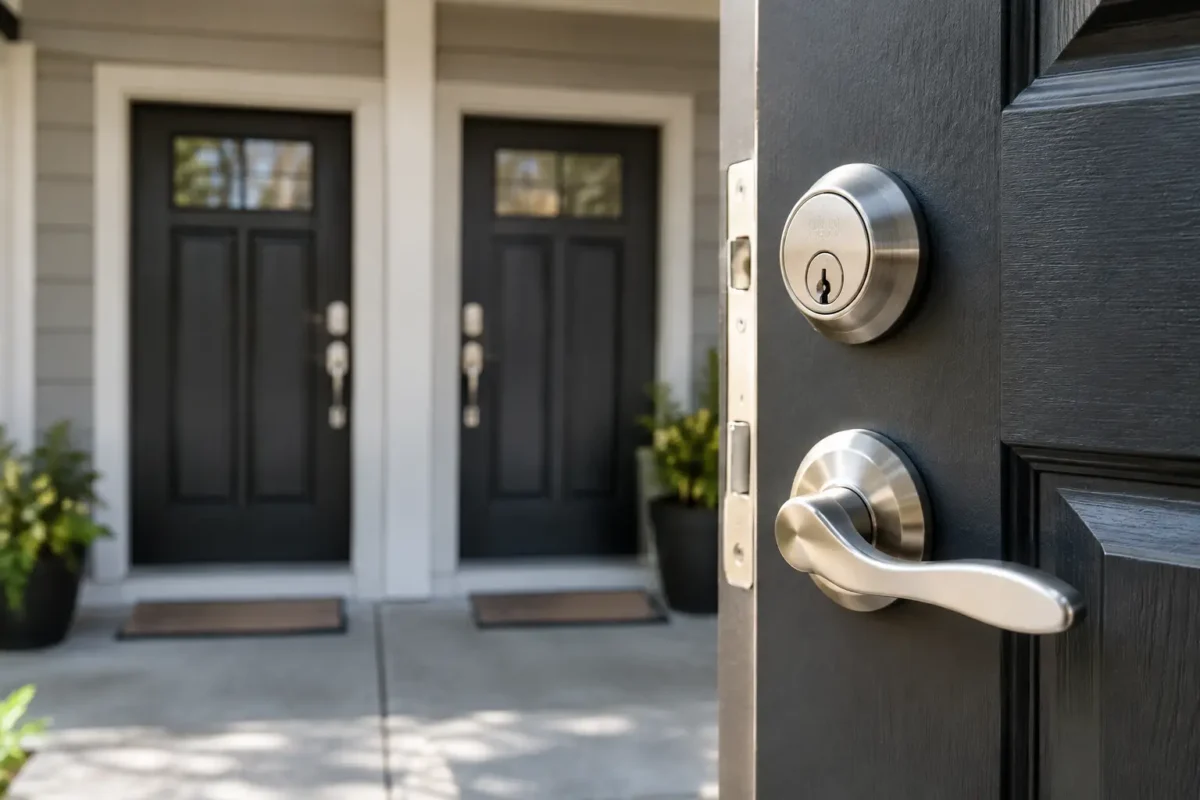
A duplex has security needs that a single-family home does not. Two households may share a front entry, driveway, mailbox area, or exterior doors, while each unit still needs privacy and reliable control over its own keys. The best locks for duplex homes are the ones that secure each access point without creating confusion over who can enter, who needs a key, and what happens when a tenant moves out.
A good lock plan also needs to work in real life. That means durable hardware, clear key control, safe emergency exit options, and a simple way to change access when occupancy changes. The right choice depends on whether the duplex is owner-occupied, fully rented, or has a shared entry before the individual unit doors.
Start With the Doors That Need Separate Control
Most duplexes have at least two categories of doors: doors that lead directly into each residence and doors used by both households. Treating every door the same is a common mistake. A tenant’s unit door should be controlled separately from a shared front door, basement entry, laundry room, storage area, or mechanical room.
For an exterior door that leads directly into one unit, a quality single-cylinder deadbolt is usually the practical starting point. It provides a stronger layer of protection than a locking knob or lever alone. Look for a deadbolt with a solid bolt, a reinforced strike plate, and hardware designed for residential exterior use. The deadbolt should be installed correctly into the door frame, not just attached to the trim.
A locking handle or lever can be used with the deadbolt, but it should not be the only lock on a main exterior door. Handles are convenient for daily use; deadbolts provide the primary security. For interior doors between units, the needs may be different. A privacy lock may be appropriate for a bathroom, while a keyed lock may be necessary for a separately controlled basement or storage room.
Do Not Overlook the Door Frame
A strong deadbolt cannot do much if the strike plate is held in place by short screws in soft wood. The strike plate should be reinforced and secured with long screws that reach the framing behind the jamb. Loose hinges, warped doors, and wide gaps around the frame should also be corrected.
This is one reason a lock upgrade is more than choosing a product from a shelf. The lock, door, frame, strike plate, and installation all work together. A mobile locksmith can assess the full opening and recommend hardware that fits the door rather than forcing a one-size-fits-all solution.
Best Locks for Duplex Homes With a Shared Entrance
If both units pass through one exterior entry, the shared door needs a different approach. A traditional keyed deadbolt can work, but it creates key-management issues. Every resident needs a key, and a lost or unreturned key may mean changing access for everyone.
A keypad deadbolt or smart lock is often a better fit for a shared entrance. Each resident can have an individual code, making it easier to remove access when someone moves out without replacing the entire lock. Some models also allow temporary codes for a cleaner, maintenance provider, or contractor. This can reduce the need to distribute extra physical keys.
Choose a keypad or smart lock that has a physical key override and a reliable battery warning. Electronic locks are convenient, but batteries eventually need replacement. The key override provides a backup when a battery is low, a code is forgotten, or a resident needs emergency access.
For a duplex with frequent tenant turnover, a commercial-style keypad lock or small access control system may be worth considering for the common entry. These options are especially useful when there are several users, multiple common doors, or an owner who needs to manage access more consistently. The goal is not to overcomplicate a residential property. It is to make access easier to manage without weakening security.
Think Carefully About Double-Cylinder Deadbolts
A double-cylinder deadbolt requires a key from both sides. It can help prevent someone from reaching through nearby glass to turn the thumbturn, but it also creates an emergency exit concern. Residents should never need to search for a key to leave during a fire or other emergency.
Before using a double-cylinder deadbolt, consider the door layout, nearby windows, local requirements, and safe exit routes. In many duplex situations, a reinforced door, secure glass, proper exterior lighting, and a standard single-cylinder deadbolt provide a safer balance.
Smart Locks Make Sense When Access Changes Often
Smart locks are not automatically the best answer for every duplex. They are most useful when the property has regular turnover, owners live in one unit and rent the other, or both households need access to a shared entry without exchanging keys.
The best smart lock setup is simple enough that residents will actually use it correctly. A keypad model is often easier for a rental property than an app-only lock. Codes can be changed without collecting keys, and the lock can still be operated normally from inside. If app access is included, make sure the person responsible for the property has a clear process for adding and removing users.
There are trade-offs. Smart locks need occasional battery service, and not every door or deadbolt is compatible with every model. Some smart locks replace the full deadbolt, while others work with an existing interior thumbturn. A professional installation helps prevent alignment issues that can cause a smart lock to bind, drain batteries, or fail to latch consistently.
Rekeying Is Often Better Than Replacing Every Lock
When a tenant moves out, keys are lost, or a new owner takes over, rekeying is one of the most practical security steps. Rekeying changes the lock’s internal pins so old keys no longer work. It is often a good solution when the existing locks are in good condition and the goal is to restore key control quickly.
For a duplex, rekeying can also create a more organized key system. Each unit can have its own key, while a designated property key may operate common-area locks if appropriate. This needs to be planned carefully. A master-key arrangement can be convenient for maintenance, but it should only be used when the owner understands exactly which keys open which doors.
If the hardware is worn, damaged, low quality, or does not match the security needs of the property, replacing the lock is the better move. Rekeying fixes key access. It does not repair a weak deadbolt, a failing latch, or a damaged door frame.
Choose Hardware That Residents Can Use Safely
Security hardware should never interfere with a safe exit. Exterior doors should allow occupants to leave quickly from the inside, and any shared hallway or exit route should remain clear. If a door serves as an emergency egress door, the lock choice must support that function.
For rental duplexes, durable lever handles can be easier for many residents to operate than round knobs. They are also available in keyed-entry versions for exterior doors. Match the finish and style if appearance matters, but put function first. A lock that looks good but sticks, misaligns, or is difficult to use will create problems long before it improves security.
Do not forget lesser-used access points. Side doors, garage-to-home doors, basement entrances, sliding doors, and gates deserve the same attention as the front door. A sliding glass door may need a secondary security device in addition to its factory latch. A gate leading to a shared yard or alley may need a weather-resistant keyed lock or keypad, depending on who needs access.
Build a Lock Plan Around How the Duplex Operates
The right setup usually comes down to a few practical questions. Does each unit have a separate exterior entrance? Is there a shared vestibule or common basement? Does the owner need access for maintenance? Are tenants changing regularly? Is there a safe way for every occupant to exit without a key?
For many owner-occupied duplexes, separate deadbolts on each unit door plus a keypad lock on the shared entry is a sensible combination. For a fully rented duplex with separate entrances, quality deadbolts and a clear rekeying policy may be all that is needed. For properties with several shared doors, controlled access hardware can reduce the confusion that comes with too many copies of too many keys.
A local locksmith can inspect the doors, identify weak hardware, and install a system that fits the property instead of adding locks one at a time. For duplex owners in Aurora, Federal Heights, Denver, and nearby areas, BS Locksmith can help with lock changes, rekeying, smart lock installation, and common-entry access solutions.
The best result is a duplex where each resident feels secure in their own space, shared areas stay controlled, and access can be updated without turning a simple move-out into a security problem.