
Commercial Door Closer Repair Guide
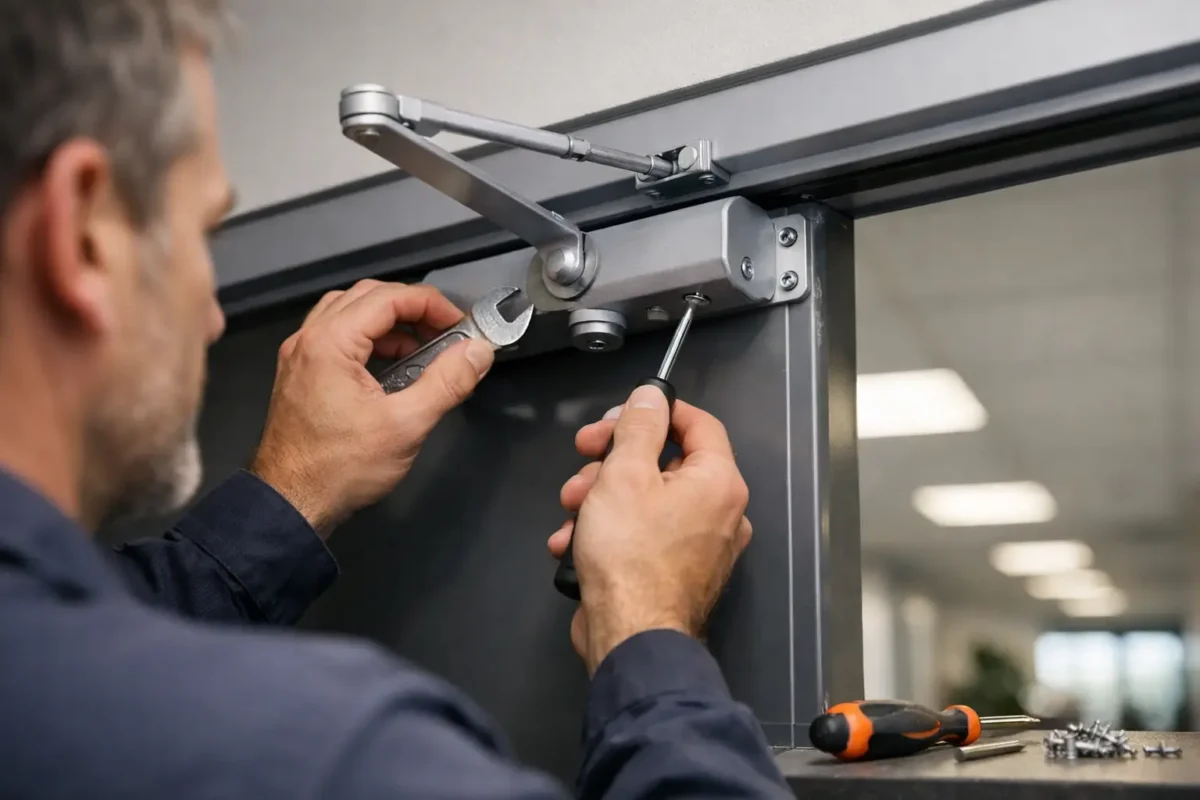
A commercial entry door that slams, sticks, or drifts open is more than an annoyance. It can turn into a security problem, an ADA issue, and a daily frustration for staff and customers. Commercial door closer repair usually starts when someone notices the door no longer moves the way it should, but the real cause is not always obvious at first glance.
In many buildings, the closer gets blamed for every door problem. Sometimes that is accurate. Sometimes the closer is fine and the real issue is hinge wear, frame movement, latch alignment, or a mounting point that has started to pull loose. Getting the diagnosis right matters because a quick adjustment can solve one problem, while another situation calls for a full repair or replacement.
What a door closer is supposed to do
A commercial door closer controls how a door opens and returns to the closed position. Its job sounds simple, but it affects safety, access, security, and wear on the entire opening. A properly working closer should let the door open with reasonable resistance, then guide it shut at a controlled speed without slamming.
Most closers use hydraulic pressure and spring tension to manage movement. That means even a small problem like a leaking seal or an incorrect adjustment can change how the door behaves. On a busy storefront, office suite, school, or apartment common area, those changes show up fast.
When the closer is working correctly, people barely notice it. When it is not, everyone notices.
Signs you may need commercial door closer repair
Some problems are obvious right away. Others build slowly and get ignored until the door becomes hard to use. If you are dealing with any of the following, it is worth having the opening checked.
The door slams shut
A slamming commercial door usually points to an adjustment issue, a loss of hydraulic control, or internal closer failure. Slamming is not just loud. It can damage the frame, stress the latch, and create a hazard for customers and employees.
The door will not fully close
If the door stops short or needs a push to latch, the closer may be out of adjustment. But that is only one possibility. Weatherstripping, stack pressure, misaligned hardware, or a sagging door can also keep it from closing correctly.
The door closes too slowly
A slow door can sound minor, but it can create security issues if the opening stays unsecured longer than it should. In some settings, it also affects climate control and traffic flow.
The closer is leaking oil
Visible hydraulic fluid is a strong sign the closer body has failed. Once a closer starts leaking, repair options are limited. In many cases, replacement makes more sense than trying to extend the life of a failing unit.
The arm is bent, loose, or disconnected
The arm assembly takes a lot of stress. If it has been forced open, hit by carts, or used on a door with alignment problems, it may bend or pull away from the door or frame. That kind of damage usually needs more than a basic adjustment.
Why commercial door closers fail
Commercial hardware deals with constant use, and closers are no exception. Some fail because of age. Others fail because the door system was never operating correctly to begin with.
Heavy traffic is one common reason. A front entrance that opens hundreds of times a day puts far more strain on a closer than a private office door. If the closer was undersized for the door, wear happens faster.
Improper installation is another issue. If the closer is mounted in the wrong location, paired with the wrong arm, or adjusted too aggressively, the unit can wear out early. The same goes for doors that are being forced against bad latch alignment or dragging hinges. In those cases, the closer is working harder than it should every time the door moves.
Colorado weather can add another layer. Temperature swings can affect door movement and closer performance, especially if the unit is already worn or the opening is exposed to wind. What works fine in mild conditions may start showing problems during more extreme weather.
Repair or replacement – what makes sense?
This is where it depends. Not every closer problem requires a new unit, but not every problem is worth repairing either.
If the closer is structurally sound and the issue is limited to adjustment, tightening hardware, or correcting arm position, repair is often the right move. A trained technician can fine-tune sweep speed, latch speed, backcheck, and closing force so the door operates the way it should.
If the closer is leaking, cracked, badly worn, or mounted on damaged wood or metal, replacement may be the smarter choice. The same is true when the current closer is the wrong type for the door. Repeated adjustments on a failing unit usually only delay the real fix.
There is also a bigger picture to consider. If a door closer has failed because the hinges are worn, the frame has shifted, or the latch is misaligned, replacing the closer alone will not solve the root problem. A complete repair should address the full opening, not just the most visible part.
Common commercial door closer repair issues a technician handles
A proper service call usually involves more than turning a screw and hoping for the best. A locksmith or door hardware professional will inspect how the entire door is functioning before making changes.
Adjustment of closing speed and latch speed
These settings control how the door moves through most of its closing cycle and how it finishes the last few inches. Too fast and the door slams. Too slow and it may not latch.
Arm and bracket repair
Loose screws, stripped mounting holes, bent arms, or damaged brackets can throw off the whole system. Repair may involve reinforcing mounting points or replacing worn components.
Closer replacement
When the body of the closer has failed, replacement is often the cleanest fix. The new unit should match the door size, use level, and opening conditions.
Door alignment correction
If the door sags or the latch does not line up, the closer will never perform properly. Hinge adjustment, strike alignment, or other hardware corrections may be needed first.
ADA and code-related adjustments
Commercial doors often need to meet accessibility and life safety requirements. That means the closer cannot simply be set as strong or as fast as someone prefers. The opening has to work safely and legally for the people using it.
Why DIY adjustments can go wrong
It is tempting to grab a screwdriver and start turning adjustment valves. That can work for very minor issues, but it also creates a lot of preventable service calls.
The first problem is misdiagnosis. A door that slams might have a failed closer, but it might also have a broken arm shoe, a hinge issue, or a latch problem. Adjusting the wrong part wastes time and can make the door harder to use.
The second problem is over-adjustment. Small valve changes matter. If someone backs out an adjustment screw too far, hydraulic fluid can escape and the closer can be ruined. That turns a manageable repair into a replacement.
There is also the safety factor. Commercial doors are heavy, and closers are spring-loaded devices. If hardware is loose or damaged, forcing an adjustment without checking the mounting and alignment can make the problem worse.
When to call for professional help
If the door is part of a business entrance, tenant space, office, retail storefront, or common area, it makes sense to get the problem handled before it affects security or daily operations. Call for professional help when the closer is leaking, the door will not latch consistently, the opening is hard to use, or the mounting hardware has started pulling away.
It is also smart to call when the issue keeps coming back. Repeated short-term fixes usually mean something larger is being missed. A technician with commercial hardware experience can check the closer, hinges, latch, strike, frame, and traffic demands together instead of treating the symptom alone.
For business owners and property managers, that matters. One bad closer can lead to complaints, lockouts, damaged hardware, and unnecessary strain on staff. Getting it repaired correctly protects both the door and the people using it.
Preventing repeat door closer problems
Commercial door closers last longer when the whole opening is maintained. That means checking mounting screws, watching for signs of sagging, and addressing latch issues early. It also helps to avoid using the door as a stop or forcing it open beyond its intended range.
On high-traffic doors, periodic inspection is worth it. A closer that is starting to drift out of adjustment often gives warning signs before it fully fails. Catching those signs early can reduce downtime and prevent extra wear on connected hardware.
If your building has multiple problem doors, consistency matters too. Using the right closer type and setting each opening correctly can reduce service issues over time.
A commercial door should open safely, close reliably, and secure the space without constant attention. When it stops doing that, the fix should be straightforward, not improvised. If the door is telling you something is wrong, it is usually better to deal with it now than wait for a small hardware issue to turn into a bigger access or security problem.