
Door Closers Versus Panic Bars Explained
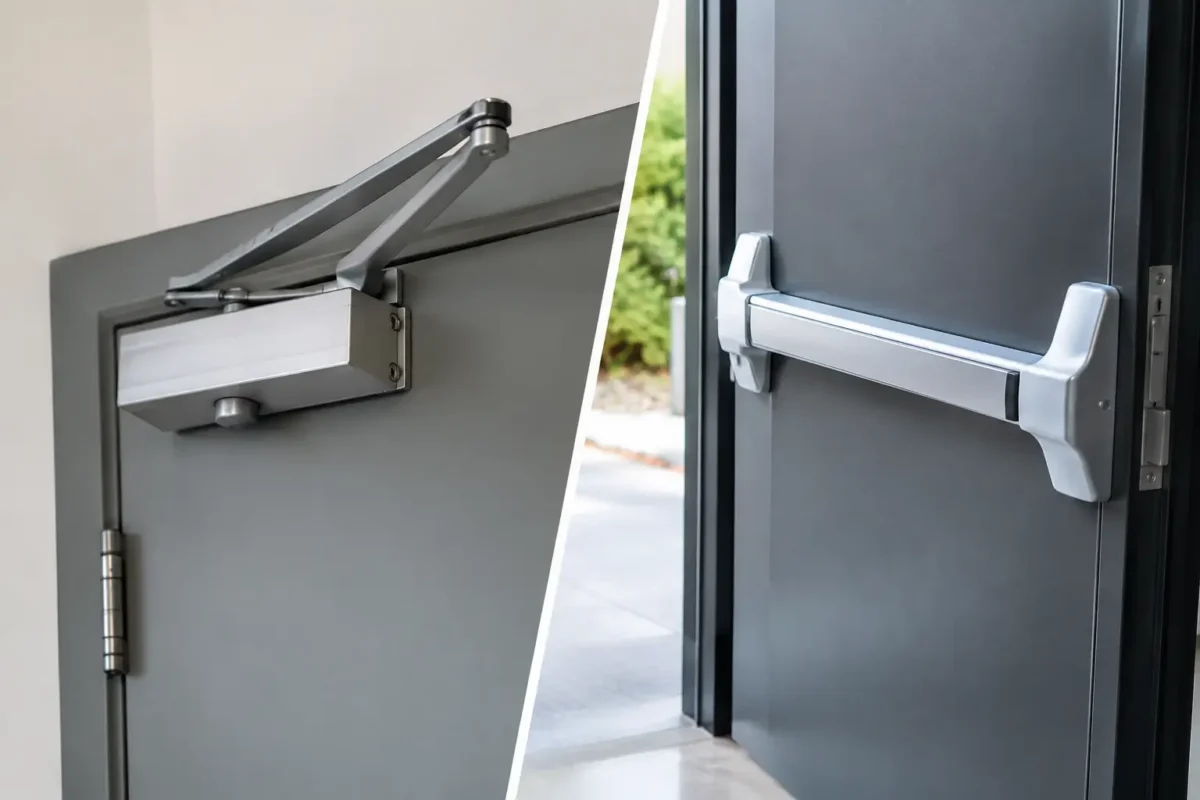
A commercial door that will not close and latch can create a security problem. A door that will not open quickly during an emergency can create a far more serious one. That is why door closers versus panic bars is not really an either-or choice for many Denver-area businesses. They perform different jobs, and the right exterior or exit door often needs both.
For property managers, shop owners, office managers, and tenants, the goal is simple: doors should secure the building after someone enters or exits, while allowing occupants to leave without confusion or unnecessary force. Choosing the right hardware starts with understanding what each component actually does.
What a Door Closer Does
A door closer is the mechanical or hydraulic device that controls a door after it has been opened. You have likely seen a surface-mounted closer at the top of an office, retail, or apartment-building door. It uses an arm and spring or hydraulic mechanism to bring the door back to its closed position at a controlled speed.
Its main purpose is to make sure the door closes reliably. On a locked exterior door, that closing action lets the latch engage with the strike, restoring security without requiring someone to pull the door shut behind them. On a fire-rated opening, proper closing and latching can be essential to the opening’s intended fire protection performance.
A closer is not a locking device and does not provide emergency egress by itself. It simply manages the movement of the door. If the closer is adjusted too aggressively, the door may slam, become difficult to open, or pose an accessibility concern. If it is too weak, the door may drift open or fail to latch when wind, pressure differences, worn hinges, or a misaligned frame get involved.
Common signs a closer needs service
A closer that leaks oil, slams the door, leaves it partly open, or pulls the door shut too slowly deserves attention. People sometimes turn adjustment screws repeatedly in an effort to fix the problem, but that can make performance worse or damage the closer. The issue may be the closer, but it may also be dragging hinges, a warped door, a loose arm, an incorrect latch alignment, or weatherstripping that is creating too much resistance.
What a Panic Bar Does
A panic bar, also called panic hardware or an exit device, is designed to let people leave through a door with a simple push. Instead of turning a knob, lever, or deadbolt thumbturn, a person presses the crossbar or push pad in the direction of travel. The latch retracts and the door opens.
This type of hardware is especially useful when multiple people may need to exit quickly, including visitors who are unfamiliar with the building. It is commonly found on restaurant exits, retail doors, schools, warehouses, assembly areas, and other commercial spaces where egress requirements apply.
Panic bars are built around safe exit, not just convenience. Properly installed hardware should allow someone to release the door from the inside without a key, special knowledge, or separate actions. Exact requirements depend on the building’s occupancy, occupant load, door location, fire rating, local code adoption, and direction of travel. A qualified locksmith or door hardware professional can assess the opening rather than assuming every commercial back door needs the same device.
Panic hardware and fire exit hardware are not identical
The terms are often used interchangeably, but there is an important distinction. Panic hardware is made for emergency egress. Fire exit hardware is a specific type intended for use on certain fire-rated doors and is designed to re-latch when the door closes. The wrong device on a fire-rated opening can affect compliance and the door’s ability to perform as intended.
This is one reason a hardware replacement should not be treated like a basic lock swap. The door, frame, hinges, strike, closer, latch, and exit device all work as a system.
Door Closers Versus Panic Bars: The Key Difference
The easiest way to separate door closers versus panic bars is to think about direction and purpose. A door closer controls what happens after the door is used. A panic bar controls how people get out.
A closer pulls the door back into the frame. A panic bar releases the latch so the door can open from the egress side. One supports security, controlled closing, and often fire-door performance. The other supports immediate, intuitive exit. Neither replaces the other when a door needs both functions.
Consider a rear exit at a small retail store. The business may need the door to remain locked from the outside, allow staff and customers to exit freely from inside, and close securely after every use. A panic bar can provide the inside release. A door closer can return the door to the closed and latched position. Exterior access may be handled by a keyed cylinder, lever trim, access control reader, or another approved entry method.
When a Door Needs Both
Many exterior commercial doors need both a closer and panic hardware, particularly if the door is part of the exit path. The closer makes the exit device work properly over time by bringing the door back to the latch position. The panic bar makes leaving easy without compromising the locked exterior side.
This pairing is also common at doors connected to access control. An employee may present a credential or use a key to enter, while anyone inside can press the exit device to leave. If the opening is fire-rated or connected to an alarm system, the hardware selection and installation details become more critical.
Do not assume that a locked door with a push bar is set up correctly just because it opens when tested once. The latch needs to engage consistently, the closer must not prevent accessible use, the strike must align, and any electronic components must behave correctly during normal use and emergency conditions.
How to Choose the Right Hardware for Your Building
Start with the purpose of the door. Is it a public exit, a staff-only exterior door, a warehouse door, an office suite entrance, or a fire-rated corridor door? Then consider who uses it, how many people may use it at once, and whether the door must meet a specific code or accessibility requirement.
The building’s adopted code and the local authority having jurisdiction determine what is required. Requirements can differ between an older office remodel, a new retail space, a restaurant, and a multi-tenant property. A property manager should also review lease obligations, insurance requirements, and any inspection findings before replacing exit hardware.
Hardware style matters too. Rim exit devices are commonly used where the device mounts on the door face. Vertical rod devices may be used on certain pairs of doors, while mortise exit devices fit into the door itself. Door closers also come in different formats, including surface-mounted, concealed, and overhead units. The right choice depends on the door construction, traffic level, frame condition, and whether the opening is rated.
A professional assessment should look at more than the lock. It should account for the following:
- The door’s fire rating and whether it must self-close and latch
- The direction of egress and whether panic hardware is required
- Door weight, size, hinges, alignment, and wind or pressure issues
- Exterior security needs, including keys, restricted keyways, or access control
- Accessibility and the amount of force needed to operate the opening
Avoid Quick Fixes That Create Bigger Problems
Commercial doors take daily abuse. It can be tempting to hold a latch back, prop a door open, remove a closer arm, or install residential-grade hardware to stop a recurring issue. Those workarounds can weaken security, interfere with egress, damage the door, and create trouble during an inspection.
A door that will not latch may look like a closer problem, but changing the closer alone may not solve it. Likewise, replacing a panic bar without correcting a warped door, damaged strike, or sagging hinges can leave the new device unreliable. The repair should address the cause, not just the symptom.
For businesses in Aurora, Federal Heights, Denver, and surrounding areas, BS Locksmith can help evaluate commercial door hardware, replace worn components, rekey exterior access, and coordinate practical security upgrades. The right setup should be easy for staff to use, difficult for unauthorized visitors to defeat, and dependable when people need to leave quickly.
A well-functioning exit door rarely gets noticed, which is exactly the point. Have it checked before a sticking latch, leaking closer, or unreliable push bar turns a routine door into a security or safety problem.