
How to Secure Storefront Doors Effectively
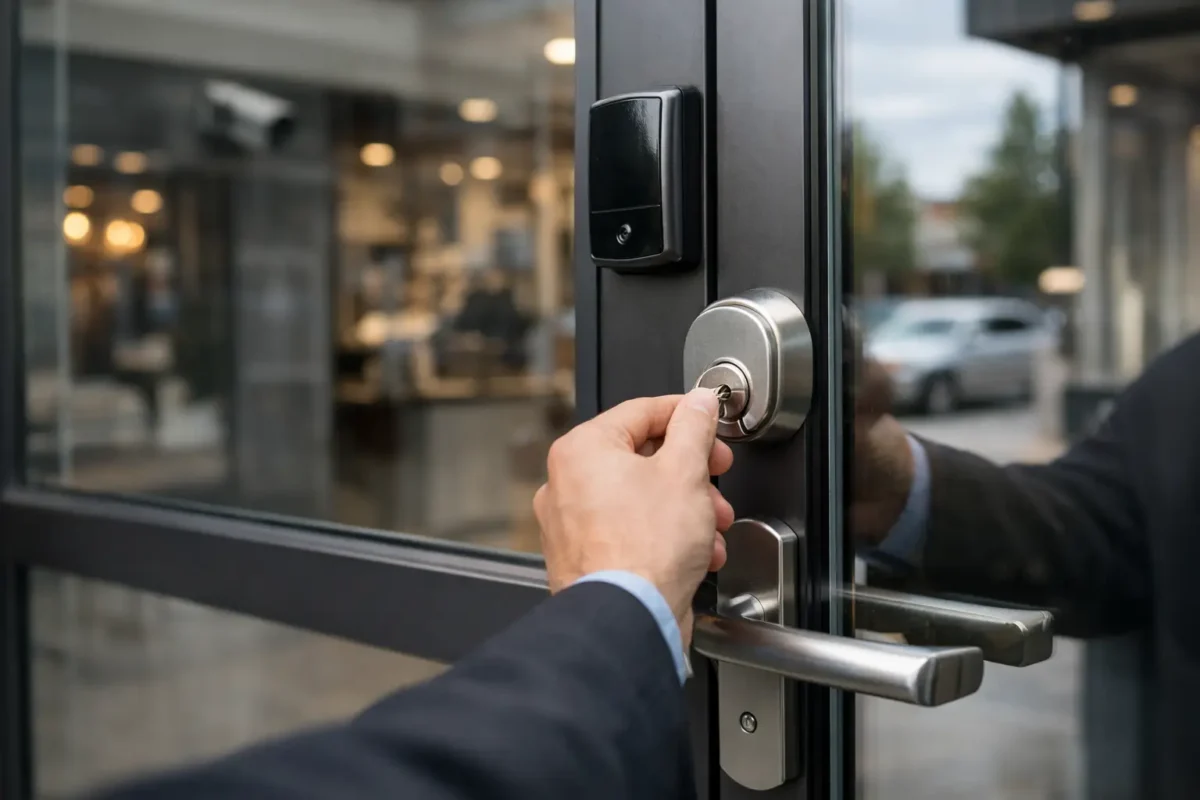
A storefront door is more than an entrance for customers. It is often the first point an intruder tests after hours, and a weak lock, loose frame, or door that does not latch can turn a small issue into a costly break-in. Knowing how to secure storefront doors means looking beyond the lock itself and addressing the entire opening: the door, frame, hinges, glass, closing hardware, and the way your team controls keys.
For Denver Metro business owners and property managers, the right setup depends on the building, hours of operation, employee turnover, and the type of merchandise or equipment inside. A retail shop with frequent customer traffic needs a different approach than a small office with a limited staff. The goal is not to make the entrance difficult for legitimate customers. It is to make forced entry, unauthorized key use, and after-hours access much harder.
How to Secure Storefront Doors From the Outside In
Start with a close inspection after closing. Stand outside and look for visible gaps around the door, movement in the frame, exposed screws, cracked glass near the lock, or a door that can be pulled away from the weatherstripping. These details matter because security hardware can only perform as well as the door and frame holding it.
A commercial-grade deadbolt or mortise lock is usually a stronger choice than light-duty hardware intended for a house or interior door. The correct option depends on the door material and existing prep. Aluminum glass storefront doors, hollow metal doors, and wood doors each require compatible hardware and proper installation. For many glass aluminum doors, a narrow-stile deadbolt or hook-bolt lock is appropriate because it secures the door without damaging the narrow metal frame.
The strike plate deserves the same attention as the lock. A heavy-duty strike secured into solid framing helps resist force at the latch point. If the door frame is bent, loose, or badly worn, replacing the lock alone will not fix the problem. Repairing or reinforcing the frame may be the more meaningful upgrade.
For double doors, check the inactive leaf as well. Surface bolts or concealed vertical rod hardware should hold it firmly at the top and bottom. If one door leaf can be pushed or pried open, the active door lock is not doing its full job.
Choose Hardware That Matches the Door and Business
Commercial storefront hardware is not one-size-fits-all. Selecting the right equipment starts with how the door is used during business hours and how it needs to be secured after closing.
A busy retail entrance may need a commercial lever or panic device for safe, convenient exit, paired with a separate high-security locking solution for closing time. An office with one public entry may benefit from a commercial deadbolt and an electronic keypad or credential reader. If employees enter at different times, access control can reduce the need to issue and collect physical keys.
Do not add hardware that interferes with required emergency exit functions. Doors that serve as an exit route generally must allow people to leave without needing a key, special knowledge, or multiple steps. Local building and fire requirements can affect what is allowed, especially for panic hardware, door closers, and secondary security devices. A professional locksmith can recommend options that improve security without creating an unsafe or noncompliant exit.
High-security cylinders can also make sense for businesses with expensive inventory, sensitive records, or repeated key-control issues. These cylinders are designed to resist common forms of manipulation and may use restricted keyways that make unauthorized duplication more difficult. They are not necessary for every storefront, but they are worth considering when key copies have become hard to track.
Reinforce the Door Frame, Hinges, and Glass
A strong lock cannot compensate for a weak perimeter. The door should sit squarely in the frame, latch fully, and resist excessive movement when pushed or pulled. A door that drags, sticks, or needs to be slammed may not be engaging the lock correctly. It can also wear down the latch, strike, and closer over time.
Exterior hinges should be protected from removal when the door swings outward. Non-removable hinge pins or security hinges help prevent someone from removing a hinge pin and taking advantage of the hinge side of the opening. On certain commercial doors, continuous hinges can improve support and reduce stress across the full door height.
Glass requires a practical balance. Large storefront windows make a business welcoming and visible, but glass near the lock can create a vulnerable area. Security film can help hold broken glass together and slow access after an impact. It will not make glass unbreakable, so it works best alongside quality locks, a secure frame, lighting, and an alarm plan.
If your door includes a glass panel, avoid leaving keys, lock tools, or an easily reachable interior thumbturn directly within reach of a broken pane. The right interior lock configuration depends on the occupancy and exit requirements, so this is another area where professional guidance matters.
Make Sure Every Door Closes and Latches
Many storefront security failures are simple: the door was closed, but it was not actually locked. A worn or misadjusted door closer may leave the door slightly open, while a misaligned latch may rest against the strike instead of engaging it.
Test the door at the end of the day. Let it close naturally rather than pulling it shut by hand. Confirm that the latch catches every time and that the deadbolt or locking mechanism turns smoothly without forcing it. If the door only locks when someone lifts it, pushes on it, or pulls it tightly, schedule a repair before the hardware fails completely.
Door closers are especially useful on customer-facing doors because they help prevent an entrance from being left ajar during a busy day. They also protect the frame and lock by controlling the door’s closing force. A closer that slams can damage hardware, while one that closes too slowly can create a security and climate-control problem.
Control Keys Before They Become a Security Problem
A durable lock does little good if former employees, vendors, or unknown third parties still have working keys. Key control is one of the most affordable ways to improve storefront security, particularly after staff changes or a change in ownership.
Keep a written record of who has each key, including keys issued to managers, cleaners, maintenance teams, and temporary staff. Collect keys promptly when someone leaves. If you cannot account for every copy, rekeying is usually more practical than hoping old keys never resurface. Rekeying changes the lock so previous keys no longer work while allowing you to keep compatible existing hardware when it is still in good condition.
For businesses with frequent turnover, electronic access control can simplify this process. Instead of collecting keys, an authorized manager can remove a code, card, fob, or mobile credential. It also allows different access levels for employees, managers, and service providers. Access control is not always needed for a single-door shop with a stable staff, but it can save time and reduce uncertainty as a business grows.
Build a Closing Routine Your Team Will Follow
The strongest equipment still depends on consistent daily use. A closing checklist removes guesswork when staff members are tired, distracted, or working a busy shift.
Your routine should verify that exterior doors are fully shut and locked, the alarm is armed if you have one, spare keys are secured, and no delivery or rear door has been left unlatched. It should also include a quick look at the storefront for damage, loose hardware, or anything unusual around the lock and glass. Assigning this responsibility to a manager or using a sign-off process makes it less likely that everyone assumes someone else handled it.
Good exterior lighting and visible cameras can support the physical security of the door. Lighting helps employees lock up safely and makes suspicious activity easier to see. Cameras can provide useful documentation, but they should not replace proper door hardware. A camera records a problem; a well-secured door can help prevent one.
Know When to Repair, Rekey, or Replace
Not every issue calls for a full hardware replacement. A locksmith can often adjust a closer, realign a strike, repair a latch, or rekey an existing commercial lock. Those repairs make sense when the hardware is structurally sound and compatible with your security needs.
Replacement is the better choice when a lock is repeatedly failing, the cylinder is badly worn, the door has been damaged, keys cannot be controlled, or the current hardware is not suitable for the door. After a break-in attempt, have the entire opening inspected. Damage is not always obvious, and a bent frame or weakened strike can leave the business exposed even after the door appears to lock.
BS Locksmith provides on-site commercial locksmith support for businesses in Aurora, Federal Heights, Denver, and surrounding communities, including lock repairs, rekeying, lock changes, and access control installation. A professional assessment can identify whether a targeted repair will solve the issue or whether the door needs a more complete upgrade.
A storefront door should give your staff confidence at closing time, not another reason to worry after the lights are off. Start with the door that concerns you most, fix the problems you can see, and have the hardware checked before a small weakness becomes an urgent call.