
How to Upgrade Home Security Without Guesswork
A front door that still uses the same key from a previous owner, contractor, neighbor, or lost keyring is not just an inconvenience waiting to happen. It is a security gap you can fix. If you are wondering how to upgrade home security, start with the parts of your home that control entry – then build outward with practical habits and technology that fit your household.
The best upgrade is not always the most expensive one. A strong security plan depends on your doors, locks, keys, routines, and who needs access to the property. For many homeowners, rekeying or replacing weak hardware makes a bigger difference than adding another camera.
How to Upgrade Home Security Starting at the Door
Most break-ins involve an accessible door or window, and the front door gets the most attention for a reason. Check every exterior entry point, including the front and back doors, garage-to-house door, patio door, side door, basement access, and any door connected to a shared or detached garage.
A secure exterior door needs more than a working knob. The deadbolt, strike plate, door frame, hinges, and door itself all work together. If one part is weak, the rest of the hardware cannot make up for it.
Look for warning signs such as a loose deadbolt, a latch that does not line up with the strike plate, screws that are short or stripped, a door that flexes near the lock, or a lock that sticks when you turn the key. These problems are worth addressing before the lock fails or the door becomes easier to force.
Upgrade weak locks and door hardware
A quality deadbolt on a solid exterior door is a basic starting point. If your current lock is old, damaged, or low-grade, changing it can improve security and daily reliability. A locksmith can also recommend hardware that fits your door correctly, which matters more than many homeowners realize. Even a good lock will perform poorly if it is installed out of alignment.
Do not overlook the strike plate on the frame. Reinforcing it with longer screws that reach the framing can help the door resist force. For doors with glass near the lock, consider the risk of someone breaking glass and reaching inside. The right solution may be a double-cylinder deadbolt, but that choice requires care: occupants must be able to exit quickly in an emergency, and local code requirements may apply.
Sliding patio doors need their own attention. Make sure the lock engages fully, the track is clean, and the door cannot simply be lifted out of place. A secondary security bar or properly fitted pin can add protection when used correctly.
Rekey After Any Change in Access
Rekeying is one of the most practical home security upgrades because it changes which keys operate your existing locks. The lock hardware stays in place, but old keys stop working.
This is a smart move after buying a house, moving into a rental with permission from the property owner, losing keys, ending a roommate arrangement, or giving keys to people who no longer need access. It is also worth considering after renovations, pet sitting, home cleaning, or extended work by contractors if you are unsure how many copies were made.
Changing locks may be the better option when the hardware is worn, damaged, incompatible with the level of security you want, or simply no longer matches your needs. A professional locksmith can inspect the condition of the lock and help you decide whether rekeying or replacement makes more sense.
Keep key control simple. Avoid hiding a spare key under a mat, rock, flowerpot, or loose outdoor fixture. Those locations are familiar to anyone looking for an easy entry point. Instead, leave a spare with a trusted nearby person or use a secure, purpose-built option appropriate for your situation.
Choose Smart Locks for Convenience, Not Hype
Smart locks can make everyday access easier, especially for busy families, rental property owners, and homeowners who regularly have visitors or service providers. Depending on the model, you may be able to use a keypad code, phone app, key fob, or traditional key.
The real benefit is access control. Instead of handing out physical keys, you can create individual codes and remove them when they are no longer needed. That can be useful for older children, guests, housekeepers, dog walkers, or short-term access needs.
Smart locks are not automatically the right answer for every door. Battery maintenance, compatibility with the existing door, Wi-Fi or Bluetooth reliability, and emergency access all need consideration. Choose a lock with a dependable physical key override or another clear backup method, and keep the mechanical key available in a safe place.
A smart lock should also be installed accurately. Misalignment can drain batteries faster, cause the bolt to bind, and leave you frustrated at the door. Professional smart lock installation helps make sure the lock, door, and strike plate work together as intended.
Protect Windows, Garages, and Less Obvious Entry Points
Homeowners often focus on the front door and forget the places that receive less daily attention. A ground-level window with a broken latch, an unlocked garage service door, or an open basement window can create an easier opportunity than the front entry.
Walk around your property during the day and again after dark. Check that windows latch properly, outdoor lighting reaches entry points, address numbers are visible for emergency responders, and landscaping does not create deep hiding spots near doors and windows. Trim back shrubs that block sightlines, particularly near first-floor windows and side entrances.
The garage deserves a closer look because it may hold tools, vehicles, spare keys, and a direct path into the home. Keep the interior door between the garage and house locked when practical. Do not leave a garage remote visible in a parked vehicle outside, and make sure any emergency release mechanism is protected without interfering with safe operation.
For homeowners who travel often, a few small habits matter. Pause package deliveries when possible, ask a trusted person to collect mail, use timers for selected interior lights, and avoid posting travel details publicly while you are away. Security is partly hardware and partly avoiding signals that a home is empty.
Add Cameras and Alarms With a Clear Purpose
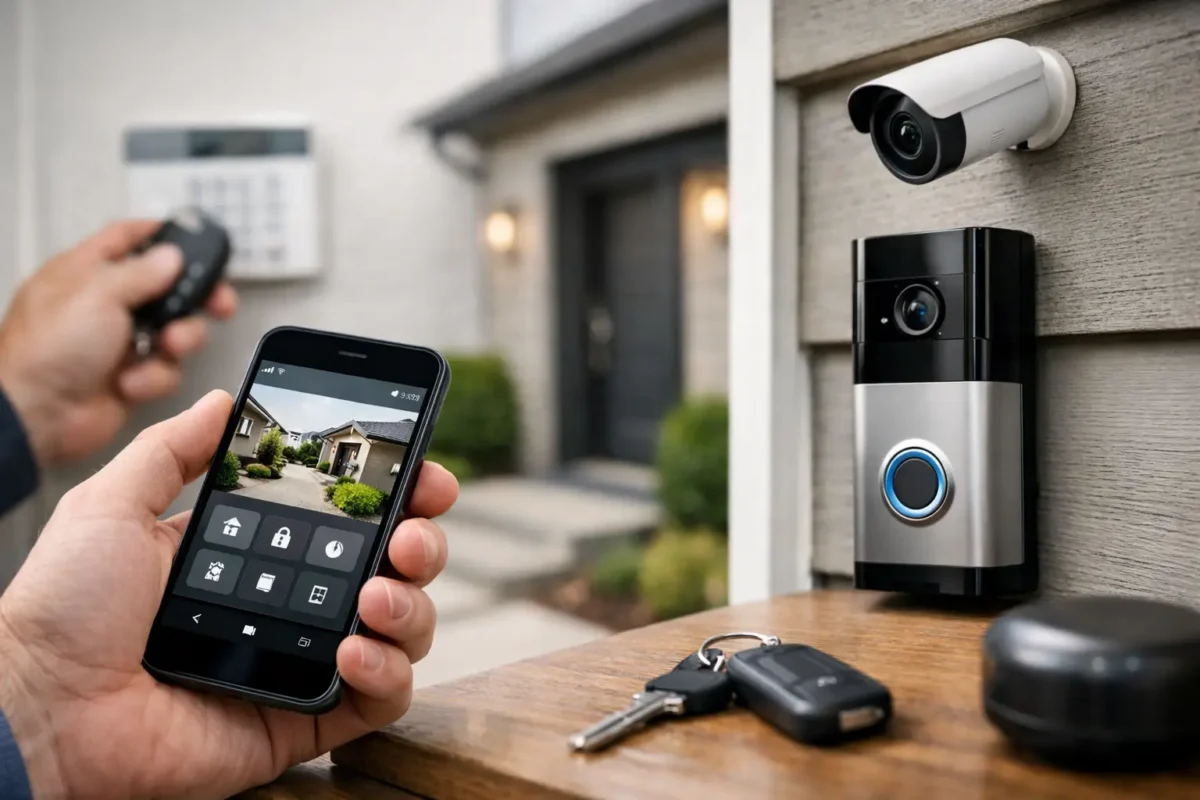
Cameras, doorbell cameras, and alarm systems can be useful additions, but they work best when they solve a specific problem. A camera may help you monitor deliveries, confirm who approached the door, or check activity around a driveway. An alarm may add notification and deterrence for homes that are frequently vacant or contain valuable equipment.
Placement matters. Cover main approaches and entry points rather than aiming a camera at a large area with little detail. Make sure devices are mounted securely, settings are tested, and notifications are not so frequent that you begin ignoring them.
Technology should not replace physical security. A camera can record an event, but a properly secured door can help prevent entry in the first place. Start with solid locks and doors, then add monitoring where it provides real value.
Build Security Into Daily Routines
The strongest hardware cannot help if doors are routinely left unlocked or keys are unaccounted for. Create routines that are easy enough for everyone in the household to follow. Lock doors and accessible windows before bed, check entry points before leaving for extended periods, and make sure family members know who has keys or access codes.
If you use keypad locks, avoid codes that are easy to guess, such as birthdays, house numbers, or repeated digits. Change codes when circumstances change. If a key is lost and you cannot confidently account for it, rekeying is the safer response than hoping it never turns up in the wrong hands.
For property managers and landlords, keep a clear record of key distribution and update access between tenants. For homeowners with aging parents or frequent caregivers, consider how authorized people can enter without creating an uncontrolled collection of spare keys.
When to Call a Locksmith
Some upgrades are simple, but lock work becomes less simple when a door is misaligned, a key breaks, a deadbolt binds, or multiple locks need to work with a coordinated key system. A locksmith can inspect the hardware, rekey locks, replace damaged cylinders, install deadbolts or smart locks, and help secure access points without unnecessary guesswork.
For homeowners in Aurora, Federal Heights, Denver, and nearby Colorado communities, BS Locksmith can help with planned residential security upgrades as well as urgent lock problems. The goal is straightforward: make sure the people who should have access can get in, and the people who should not cannot.
Start with one exterior door this week. Check the lock, the frame, the keys in circulation, and the habits around that entry point. A few well-chosen improvements can make your home easier to manage and much harder to access without permission.