
Panic Bars: What Denver Businesses Need to Know
A crowded restaurant, a busy office, or a warehouse shift change can turn one exterior door into a critical safety feature. Panic bars allow people to open an exit door with a simple push, without turning a knob, finding a key, or figuring out a lock under pressure. For business owners and property managers, that makes them more than a piece of door hardware. They are part of a practical emergency-exit plan.
The right exit device needs to work every time, fit the door correctly, and meet the requirements that apply to the building. A door that sticks, has the wrong hardware, or cannot fully latch after installation can create trouble during an inspection and, more importantly, when people need to get out quickly.
What Are Panic Bars?
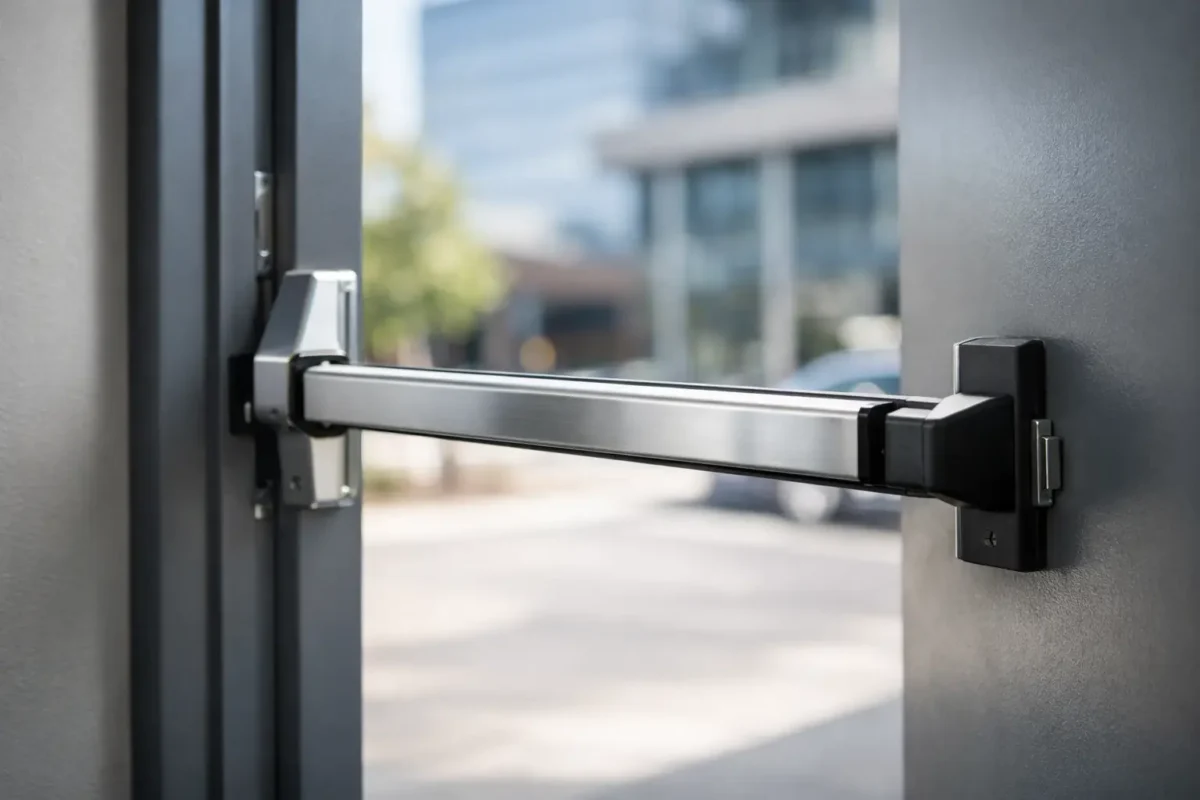
A panic bar is an exit device mounted across the inside of a door. When someone presses the bar or touchpad, the latch releases and the door opens in the direction of exit travel. You may also hear them called push bars, crash bars, exit devices, or panic hardware.
They are designed for a simple reason: people should be able to leave a building without special knowledge or fine motor control during an emergency. A broad push surface is easier to operate than a keyed lock, thumb turn, or traditional lever when someone is carrying items, moving with a crowd, or reacting under stress.
Panic hardware is often installed on exterior exit doors in commercial spaces, schools, medical facilities, assembly areas, and multifamily buildings. Whether a particular door requires it depends on the building’s use, occupancy, door type, and applicable code requirements. A local authority having jurisdiction, fire inspector, or building official makes the final call.
Panic Hardware and Fire Exit Hardware Are Not the Same
This distinction matters when selecting replacement hardware. Standard panic hardware is made to provide fast egress. Fire exit hardware is intended for use on a fire-rated door assembly and must help the door latch securely when it closes.
A fire-rated exit door is part of the building’s fire protection system. If its hardware is changed incorrectly, the door may no longer perform as intended. For example, adding unapproved hardware, using the wrong latch arrangement, or making unapproved modifications to the door can affect the rating and create compliance problems.
If you manage a building with labeled fire doors, do not assume any push bar is an acceptable replacement. The device, door, frame, closer, strike, and related components need to work together. This is a situation where getting the correct hardware from the start can prevent a much larger repair later.
Which Doors May Need Panic Bars?
Panic bars are commonly found on doors used as required exits, especially where a large number of people may need to leave quickly. Restaurants, retail spaces, offices, churches, event venues, warehouses, and shared commercial properties often have one or more doors that use exit devices.
The need is not based solely on whether a door leads outside. A rear delivery door, for example, may need different hardware than a public exit. An interior door separating certain areas of a larger facility may also have specific requirements. Occupant load, the type of work performed in the space, and whether the door is fire rated can all affect the decision.
For small businesses, the practical question is usually this: can employees and visitors exit easily from every required egress door, without a key, special action, or delay? If the answer is no, the door should be evaluated by a qualified professional and, when needed, the appropriate local official.
Choosing the Right Exit Device
Not every panic bar works on every commercial door. The hardware should be selected around the door, how the building operates, and how people use the exit. A single exterior aluminum storefront door has different needs than a pair of steel doors at a warehouse or a fire-rated corridor door in an apartment building.
Rim, vertical rod, and mortise devices
A rim exit device mounts on the face of the door and latches into a strike on the frame. It is common on single doors and can be a practical choice for many storefronts and offices.
Vertical rod devices are often used on pairs of doors. They secure the inactive door at the top, bottom, or both, depending on the design. Concealed vertical rods offer a cleaner appearance, while surface vertical rods are easier to see and service. The right option depends on the door construction, traffic level, and building requirements.
Mortise exit devices use a lock case installed in a pocket cut into the door. They are frequently used where a more integrated look or specific locking function is needed. Because door preparation is more involved, replacement or conversion should be planned carefully.
Outside access and security
An exit device provides free exit from the inside, but the outside trim determines how people enter from the exterior. A door may have a pull handle, keyed lever, keypad, credential reader, or another access-control component outside.
This is where security and daily operations need to be balanced. A staff-only rear door may need to stay locked from the outside while still allowing instant egress. A main entrance may need scheduled access for employees and controlled entry after business hours. The exit device must work correctly with any cylinder, key system, electric strike, electrified trim, or access control setup.
Adding a chain, slide bolt, improvised lock, or other device that interferes with egress is not a safe shortcut. If a business needs stronger after-hours security, there are proper commercial hardware and access-control options that preserve the ability to exit.
Installation Details That Affect Safety
A panic bar can look fine from a distance and still have a problem. Proper installation includes more than attaching a bar to the door. The device must be aligned so the latch engages consistently, the door closes and latches after each use, and the opening force remains reasonable for the people using it.
Door closers are a frequent source of trouble. A closer that is too strong can make the door difficult to open. One that is weak, leaking, or poorly adjusted may prevent the door from closing fully, leaving the latch unengaged. Weatherstripping, warped doors, damaged hinges, and frame movement can also affect performance.
For fire-rated openings, the details are even more sensitive. The door must positively latch when it closes, and the hardware must be compatible with the rated assembly. In commercial properties around Denver, routine maintenance is especially useful because temperature swings, heavy use, and building movement can gradually put hardware out of adjustment.
Signs Your Exit Device Needs Service
Exit hardware should be checked regularly, not only after someone reports a problem. Staff can perform a basic visual and operational check by opening the door with the bar, confirming it swings freely, and making sure it closes and latches on its own. They should never disable the hardware to make a door easier to manage.
Call for service if the bar feels loose, the latch scrapes or fails to catch, the door will not close fully, outside trim is difficult to operate, or an alarmed or electrified component is behaving inconsistently. A door that opens only after repeated pushing is also a warning sign. Small adjustments can often prevent a full hardware failure at the worst possible time.
Property managers should also inspect doors after tenant changes, remodeling, new access-control work, or a change in how a space is used. A door that was acceptable for one occupancy or traffic pattern may need different hardware when the building operation changes.
When to Call a Commercial Locksmith
Commercial exit devices involve door alignment, locking hardware, key systems, and sometimes electronic access control. A qualified locksmith can identify whether the issue is the panic bar itself, the closer, hinges, frame, strike, cylinder, or door condition. That matters because replacing the bar alone will not fix a door that is sagging or a frame that is out of alignment.
BS Locksmith provides commercial locksmith help for businesses and property managers who need exit hardware installed, repaired, or evaluated as part of a broader door-security plan. For a new installation, replacement, or recurring maintenance issue, start with the door’s use, rating, and access needs rather than choosing hardware based on appearance alone.
A properly working exit door should never demand extra thought from the person using it. Keep the path clear, test the door regularly, and address changes in operation before they become an emergency.