
Mortise Versus Deadbolts for Better Security
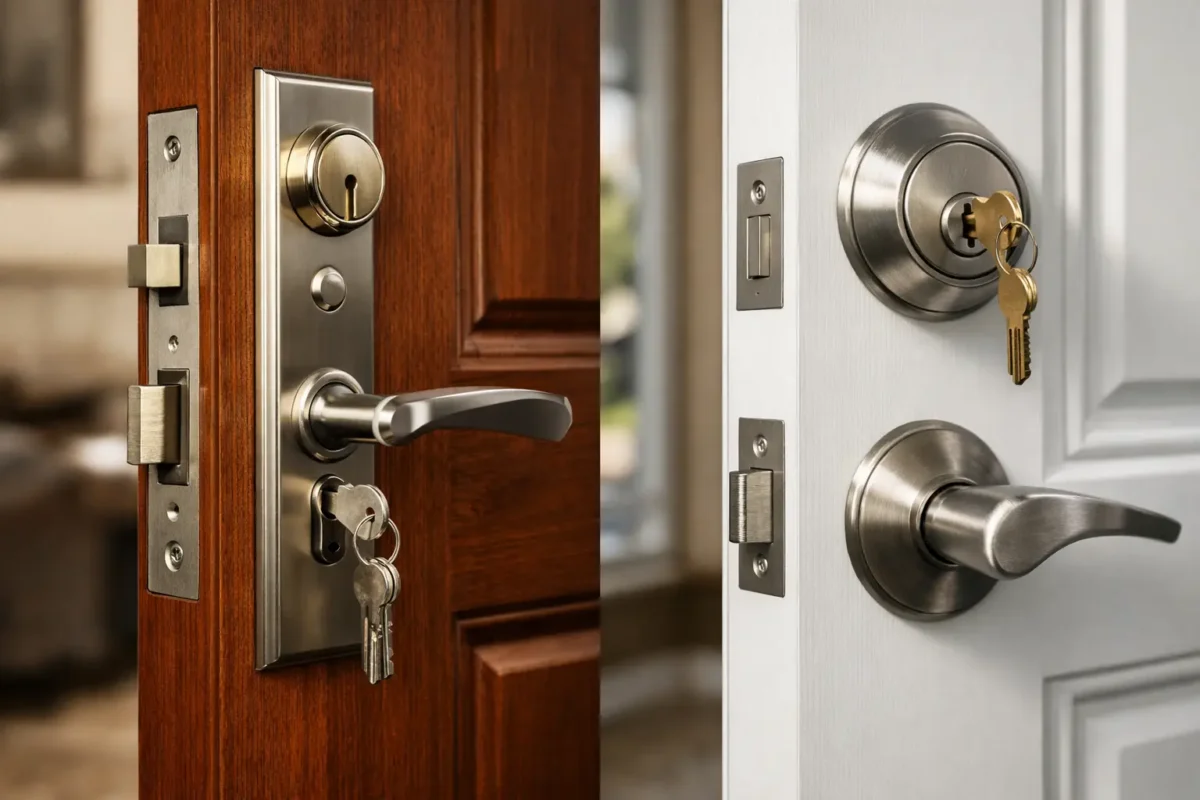
A lock can look solid on the door and still leave a weak point where it matters most. When comparing mortise versus deadbolts, the right choice depends on your door, the type of property, who needs access, and how much daily use the hardware will handle. A homeowner replacing one front-door lock has different needs than a Denver-area business securing a busy entry all day.
Both options can provide dependable security when they are quality products installed correctly. The bigger question is not simply which lock is stronger. It is which lock system fits the door and protects the entry as a whole.
What Is a Deadbolt?
A deadbolt is a lock with a solid metal bolt that extends from the door into the frame. Unlike a spring latch, it does not retract when someone pushes or pulls on the door. It must be turned by a key, thumbturn, or electronic mechanism.
The most familiar version is a single-cylinder deadbolt. It uses a key on the exterior and a thumbturn on the interior. Double-cylinder deadbolts require a key from both sides, while keyless and smart deadbolts may use a keypad, app, fingerprint reader, or other electronic credential.
Deadbolts are commonly installed above a separate doorknob or lever. That makes them a practical option for many residential doors because a locksmith can replace an existing deadbolt or add one without rebuilding the entire door edge.
A good deadbolt can be an excellent residential security choice, especially when it has a properly reinforced strike plate and long screws that reach the wall framing. The bolt is only one part of the system. If the strike plate, jamb, hinges, or door itself are weak, even a high-quality deadbolt cannot perform at its best.
What Is a Mortise Lock?
A mortise lock is a lock body installed inside a rectangular pocket, called a mortise, cut into the edge of the door. Rather than adding a separate deadbolt above a knob, a mortise lockset typically combines several functions in one internal case. Depending on the hardware, it may include a latch, a deadbolt, a keyed cylinder, interior thumbturn, and lever or handle trim.
Mortise locks are common on commercial storefronts, apartment buildings, offices, older homes, and heavy entry doors. They are designed for frequent use and can support more complex hardware arrangements than many standard residential locksets.
Because the lock body sits inside the door, installation is more involved. The door must be measured carefully and cut accurately. Replacing a mortise lock also requires matching the existing door preparation, backset, cylinder type, handing, and trim whenever possible. This is not a job for guesswork with a drill.
Mortise Versus Deadbolts: The Main Differences
The clearest difference is the design. A standard deadbolt is usually one dedicated locking component mounted through a round bore in the door. A mortise lock is a complete internal lock case that can handle both latching and deadbolting functions.
That difference affects strength, convenience, repair options, and the kind of door each lock works best with.
Security depends on the full installation
A quality mortise lock can offer very strong security because it uses substantial internal hardware and is often installed on commercial-grade doors. Many mortise systems also work with high-security cylinders and restricted key systems, which can be useful where key control matters.
A quality deadbolt can also be highly secure. On a solid exterior door with a reinforced frame, a properly installed deadbolt is a proven and effective solution. It is often the right answer for a house, condo, rental unit, side door, or garage-entry door.
Neither label automatically guarantees better protection. A low-grade mortise lock installed in a damaged door is not a security upgrade. Likewise, a well-made deadbolt installed with a reinforced strike can provide far more protection than many people expect.
Daily traffic changes the equation
For a front door that opens a few times a day, a deadbolt and separate lever can be simple, familiar, and easy to maintain. If the lock wears out or a key is lost, replacement or rekeying is usually straightforward.
For a busy office, retail entrance, multi-tenant building, or door exposed to constant use, a mortise lock often makes more sense. Its internal components are built to manage repeated latching and locking cycles. It can also support commercial levers, panic hardware coordination, master key systems, and certain access control setups.
A door used by employees, customers, delivery drivers, or tenants all day needs hardware selected for traffic, not just appearance. Choosing residential-grade hardware for a demanding commercial door can lead to premature wear and avoidable lockouts.
Installation is not interchangeable
Deadbolts are generally easier to add, replace, or upgrade. If the door already has a standard deadbolt bore, a compatible replacement may require limited modification. That can make deadbolts a practical security upgrade after a move, a lost key, or a tenant change.
Mortise locks require a door that is prepared for them or can safely be modified. Cutting a mortise into a thin, cracked, hollow, or damaged door may not be appropriate. Replacing a mortise lock with a standard deadbolt can also leave large holes or weaken the door unless the conversion is planned carefully.
Before changing hardware, a locksmith should inspect the door thickness, edge condition, frame alignment, existing cutouts, and how the door closes. A lock that binds because the door is sagging will eventually become a key, latch, or bolt problem.
Key control and access needs may decide it
A basic deadbolt is ideal when one household needs a few keys and uncomplicated access. It can also be rekeyed after a move, lost key, or change in occupancy, allowing the lock hardware to stay in place.
Mortise systems are especially useful when several doors, employees, tenants, or maintenance staff need organized access. They can be configured for master keying, interchangeable or removable cylinders in some applications, and commercial access credentials. The exact options depend on the lock body and cylinder format.
For a rental property or business, key control deserves serious attention. If you do not know who may still have a working key, rekeying or changing the lock is a practical first step. For high-turnover properties, a locksmith can recommend a system that makes future changes easier to manage.
When a Deadbolt Is Usually the Better Choice
A deadbolt is often the better fit for a standard residential exterior door, especially if the door has a separate knob or lever and a conventional round lock opening. It provides a clear security improvement without requiring major door alterations.
It is also a good choice when you want simple operation, easy replacement options, or a smart-lock upgrade. Many smart deadbolts fit common residential door preparations, though the door must still align properly with the strike for reliable locking.
For glass-adjacent doors, think carefully about interior operation. A thumbturn is convenient, but if glass near the lock can be broken, someone may be able to reach it. The right setup depends on the door design, local fire and building requirements, and how occupants need to exit in an emergency.
When a Mortise Lock Is Usually the Better Choice
A mortise lock is usually worth considering when the door already has mortise preparation, when it is a heavy commercial door, or when the entry gets constant use. It is also a strong option for older doors with existing mortise hardware, where preserving the door and fitting compatible replacement parts is preferable to a conversion.
Businesses may benefit from mortise hardware when they need durable levers, coordinated latching and deadbolting, master key systems, or access control planning. Property managers may also prefer mortise systems on common doors because the hardware can be serviceable without replacing the entire entry setup.
The trade-off is complexity. Proper mortise lock installation and repair require accurate measurements and compatible parts. A professional assessment can prevent a replacement that looks close but does not align, latch, or secure correctly.
Do Not Overlook the Door Frame
Most forced-entry damage happens at the frame, not through the lock cylinder. Whether you choose a mortise lock or a deadbolt, inspect the strike plate, screws, jamb, hinges, and door material. A reinforced strike plate attached to solid framing can make a meaningful difference.
Also check the cylinder and keyway. If a key is difficult to turn, the problem may be alignment rather than the lock itself. Forcing a key can break it inside the cylinder and turn a minor adjustment into an urgent service call.
If your exterior door is sticking, your deadbolt does not throw fully, or a mortise latch is failing to catch, address it before the lock stops working completely. BS Locksmith can inspect the full entry, explain the practical options, and install or rekey hardware that fits the way your property is used.
The best lock is the one that matches a sound door, a reinforced frame, and your real access needs. Start there, and the choice becomes much clearer.