
Smart Lock Installation Cost Explained
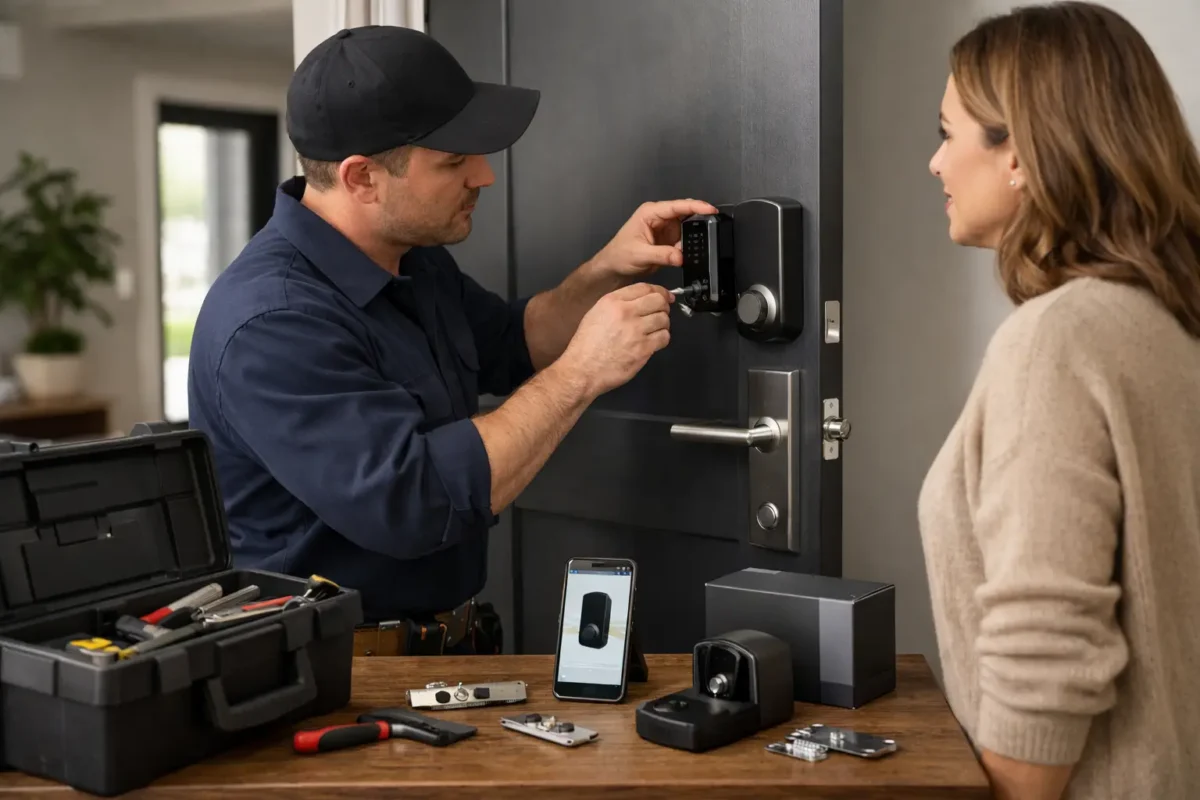
A smart lock sounds simple until the install starts fighting back. The door is slightly misaligned, the deadbolt sticks, the existing holes are off, or the new lock needs app setup and calibration before it works the way it should. That is why smart lock installation cost can vary more than most homeowners expect.
If you are planning a security upgrade, the real question is not just what the lock costs. It is what the full job involves. A basic swap on a standard door is one thing. A retrofit on an older door, a keypad lock for a rental, or a smart lock tied into a business entry system is something else entirely. Knowing what changes the price helps you avoid surprises and make a better decision.
What affects smart lock installation cost?
The biggest factor is the type of smart lock being installed. Some models are built to replace an existing deadbolt with minimal changes. Others require a full hardware change, extra door prep, Wi-Fi bridge setup, keypad programming, or integration with a larger access system. The more features involved, the more labor the install usually requires.
Your current door matters just as much as the lock itself. If the existing deadbolt lines up well, the bore holes are standard, and the door closes cleanly, installation is usually more straightforward. If the door is warped, the strike plate is off, or the latch binds, a locksmith may need to correct those issues before the smart lock can work reliably.
Material and door style also play a role. A standard residential wood door is usually simpler than a metal security door, a thick commercial door, or a glass storefront setup with specialized hardware. In those cases, the lock may be only one part of the project.
Basic install versus problem-solving
When people search for smart lock installation cost, they are often imagining a clean swap. Old lock comes off, new lock goes on, and everything works right away. Sometimes it really is that simple.
But locksmith work often includes problem-solving that is not obvious until the technician is on-site. A deadbolt that drags, a door frame that has shifted, stripped screws, or a poorly fitted existing lock can add time. That does not mean anything is wrong with choosing a smart lock. It just means the condition of the door affects the job.
This is especially common in older homes and rental properties where hardware has been changed more than once. One lock may have been installed slightly off-center, another may have left enlarged holes, and now the new smart lock has to be fitted correctly so it locks every time. A proper install is not just about getting it attached. It is about making sure the door secures smoothly and consistently.
The lock you choose changes the work
Not all smart locks install the same way. A keypad deadbolt is different from a lever-style smart lock, and both are different from a lock that connects to a smart home platform or requires a separate hub. Some need only mechanical installation and basic programming. Others involve user code setup, app pairing, firmware updates, and connectivity checks.
Battery-powered models are often simpler than hardwired options, but even battery-powered locks can become tricky if the fit is tight or the alignment is off. If the motor inside the smart lock has to fight the door every time it locks, performance suffers. That is one reason professional installation can matter. The goal is not just to mount the hardware but to make sure it operates the way the manufacturer intended.
For landlords and property managers, the setup may include creating multiple codes, setting up master access, or making sure turnover between tenants is simple. For small businesses, the concern may be scheduling access for staff or matching the new lock with existing security hardware. The lock may be marketed as plug-and-play, but the real-world setup can still vary quite a bit.
Residential and commercial jobs are not priced the same
A smart lock on a front door at home is usually more straightforward than a commercial install. Homes tend to use familiar deadbolt formats, and the main goals are convenience, keyless entry, and better control over who has access.
Commercial doors can be a different story. The door may have panic hardware, narrow stile hardware, ADA considerations, or existing access control components that affect compatibility. In that setting, smart lock installation cost is influenced by how the new device fits into the broader security setup, not just whether it can replace the old lock.
That does not mean commercial installation has to be complicated. It means the planning matters more. A locksmith needs to look at the hardware already in place, how the door is used during business hours, and whether the lock needs to support multiple users, scheduled access, or higher traffic.
Why labor varies from one job to another
Labor is not only about time. It is also about the skill required to make the lock reliable.
A rushed install can leave you with a keypad that works sometimes, a bolt that sticks, or an app-enabled lock that disconnects because the setup was never finished correctly. A proper job includes fitting, alignment, testing, and making sure the lock responds the way it should from both the inside and outside.
Some installations also include removal of old hardware, light door modification, strike adjustments, and customer walkthrough. That walkthrough matters more than people think. If you do not know how to change codes, replace batteries, use backup entry, or handle lockout settings, the smart features can turn into frustration fast.
DIY can save money, but not always
Some homeowners are comfortable installing smart locks themselves, especially when replacing a newer deadbolt on a standard door. If the lock is compatible and the door is already in good shape, a DIY install may go smoothly.
The trade-off is that smart locks are less forgiving than standard hardware when alignment is off. Traditional deadbolts can sometimes still function with a little drag. Motorized smart locks often cannot. If the bolt does not move cleanly, you may end up troubleshooting battery drain, failed locking cycles, or app errors that are really door-fit issues.
There is also the risk of damaging the new hardware or the door during installation. If extra drilling, patching, or correction is needed after a failed attempt, the project can become more expensive and more time-consuming than expected.
For many people, professional installation is less about avoiding work and more about avoiding repeat work.
Questions to ask before booking smart lock installation
A good starting point is to ask whether your current door and lock setup are compatible with the smart lock you want. If you have not bought the hardware yet, it also helps to ask what type of lock makes sense for your door, your security goals, and how many users need access.
You should also ask what is included in the installation itself. Some jobs are limited to mounting the lock, while others include programming, testing, adjustment, and user setup. If you are replacing old or damaged hardware, mention that upfront. The more complete the picture, the easier it is to understand what the job involves.
For rental properties or offices, think beyond the first install. Ask how easy it is to change codes, manage access, and maintain the lock over time. A lower upfront cost is not always the better value if the lock becomes difficult to manage later.
Smart lock installation cost is really about fit and function
The reason there is no one-size-fits-all answer is simple. Smart lock installation cost depends on the lock, the door, the condition of the existing hardware, and how much setup is needed after the lock is mounted.
That is not a bad thing. It just means the best install is the one that fits your door correctly, works every time, and matches how you actually use the space. A front door for a busy family, a rental turnover unit, and a small business entry all have different needs.
If you are upgrading to a smart lock, it helps to think past the box on the shelf. The lock is only part of the job. The real value is having a secure door, dependable access, and hardware that works the first time you need it to.