
Commercial Locksmith Versus Handyman Explained
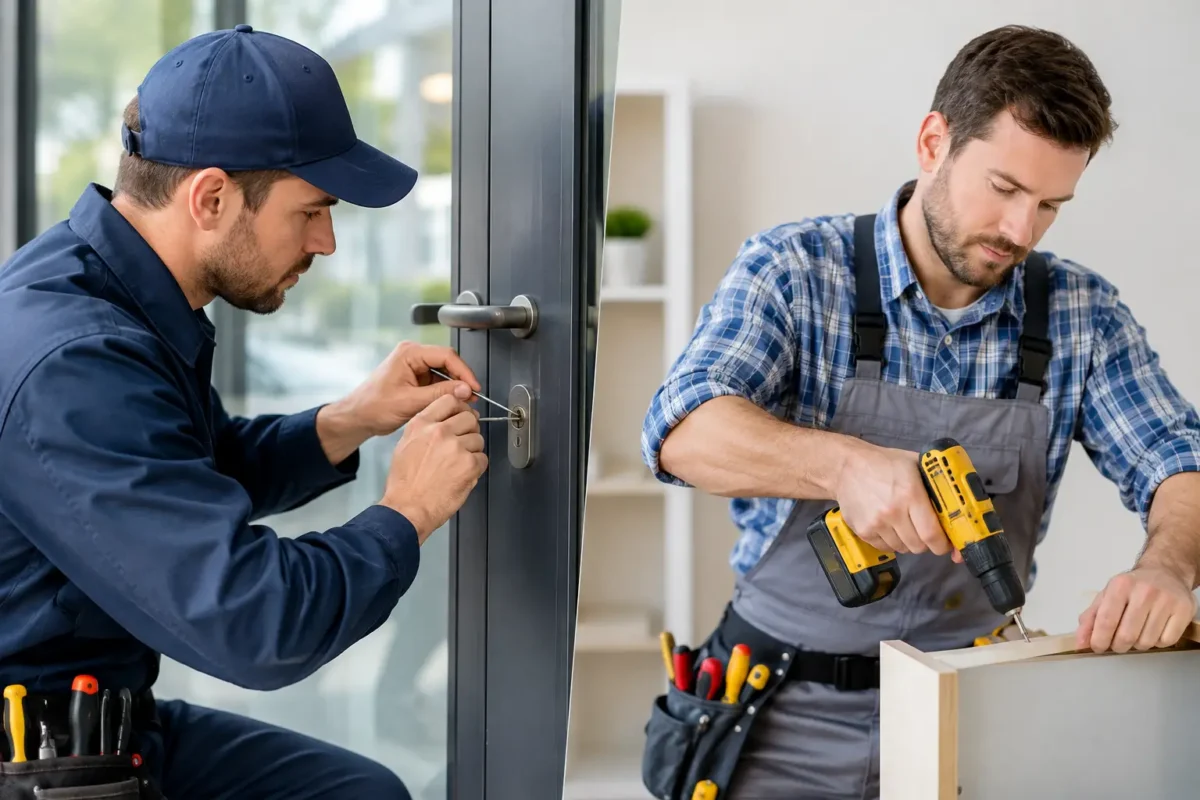
A sticking office door, a lost master key, or a lock that no longer latches may look like a small maintenance issue. But the commercial locksmith versus handyman decision can affect who has access to your building, whether a door closes correctly, and how well your business is protected after the work is done.
For many routine building repairs, a handyman is a practical choice. For work involving keys, cylinders, exit doors, credentialed access, or security hardware, a commercial locksmith brings the specialized knowledge that the job requires. The right choice depends on the problem, the door, and the security risk behind it.
Commercial Locksmith Versus Handyman: The Main Difference
A handyman typically handles a broad range of property maintenance tasks. That may include minor door adjustments, patching walls, replacing trim, mounting signage, repairing cabinets, or correcting a loose hinge. This broad skill set is useful when a business has a list of general repairs to address.
A commercial locksmith focuses on the systems that control entry and exit. That includes lock cylinders, keys, panic hardware, door closers, high-security locks, electronic access control, master key systems, and compatible door hardware. The goal is not simply to get a door working again. It is to make sure the opening is secure, usable, and configured for the people who should have access.
There is some overlap. For example, a loose strike plate may need repositioning, and a door that drags on the threshold may need a hinge adjustment before a lock can operate properly. A capable locksmith can identify when the lock issue is actually caused by the door or frame. Likewise, a handyman may be able to correct a simple non-security-related door issue. The key is knowing when a small repair has become a security or life-safety concern.
When a Handyman May Be the Right Call
A handyman can be a sensible option when the issue is clearly part of general building upkeep and does not involve changing who can enter the property. If a closet door needs a new pull, an interior non-locking door needs minor alignment, or office furniture and cabinetry need repair, those are usually maintenance jobs.
Handymen can also be helpful before or alongside locksmith work. A damaged wall around a door frame, worn weatherstripping, or a badly sagging door may need repair so that new security hardware can function as intended. In these cases, the handyman handles the surrounding construction or finish work while the locksmith addresses the lock and hardware setup.
The decision changes when a repair involves a keyed lock, a controlled opening, an exterior entry, or an exit path. A door can appear to have a simple alignment problem while actually placing pressure on the latch, preventing a deadbolt from extending fully, or interfering with panic hardware. Those details matter in commercial settings.
When to Call a Commercial Locksmith
Call a commercial locksmith when the work affects access, key control, emergency egress, or the security of business assets. This includes a broken lock, a lost employee key, a tenant turnover, a failed keycard reader, a door that will not lock, or a need to limit access to certain rooms.
Rekeying is a common example. When keys are lost, employees leave, or a business moves into a new suite, rekeying lets you change which existing keys work without necessarily replacing every piece of hardware. A locksmith can assess the condition and type of cylinders, determine whether the locks can be rekeyed, and set up an organized key plan where appropriate.
Commercial locksmiths are also the right fit for master key systems. These systems give different people different levels of access – for example, a manager may access all storage rooms, while staff members can access only the rooms needed for their work. Setting this up correctly requires planning. Poor key control can create confusion, duplicate-key problems, and unnecessary exposure over time.
Electronic access control is another clear locksmith job. Keypads, fobs, card readers, smart locks, and door strikes must work together with the door, lock, power source, and exit hardware. A good installation considers daily traffic, staff turnover, restricted areas, and how occupants will exit safely during an emergency.
Exit Doors Need Special Attention
Exit doors are not ordinary doors. Many commercial buildings use panic bars, exit devices, door closers, and other hardware designed to let people leave quickly. Hardware on these openings should not be modified casually because a change that seems harmless can affect operation or code compliance.
If an exit device sticks, fails to latch, has been damaged, or is difficult to open, have a commercial locksmith inspect it. The same applies to doors that must remain secure from the outside while allowing free exit from the inside. The hardware has to do both jobs correctly.
Why Commercial Hardware Is More Complex Than It Looks
A lock is only one part of a commercial opening. The door material, frame, hinges, latch, strike, closer, threshold, and weather conditions all affect how the hardware works. If the latch does not align with the strike, for example, forcing the lock may damage the cylinder or make the door less secure.
Commercial doors also experience heavier use than most residential doors. Employees, customers, deliveries, and service providers may use the same entrance all day. Over time, normal movement in the frame or hinges can create problems that show up as a lock issue. A locksmith evaluates the full opening so the repair addresses the cause, not only the symptom.
Hardware compatibility matters too. A replacement lock has to fit the door preparation, work with the existing exit hardware, and provide the level of security the business needs. A storefront, medical office, warehouse, retail shop, and small professional office may all require different solutions.
Questions to Ask Before You Schedule Service
Before deciding who to call, start with a few practical questions. Does the issue involve a key, lock, credential, or restricted-access area? Is the door an exterior entry or an exit door? Has a key been lost, copied without authorization, or kept by a former employee? Does the problem affect a customer-facing entrance, cash storage area, server room, or supply room?
If the answer is yes to any of these, a commercial locksmith is usually the better starting point. The same is true if you are unsure whether the door is fire-rated, part of an exit route, or connected to an access control system. It is easier to evaluate the hardware first than to repair one part and later discover that the lock, door, or access plan needs a different approach.
For property managers, it also helps to keep records of who holds keys and which doors are on each key system. That simple habit makes rekeys, tenant changes, and emergency decisions much easier. It can also reduce the need to replace hardware unnecessarily.
Choosing the Right Help for Urgent Problems
Some problems cannot wait for the next maintenance visit. A business may be unable to secure its doors after a break-in, a key may snap in the lock, or an employee may be locked out before opening. These situations call for a locksmith who can respond on-site and restore secure access without creating a new security gap.
For Denver Metro businesses, BS Locksmith provides mobile commercial locksmith support for lockouts, rekeying, lock changes, commercial door hardware, and access control needs. A professional inspection can clarify whether the solution is a simple repair, a rekey, a replacement cylinder, or a larger security upgrade.
The best choice is not about making every repair more complicated than it needs to be. It is about assigning the job to the person who can protect the building, the people inside it, and the access plan your business relies on. When keys, locks, or exit hardware are involved, getting the right help early keeps a small problem from becoming a bigger disruption.