Best Locks for Apartments Renters Can Install
A standard apartment door lock can feel like the weakest part of your home, especially after a lost key, a former roommate moves out, or you notice the deadbolt is loose. The best locks for apartments improve security without putting you in conflict with your lease or damaging a door you do not own.
For most renters, the right answer is not simply buying the strongest lock on the shelf. It is choosing a lock that fits the door, follows building rules, and gives you a reliable way to secure your unit every day. For landlords and property managers, it means selecting durable hardware that is easy to manage between tenants.
Start With Your Lease and Building Rules
Before replacing any lock, check your lease and ask the property manager what changes are permitted. Many apartment communities require management to retain access for maintenance and emergencies. Some also require approval before you drill new holes, replace a deadbolt, or install a keypad lock.
A renter may be allowed to add a temporary interior security device, replace hardware if the original lock is reinstalled at move-out, or have a professional rekey the lock with management approval. Other buildings will handle every lock change themselves. Do not assume a new deadbolt is allowed simply because it fits the door.
Common exterior doors, building entry doors, mailboxes, garage gates, and shared storage areas are not personal apartment hardware. Altering them can affect everyone in the building and should be handled by property management or an authorized locksmith.
Best Locks for Apartments by Situation
The best option depends on whether you rent, manage the property, need keyless access, or need a temporary layer of protection. A quality lock is only useful when it is installed correctly and works with the door and frame.
A Grade 1 or Grade 2 deadbolt for a permanent upgrade
For a landlord-approved lock replacement, a single-cylinder deadbolt is the practical standard for most apartment entry doors. Look for an ANSI Grade 1 or Grade 2 rating. Grade 1 is built for heavier-duty use, while Grade 2 is a strong residential choice. Either can be a meaningful improvement over a worn, low-quality deadbolt.
A single-cylinder deadbolt uses a key outside and a thumb turn inside. This is common for apartment doors because it allows a quick exit without a key. If the door has glass close to the lock, however, the property manager should determine the appropriate hardware and local code requirements. A double-cylinder deadbolt may seem more secure, but it can create an exit safety concern and may not be permitted.
The lock body matters, but the strike plate matters too. A long reinforced strike plate secured with properly sized screws helps anchor the lock to the door frame rather than just the trim. This is often where a professional installation makes a real difference.
A retrofit smart lock for renters who want keyless entry
A retrofit smart lock is often one of the most renter-friendly choices. Instead of replacing the exterior keyed portion of the deadbolt, it replaces or attaches to the interior thumb-turn assembly. The outside of the door can remain unchanged, which may help preserve the building’s existing key system.
This setup lets you lock or unlock the door with an app, keypad accessory, code, or phone, depending on the model. It can be useful when you regularly carry groceries, share access with a partner, or want to avoid making extra keys.
There are trade-offs. Check that the lock works with your existing deadbolt and that the door does not bind when it closes. Smart locks also need battery maintenance. Keep the physical key accessible, understand the manual override procedure, and avoid relying solely on a phone during a dead battery or connectivity problem.
A keypad deadbolt for managed rentals and frequent access changes
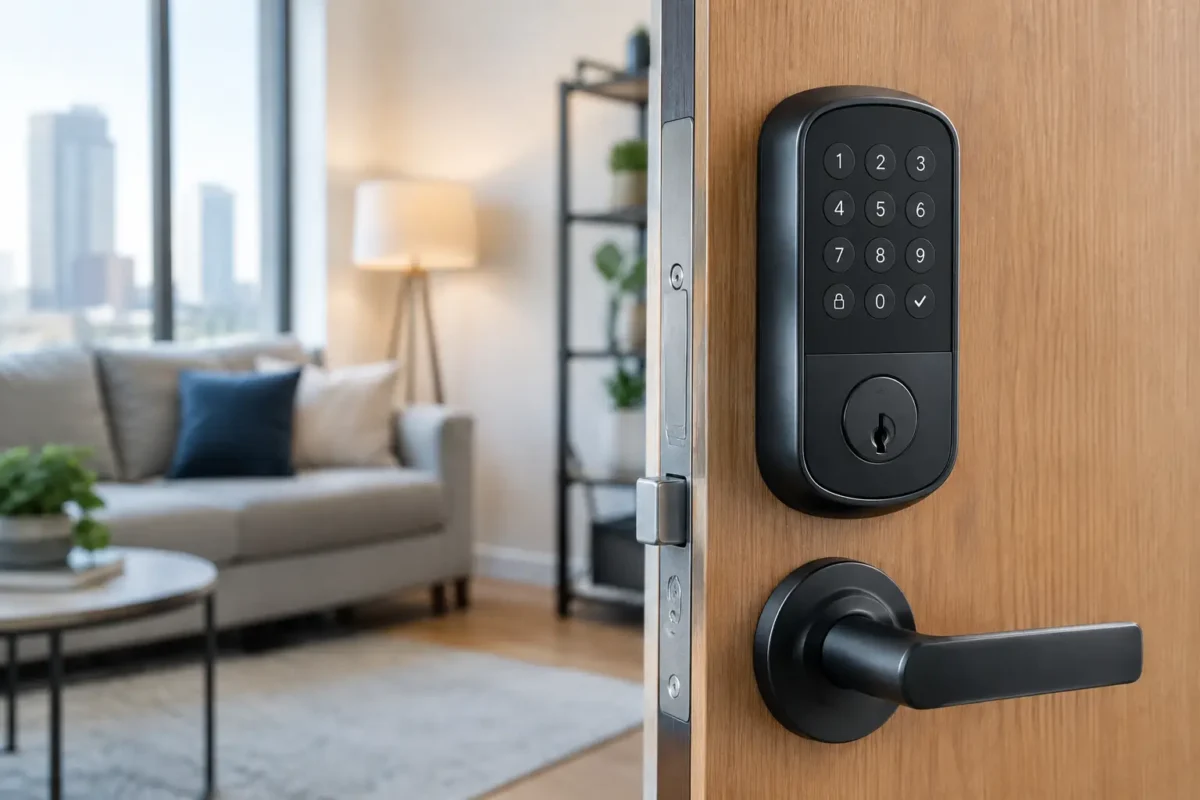
A full keypad deadbolt replaces the current deadbolt and allows entry by code. This can be a good fit for landlords, property managers, or renters with written approval. Codes are easier to change than keys, which is helpful after a tenant turnover, staff change, or roommate move-out.
For a rental unit, choose a keypad lock with a physical key override and a low-battery warning. A model that supports multiple user codes can also make access management easier. The downside is that installation typically requires changing exterior hardware, so it is not the best first choice for a renter without permission.
A portable door lock or door jammer for temporary interior security
Portable door locks and door jammers can add an interior layer of resistance without permanently changing the door. These devices are especially useful for renters who want more control while they are home, provided the door design is compatible.
They are not a replacement for a properly functioning deadbolt. They also should not interfere with your ability to leave quickly in an emergency. Test any temporary device while you are inside, read its instructions carefully, and never use a product that makes it difficult to exit.
What Makes an Apartment Lock Worth Buying?
Do not judge a lock by its finish or the number of smart features. Start with fit and durability. Apartment doors vary in thickness, backset, bore hole size, latch style, and frame condition. A lock that is technically high quality can still perform poorly if it is forced onto an incompatible door.
For a mechanical deadbolt, prioritize an ANSI grade, a solid bolt, a protected cylinder, and a reinforced strike plate. For a smart lock, also look for dependable battery alerts, a physical key option, simple code management, and compatibility with the existing deadbolt or door preparation.
Think about who needs access. A single renter may prefer a retrofit smart lock that leaves the exterior key unchanged. A household with several occupants may prefer a keypad. A property manager may need a system that supports authorized rekeying or controlled access between tenants. The best choice is the one that solves the actual access problem without creating a new one.
When Rekeying Is Better Than Replacing the Lock
If the lock works well but you are worried that an old key may still be out there, rekeying is often the smarter move. Rekeying changes the pins inside the existing lock cylinder so old keys no longer work. The hardware stays in place, but the key changes.
This is common after a move, a breakup, a roommate change, a lost key, or a maintenance key concern. It can also preserve the matching finish and hardware already approved for the apartment. In a managed building, ask the property manager first because the door may be part of a master-key system.
Replacing the lock makes more sense when the deadbolt is damaged, loose, outdated, difficult to turn, or not providing the level of security you need. A locksmith can inspect the lock, door alignment, latch, and strike plate before recommending whether rekeying or replacement is appropriate.
Avoid These Common Apartment Lock Mistakes
The biggest mistake is installing a lock without permission and discovering at move-out that the original hardware must be restored. Keep any original parts if management approves a temporary replacement, and document the condition of the door before work begins.
Another common problem is ignoring a door that sticks or requires force to lock. Forcing a deadbolt into a misaligned strike can wear out the lock and leave you locked out later. The door, hinges, frame, and strike should align so the bolt extends smoothly.
Finally, do not leave spare keys under a mat, above a door frame, or in another obvious hiding place. If you need backup access, use a trusted person, an approved lockbox where permitted, or a keyless system with properly managed codes.
Get the Installation Right
A lock upgrade should make daily access easier, not create a new lockout risk. If you are unsure what your lease allows, if the current lock is damaged, or if a smart lock will fit your door, a professional can assess the hardware before anything is drilled or replaced.
BS Locksmith helps renters, landlords, and property managers in the Denver Metro area with lock changes, rekeying, smart lock installation, and urgent lock problems. A properly fitted lock and a clear plan for keys or codes can give you more confidence every time you close the door behind you.