
Smart Lock Retrofit Case Study for Rental Homes
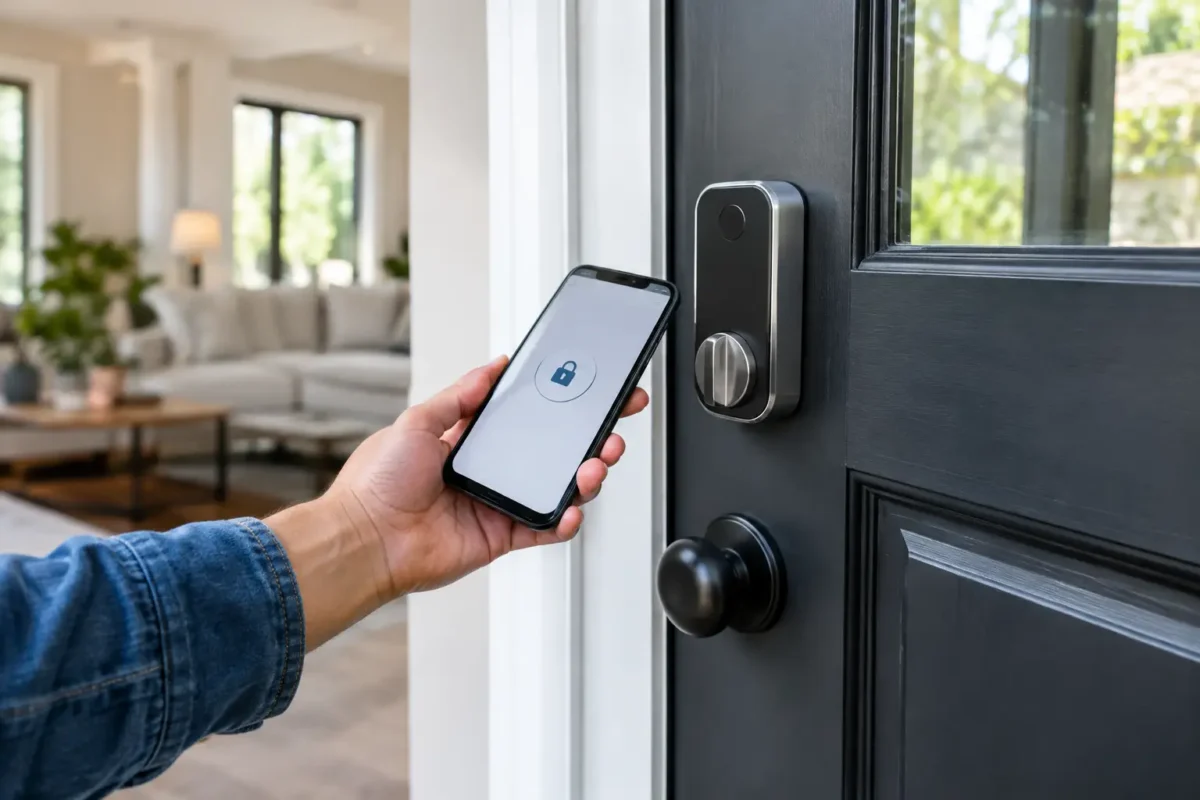
A lost key used to mean a simple replacement. For a rental property, it can also mean a security decision: Who may still have a copy, does the lock need to be rekeyed, and who will meet the next tenant with keys? This smart lock retrofit case study follows a representative Denver-area rental upgrade where the goal was practical access control without replacing a good exterior door or changing the entire lock setup.
The property owner did not need a complicated building system. They needed a reliable way to manage turnover, give access without passing around physical keys, and keep the existing door looking and working right. The result came down to choosing compatible hardware, checking the door before installation, and setting clear rules for codes and backup access.
The property and the access problem
The home was a single-family rental with a standard front entry door, a deadbolt above a separate keyed knob, and a storm door. The existing deadbolt was mechanically sound, and the owner wanted to avoid unnecessary door drilling or replacing hardware that still worked.
The challenge was not just convenience. The owner had dealt with the usual rental issues: keys copied by former occupants, keys returned late, contractors needing entry while the property was vacant, and the need to rekey between tenancies. None of these problems is unusual, but together they create extra coordination and uncertainty.
A smart lock retrofit made sense because it could replace or adapt the deadbolt while leaving the rest of the door intact. The owner could issue individual keypad codes for a tenant, cleaner, or maintenance professional, then remove access when the work was done. A physical key option was still preferred as a backup.
That last detail mattered. Electronic access is useful, but a rental property should not depend on one method of entry. Batteries run down, a phone may be unavailable, and people forget codes. A good retrofit plan keeps a dependable manual backup in place.
Why a retrofit was the right choice
A full lock replacement can be the right move when the existing lock is worn, damaged, low quality, or incompatible with the door. In this case, the deadbolt was in good condition and the door was solid. The owner did not need a major hardware overhaul.
A retrofit offered three practical benefits. First, it reduced changes to the door and trim. This is especially helpful on painted doors, older homes, and rentals where appearance matters. Second, it preserved the familiar hardware layout for residents. Third, it focused the budget on access management rather than replacing components that were not causing a problem.
Not every door is a retrofit candidate. Doors that stick, sag, fail to latch, or have a damaged strike plate should be corrected before adding electronic hardware. A smart lock cannot compensate for poor door alignment. If the bolt rubs against the strike opening, the motor has to work harder every time it locks or unlocks, which can shorten battery life and lead to unreliable operation.
The site check before installation
Before selecting the lock, the installer checked the basics that determine whether a smart lock will work correctly: door thickness, backset, bore hole size, deadbolt type, interior clearance, and the condition of the jamb and strike plate.
The door itself had a common residential setup, but the storm door created an important consideration. Some smart locks have a larger interior or exterior profile than a standard deadbolt. The storm door had to close without pressing against the keypad or exterior housing. This was confirmed before the new hardware was installed.
Door alignment also needed a small adjustment. The deadbolt extended into the strike, but it was not moving freely at every point in the door’s swing. Rather than installing the electronic lock and hoping it would handle the resistance, the strike opening was adjusted so the bolt could extend smoothly. That is a small repair, but it protects the new lock and improves everyday use.
The owner also chose a lock with keypad access, programmable user codes, and a physical key override. Remote app features were considered useful but not essential. That distinction kept the project focused. For some owners, remote management is a priority. For others, a keypad and locally managed codes are simpler and easier to maintain.
Installation and setup
The old deadbolt was removed carefully, with attention to the existing door holes and finish. The new smart lock was installed according to the manufacturer’s specifications, then tested repeatedly with the door open and closed. Testing with the door closed is critical because that is where alignment problems show up.
Once the mechanical operation was confirmed, the owner set up access codes. Instead of using one shared code for everyone, separate codes were created for the property owner, current tenant, and service use. This makes access easier to manage. When a contractor finishes a job, that code can be removed without affecting anyone else.
The tenant code was kept private, while maintenance access was limited to when it was actually needed. If a property has frequent vendors, it may be useful to create separate codes for cleaning, landscaping, repairs, and inspections. For a smaller rental, fewer codes are usually easier to track and less likely to be forgotten.
The owner was also shown how to change batteries before they run low, confirm that the deadbolt throws completely, and use the physical key backup. A smart lock works best when the people using it understand the basics. No app or keypad replaces good door habits, such as making sure the door is fully closed before locking it.
Results for the owner and tenant
The immediate improvement was fewer physical keys in circulation. The owner no longer had to make multiple copies for short-term access or collect every key from service providers. During turnover, the primary tenant code could be deleted and a new one created instead of relying on a key return alone.
For the tenant, the biggest benefit was straightforward entry without carrying an extra house key. That does not mean keys became irrelevant. The physical key remained available for backup, but daily access was simpler.
The property owner also gained a clearer routine for access changes. When a tenant moved out, the steps were no longer vague: remove the old code, inspect the door and lock, confirm the backup key is accounted for, and decide whether the mechanical cylinder should be rekeyed based on the property’s security policy.
A smart lock does not automatically eliminate the need for rekeying. If a prior tenant may possess a physical key, deleting a keypad code does not disable that key. In properties where key control is uncertain, rekeying or changing the cylinder remains the right security step.
What this smart lock retrofit case study teaches
The best result was not simply adding technology to a front door. It was matching the lock to the property and the owner’s actual access needs. The existing deadbolt was suitable, the door was adjusted before installation, and the owner kept a key backup rather than relying solely on electronics.
For homeowners, a retrofit can be a convenient upgrade for family access, guests, and everyday security. For landlords and property managers, it can make turnover and maintenance access easier to organize. But compatibility and door condition matter more than the features printed on the box.
When a smart lock retrofit may not be enough
A retrofit is not the answer for every entry. If the door frame is split, the strike plate is loose, the deadbolt is failing, or the door has been forced before, the hardware and frame should be repaired first. For a commercial space with multiple employees, restricted areas, and regular staffing changes, a broader access control system may be a better fit than a residential smart deadbolt.
Likewise, a property with several exterior doors may need a consistent plan across all entries. Mixing different lock types, code rules, and backup keys can create confusion during an emergency. A locksmith can assess the doors, recommend compatible options, and install the hardware so it operates correctly from day one.
A smart lock should make entry easier to manage, not add another problem to a door that already needs attention. If you are considering a retrofit for a home or rental in Aurora, Denver, Federal Heights, or nearby, start with the door condition and the people who need access. The right setup is the one that stays simple, secure, and dependable after the installation is finished.