
Commercial Lock Guide for Denver Businesses
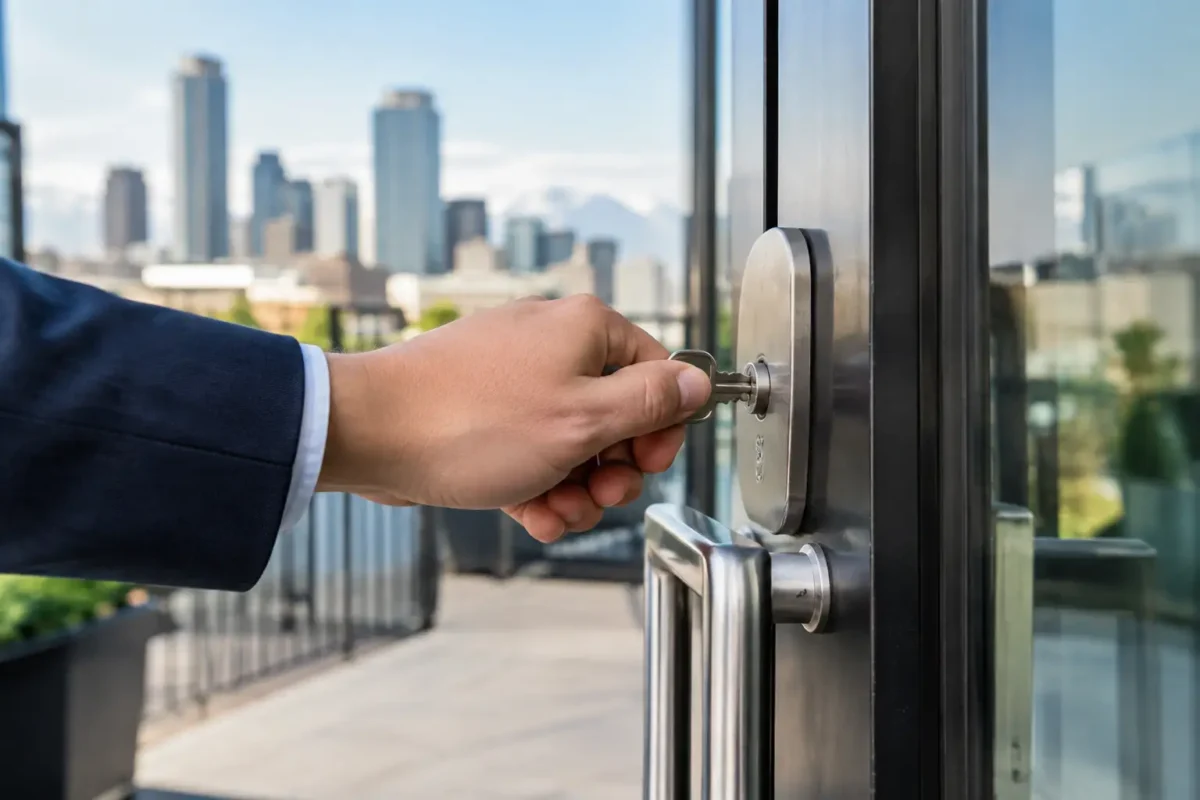
A business door that does not latch, a former employee who still has a key, or a back entrance with worn hardware can turn into a real security problem fast. This commercial lock guide helps Denver-area business owners and property managers make practical decisions about door security before a small issue becomes an emergency.
Commercial security is not just about putting a stronger lock on the front door. The right setup depends on the door, the type of business, who needs access, fire and accessibility requirements, and how quickly you need to change access when staffing changes. A professional locksmith can help match the hardware to the building instead of selling a one-size-fits-all fix.
Start With the Doors That Create the Most Risk
Walk through your property as if you were arriving after hours. The main entrance gets attention, but side doors, employee entrances, storage rooms, rear exits, and shared building doors often need the closer look. Check whether each door closes fully, latches without being pulled or pushed, and has a frame that is in good condition.
A strong commercial lock cannot compensate for a loose strike plate, a warped door, or a door closer that leaves the door partly open. Door hardware works as a system. The lock, latch, frame, hinges, strike, closer, and access method all need to work together.
For many small offices, retail locations, restaurants, and service businesses, the priority is separating public access from employee-only areas. That may mean improving the back door, adding key control to stockrooms, or replacing a basic office lock with hardware that holds up to frequent use. For warehouses, medical offices, apartment common areas, and properties with multiple tenants, access management may be the larger concern.
Commercial Lock Guide: Choose Hardware by Use
The best commercial lock is the one that fits the door’s job. A front entrance used all day needs durable hardware designed for heavy traffic. A storage closet may need controlled access but not the same level of hardware as an exterior door. Choosing based on appearance alone can lead to early wear, inconvenient keying, or a setup that does not meet building requirements.
Cylindrical Locks for Everyday Interior Doors
Cylindrical lever locks are common on office doors, utility rooms, interior employee areas, and some exterior doors. They are familiar, straightforward to operate, and available in several function types. A passage lever does not lock, a privacy lever is intended for spaces such as restrooms, and a keyed entry lever controls access to offices or staff-only rooms.
For business use, commercial-grade hardware matters. Residential knobs and light-duty levers may not last under repeated daily traffic. A locksmith can identify whether a door needs a standard commercial lever, a heavier-duty option, or a different lock style altogether.
Deadbolts for Exterior Security
A deadbolt can add protection to an exterior door when used with compatible hardware and a secure frame. It is often a good choice for a back entrance, private office, or low-traffic exterior door. However, deadbolts are not right for every commercial opening.
On an exit door, occupants must be able to leave quickly and safely. Fire code and life-safety requirements can affect which lock functions are allowed. Never add a double-cylinder deadbolt or other key-required exit hardware simply to prevent unauthorized entry without confirming it is appropriate for that door.
Panic Bars and Exit Devices
Panic bars, also called exit devices, are designed for doors where people may need to exit quickly. They are common in restaurants, retail spaces, schools, assembly areas, and commercial buildings with public traffic. Pressing the bar releases the latch from the inside, while the outside trim can be configured for the access level you need.
If a panic bar sticks, fails to latch, or has been damaged, treat it as a priority repair. It affects both security and safe egress. The same goes for emergency exit doors that have been altered, propped open, or fitted with incompatible add-on locks.
Mortise Locks for High-Traffic Openings
Mortise locks are installed into a pocket cut into the edge of the door. They are often found on older commercial buildings, storefronts, and doors that receive heavy use. They offer flexibility in latch, deadbolt, lever, and key functions, but they require proper installation and servicing.
If a mortise lock becomes difficult to turn, do not force the key or lever. The issue may be internal wear, alignment, or door movement. Repairing the problem early can help avoid a damaged key, lockout, or full hardware failure during business hours.
Key Control Matters as Much as the Lock
A quality lock loses value when too many untracked keys are circulating. Keys can be copied, passed between employees, kept after a job ends, or misplaced without anyone noticing. That does not always mean you need to replace every lock.
Rekeying changes the internal pins so old keys stop working while the existing lock hardware stays in place. It is often a practical choice after employee turnover, a lost master key, a tenant change, or an uncertain key history. Changing the lock may make more sense when the hardware is worn, damaged, outdated, or no longer appropriate for the door.
For businesses with several doors, a master key system can make daily operations easier. Employees can carry one key for the doors they need, while managers have broader access. The trade-off is that planning matters. A poorly organized master key system can create confusion and increase risk if a high-level key is lost. Keep an accurate record of who has keys and what each key opens.
When Electronic Access Control Is Worth It
Keys are simple and reliable, but they are not always easy to manage. Electronic access control can be a better fit when employees change often, multiple shifts use the building, or you need to limit access by door, role, or time of day.
Instead of issuing physical keys, users may enter with a card, fob, keypad code, or mobile credential. When someone leaves, access can be removed without rekeying the entire property. This can be especially useful for offices, clinics, warehouses, shared workspaces, and multi-tenant properties.
Electronic systems also have trade-offs. They need professional installation, power planning, and ongoing administration. Not every door needs electronic access. Many businesses use access control on exterior and sensitive doors while keeping mechanical locks on low-risk interior spaces. A blended system can be cost-effective and easier for staff to use.
Do Not Ignore Door Closers, Frames, and Hinges
Commercial lock problems are often door problems in disguise. If a door sags, strikes the frame incorrectly, or closes too quickly, the latch may not engage as intended. Staff may start slamming the door, propping it open, or leaving it unlocked because it is frustrating to use.
A properly adjusted door closer helps the door close and latch consistently. Reinforced strikes, secure hinges, and a solid frame help the locking hardware do its job. For outward-swinging doors, hinge security deserves special attention because exposed hinge pins can create a weak point if the door was not built with protective features.
When assessing a commercial door, look for four warning signs:
- Keys that stick, spin, or require force to turn
- A latch that misses the strike plate or needs the door pushed to lock
- Loose levers, handles, panic bars, hinges, or door closers
- Doors that are routinely propped open because the hardware is difficult to use
These issues are easier to address before they cause a lockout, break-in concern, or interruption to your workday.
Build a Simple Response Plan for Lost Keys
Lost keys happen. The response should depend on what was lost and what it could access. A misplaced key to a low-risk interior closet is different from a key to the main entrance, alarmed area, or master key system. Avoid waiting until the next day if the key could be connected to your business address or an identifiable employee.
Decide in advance who can authorize rekeying, lock changes, and access updates. Keep the contact information for your property manager, alarm provider, and locksmith available to the people who open and close the business. If an exterior lock is damaged, a key breaks in the cylinder, or an employee cannot secure the building, 24-hour locksmith support can keep the issue from becoming a longer disruption.
BS Locksmith provides mobile commercial locksmith service for businesses in Aurora, Federal Heights, Denver, and nearby communities, including lock repair, rekeying, lock changes, and access control installation. The goal is straightforward: get the door secure and help you choose hardware that works for the way your business operates.
A commercial door should be easy for authorized people to use and difficult for everyone else to defeat. Start with the doors your team relies on most, fix the hardware that is already showing wear, and make sure you know exactly who has access before the next staffing change or lost key forces the issue.