
Commercial Lock Upgrade Guide for Your Business
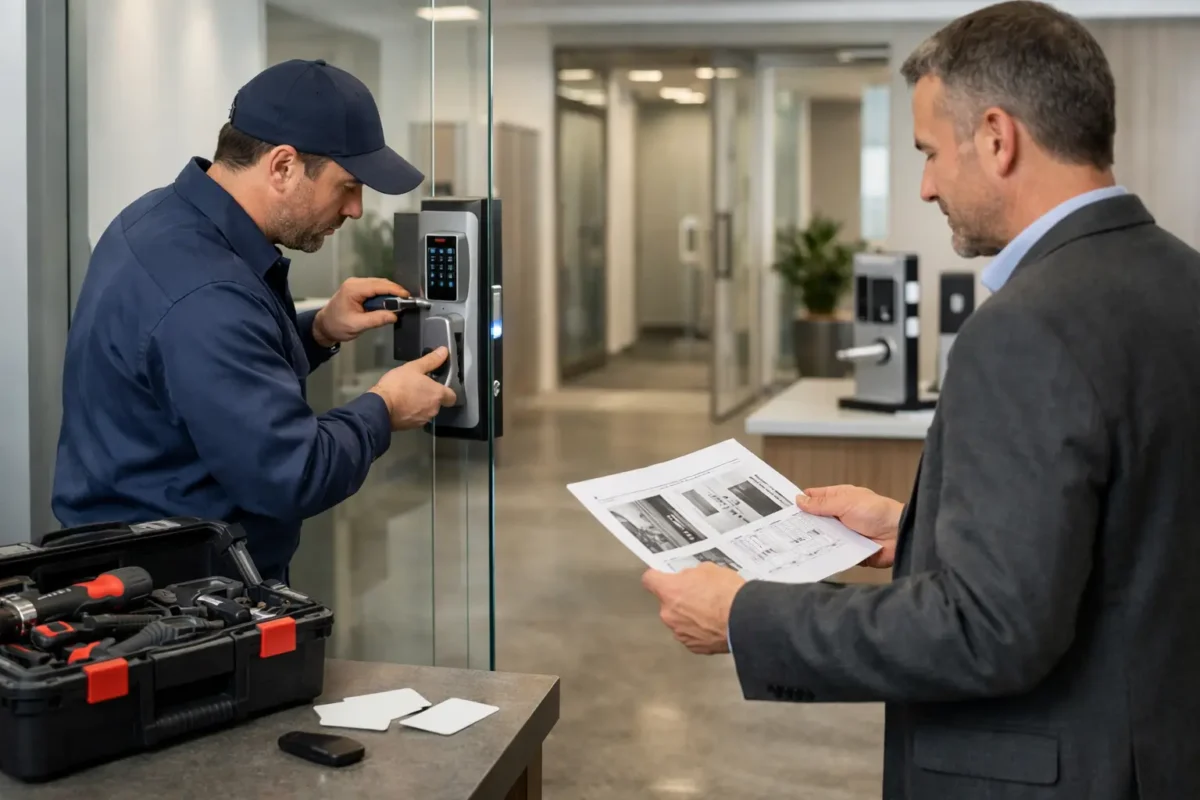
A former employee still has a key. A rear door does not latch unless someone pulls it hard. Different tenants, managers, or vendors have copies of keys nobody can account for. These are the situations a commercial lock upgrade guide should address before they turn into a break-in, a lockout, or a difficult conversation after an incident.
For a small business, office, storefront, warehouse, or multi-tenant property, better security is not always about installing the most complicated system available. It is about making sure the doors, keys, hardware, and access rules match how your business actually operates. The right upgrade gives authorized people convenient access while making it harder for the wrong person to get in.
Start With the Actual Security Problem
Before choosing new locks, look at what is not working. A door that sticks, a loose strike plate, a worn lever, or a damaged frame can defeat the benefit of a new lock. Commercial doors get heavy daily use, especially at customer entrances, staff entrances, delivery doors, and shared corridors.
Key control is often the first concern. If keys have been passed around for years, lost after staff turnover, or copied without approval, rekeying may be the right first move. Rekeying changes the internal pins of the existing lock so old keys stop working. It can be a practical option when the hardware is in good condition and you want to restore control quickly.
Replacement makes more sense when a lock is worn, damaged, outdated, or not suited to the door. A basic residential-style lock on a busy commercial entrance may not hold up to constant use. A commercial-grade lever, deadbolt, mortise lock, or rim cylinder can provide better durability and a better fit for the opening.
Ask a simple question: if someone tried to enter this door after hours, what would stop them? Then ask a second question: can employees and customers leave safely in an emergency? Both answers matter.
Commercial Lock Upgrade Guide: Match the Lock to the Door
Every commercial door has its own demands. The front door of a retail store needs different hardware than the back entrance of a restaurant, an office suite, or a storage room. Choosing hardware by appearance alone can create problems with security, code compliance, and daily use.
Exterior entry doors
Exterior doors generally need commercial-grade locking hardware designed for frequent use and exposure to weather. Depending on the door and building layout, an upgrade may include a heavy-duty deadbolt, lever lock, mortise lock, keypad lock, or electronic access control. The lock should work with the door material, frame, and existing preparation instead of being forced into an unsuitable opening.
For glass storefront doors, the hardware must be chosen carefully. These doors often use narrow-stile or aluminum-door systems that require specific lock bodies and cylinders. A professional assessment helps avoid installing a lock that does not align correctly or leaves the door difficult to secure.
Interior offices and restricted rooms
Not every interior door needs the same level of protection. Private offices, server rooms, supply closets, medication storage, records rooms, and cash-handling areas may need separate access rules. A keyed lever may be enough for one room, while another may benefit from a restricted keyway or electronic credential access.
The goal is not to create unnecessary barriers. It is to limit access where it has a clear purpose. When fewer people can enter sensitive areas, it is easier to manage responsibility and investigate a problem if one occurs.
Exit doors and life-safety hardware
Exit doors are not ordinary lock installations. They must allow people to leave quickly and safely, and the hardware may need to meet local building and fire code requirements. Panic bars, exit devices, door closers, and exterior trim all need to work together.
Do not add a lock to an exit door simply because it seems more secure. A change that prevents free egress can create a serious safety issue. Commercial locksmiths can help identify hardware that improves exterior security without interfering with the way occupants exit the building.
Choose the Right Level of Key Control
Traditional keys remain a reliable option for many Denver-area businesses, but not all key systems are equal. Standard keys are convenient and affordable, yet they can be copied easily if there is no clear process for issuing and collecting them.
A restricted key system gives the business more control over duplication. This can be useful for property managers, medical offices, professional offices, and businesses with multiple doors or frequent staff changes. The trade-off is that authorized replacement keys must be handled through the proper channel, which adds a little more administration. For many businesses, that added control is worth it.
Master key systems can also simplify access. One manager may carry a key that opens several approved doors, while individual employees carry keys that open only their assigned areas. This reduces the number of keys people need, but it must be designed carefully. A poorly planned master key system can become confusing and difficult to maintain as tenants, departments, or employees change.
Keep a current key record, even if the business has only a few locks. Record who has each key, which doors it opens, and when it was issued. When an employee leaves or a key goes missing, you can make a clear decision about rekeying rather than guessing how much exposure exists.
Consider Electronic Access When Keys Are Hard to Manage
Electronic access control can be a strong upgrade for businesses that need more flexibility than metal keys provide. Instead of cutting a new key or rekeying a door each time access changes, you can add or remove approved users through the system.
Keypads, card readers, fobs, mobile credentials, and scheduled access can all make sense depending on the size of the business. A small office may benefit from a keypad at a staff entrance. A larger operation with multiple employees, shifts, or restricted rooms may need a broader access control setup.
Electronic systems offer useful accountability because they can show which credential was used at a door and when. That does not replace good management, but it can help clarify activity around sensitive areas. It also reduces the headache of recovering keys from every employee at the end of employment.
There are trade-offs. Electronic access requires reliable installation, power considerations, and a plan for credentials, backups, and system administration. It should also be paired with properly functioning door hardware. A reader will not solve a weak door frame, failed closer, or misaligned latch.
Do Not Ignore the Hardware Around the Lock
A lock works as part of a complete door system. If the door does not close fully, the latch may not engage. If the strike plate is loose or the frame is damaged, the door may be vulnerable even with a quality cylinder. If a closer slams the door or fails to close it, employees may start propping it open just to avoid frustration.
During a commercial security upgrade, inspect the door, hinges, frame, strike, closer, weatherstripping, and latch alignment. Exterior doors can shift over time because of weather, building movement, or heavy use. Correcting those issues improves security and makes the door easier for staff to use.
For higher-risk entries, consider whether reinforcement is needed at the strike area, hinge side, or frame. The best choice depends on the door construction and the type of business. A storefront, office suite, and warehouse loading area do not face the same risks.
Plan the Upgrade Without Disrupting Your Business
A good upgrade starts with a simple plan. You do not need to replace every lock at once if the highest-priority doors can be addressed first. Focus on the entrances, sensitive rooms, and doors with known key-control problems.
For a smoother project, take these steps:
- List every door that requires a key, code, credential, or exit device.
- Identify who needs access to each door and at what times.
- Note doors that stick, fail to latch, have damaged hardware, or are routinely propped open.
- Decide who will be responsible for keys, credentials, employee changes, and future service.
This information helps prevent wasted upgrades. For example, installing a keypad on a door is not helpful if the door has a failing closer and never latches consistently. Likewise, rekeying a single office may not solve the problem if old exterior keys are still unaccounted for.
Know When to Rekey, Replace, or Call for Immediate Help
Rekeying is a practical response after lost keys, employee turnover, tenant turnover, or uncertainty about who has copies. Replacing locks is usually the better choice when the hardware is damaged, unreliable, outdated, or unsuitable for the door.
Immediate service may be needed when a business cannot secure its entrance, a key breaks in the lock, a lock is damaged after an attempted break-in, or an employee is locked out of a critical area. In those moments, the priority is restoring safe access or securing the door without creating additional damage.
For planned upgrades, a mobile commercial locksmith can inspect the hardware on-site and recommend options that fit the door, the level of traffic, and your access needs. BS Locksmith serves businesses throughout Aurora, Federal Heights, Denver, and surrounding Colorado communities with commercial rekeying, lock replacement, exit hardware support, and access control solutions.
Your business does not need a complicated security plan to be better protected. Start with the doors people use every day, fix the weak points you already know about, and make sure you can account for who has access when it matters.