
Electronic Lock Versus Traditional Lock Compared
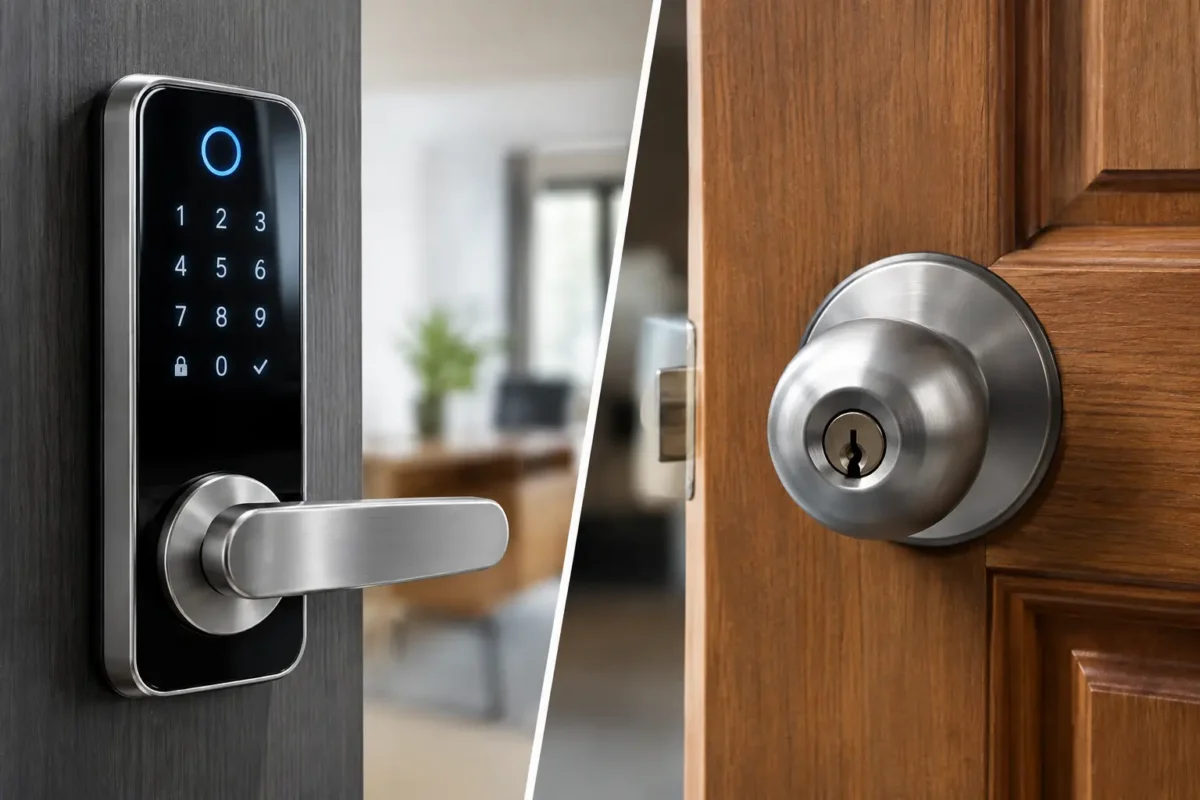
A lost house key at 10 p.m., an employee who never returned a key, or a rental turnover can change the electronic lock versus traditional lock question from a casual upgrade idea into an immediate security decision. Both options can protect a door well when the hardware is properly selected and installed. The better choice comes down to how many people need access, how often access changes, and what happens when power or a key is unavailable.
For many Denver-area homes, a quality deadbolt and well-managed keys remain the right answer. For a busy household, rental, office, or shop, an electronic lock can remove much of the key handoff problem. The goal is not to choose the newest hardware. It is to choose a lock that fits the door, the people using it, and the level of control you need.
Electronic Lock Versus Traditional Lock: The Basic Difference
A traditional lock uses a physical key to operate a cylinder, usually paired with a deadbolt or lever. Security depends on the quality of the lock, the strength of the door and frame, correct installation, and control of every issued key. If a key is copied, lost, or kept by someone who should no longer have access, the usual fix is rekeying or replacing the lock.
An electronic lock uses a keypad, key fob, card, phone credential, fingerprint reader, or another electronic method to authorize entry. Many residential smart locks still include a keyway as a backup. Commercial electronic access systems may use credential readers and door hardware designed for heavier traffic.
The distinction matters because electronic locks change how you manage access. Instead of collecting physical keys from every person who had one, you can often remove a code or credential. That is especially useful for property managers, small business owners, and families with service providers, dog walkers, or older children coming and going.
Security Is More Than the Lock Type
An electronic lock is not automatically more secure than a traditional lock, and a key lock is not automatically outdated. A low-quality electronic lock on a weak door can still be a poor security setup. The same is true of a basic keyed lock installed with short strike-plate screws or a loose frame.
Start with the door itself. Exterior doors should close and latch correctly without forcing them into position. The deadbolt should extend fully into a solid strike plate, and the strike should be secured into framing where possible. A locksmith can also identify worn hinges, misalignment, or hardware that is no longer operating reliably.
With a traditional lock, key control is the main concern. You need to know who has keys and whether they could have been duplicated. Rekeying is a practical choice after moving into a home, changing tenants, ending an employee relationship, or losing keys.
With electronic hardware, credential control becomes the priority. Use individual codes instead of one shared code whenever the lock allows it. Remove access promptly when a person no longer needs it, and avoid easy codes such as an address, birthday, or repeated numbers. For phone-connected locks, secure the account with a strong password and available multi-factor authentication.
Convenience Can Be a Real Security Benefit
A physical key is simple. It works without batteries, an app, or a remembered code. For a homeowner who prefers straightforward hardware and has only a few trusted keyholders, that simplicity is hard to beat.
Electronic locks reduce the everyday friction of managing keys. You can leave without carrying a house key, give a temporary code to a contractor, or let a family member in without hiding a spare key outdoors. Some systems can report when a specific code was used, which can be useful for rental properties and businesses.
That convenience can improve security when it replaces risky workarounds. Hidden keys are easy to forget and easy for someone else to find. A shared office key can circulate for years with no record of who has it. Controlled electronic credentials give the owner a clearer way to manage access.
Convenience is not the same as hands-off security, though. Codes need to be updated, users need to be removed, and batteries need attention. A lock works best when someone is responsible for those basic tasks.
Power, Batteries, and Backup Entry
Power concerns are one of the biggest reasons people hesitate to install an electronic lock. Most residential keypad and smart locks run on batteries, not the home electrical system. A properly maintained lock provides warnings before the batteries are depleted, but those warnings should not be ignored.
Before choosing a model, understand its backup options. Many locks retain a traditional keyway. Others have emergency contacts for a temporary battery connection, while some models have alternative credential options. The details vary, so it is worth asking before installation rather than learning during a lockout.
Traditional locks avoid the battery issue entirely. That makes them a strong fit for gates, storage areas, lightly used doors, or anyone who does not want another device to maintain. On the other hand, a mechanical lock still has moving parts that can wear, freeze, bind, or break, particularly when the door is misaligned.
For a main entry door, a keypad deadbolt with a physical key backup is often a practical middle ground. It provides code-based access for daily use while keeping a familiar backup method available.
Choosing for a Home
Homeowners should think about household routines before focusing on features. A traditional deadbolt may be ideal if everyone is comfortable carrying keys and access rarely changes. Rekeying the locks after a move gives you control without replacing hardware that is otherwise in good condition.
An electronic lock makes more sense when several people need access on different schedules. Families may appreciate separate codes for household members. Homeowners who regularly use cleaners, caregivers, or repair professionals can issue a temporary code rather than distribute another key. Vacation property owners may also benefit from changing guest access without being on-site.
Not every home needs app control. A simple keypad lock can solve the no-key problem without adding phone connectivity. If remote management matters to you, select a product that works with your existing home setup and make sure the lock is compatible with the door’s thickness, handing, and existing deadbolt preparation.
Choosing for a Business or Rental Property
Commercial properties usually have more to consider than a single front-door lock. Staff turnover, different access schedules, delivery doors, restricted rooms, and local code requirements can all affect the right setup.
A small office with a few trusted employees may only need a commercial-grade keyed lock and a clear key-control policy. If keys change hands often, however, repeated rekeying can become inconvenient. Electronic access can allow an owner or manager to add and remove authorized users without collecting every credential in person.
For businesses with multiple doors or employees, access control can provide better organization than individual standalone locks. Credentials can be assigned by role, access can be limited to certain doors or hours, and records may help resolve questions about entry activity. The hardware must be selected and installed correctly, especially on fire-rated doors, exit doors, and doors requiring ADA-compliant hardware.
Rental owners should also weigh the value of a fresh credential at every turnover. A traditional lock can be rekeyed efficiently between tenants. An electronic lock can be reset and assigned a new code, but only if the property manager follows a consistent process and verifies that all prior users have been removed.
Installation Quality Decides How Well Either Lock Performs
A lock can have excellent features and still cause trouble if it is installed poorly. A bolt that rubs the strike, a keypad mounted crooked, or a door that shifts with the weather can lead to sticking, failed latching, and unnecessary wear.
Professional installation is particularly useful when replacing older hardware, adding a deadbolt to a door that was not prepared for one, or installing commercial access hardware. It also helps prevent a common mistake: choosing a lock based only on appearance without checking door measurements and operation.
BS Locksmith can assess the existing door and hardware, explain whether rekeying, a lock change, a keypad lock, or a larger access-control solution fits the situation, and install the selected option on-site. That practical assessment can save time and prevent buying hardware that does not match the door.
The Right Choice Depends on How You Use the Door
Choose a traditional lock when you want proven simplicity, do not need frequent access changes, and prefer a system with no batteries or electronic setup. Choose an electronic lock when managing keys has become a recurring problem, when temporary or individual access matters, or when you need more control over who can enter.
There is also no rule that every door must use the same solution. A home may use a keypad deadbolt on the main entrance and traditional locks on side gates or utility doors. A business may use access control at employee entrances while retaining high-quality keyed hardware on lower-traffic doors.
Before making a change, stand at the door and consider the real situation: who enters, when they enter, what happens if they lose access, and how quickly you need control restored after a key or credential changes hands. That answer will point you toward hardware that makes the property easier to manage and harder for the wrong person to enter.