
How Long Does Locksmith Take?
Locked out of your house, car, or office is not the moment you want a vague answer. When people ask how long does locksmith take, they usually mean two different things: how long it takes for the locksmith to arrive, and how long the actual job takes once they get there. Both matter, especially when you are standing outside in the cold, late for work, or trying to secure a property quickly.
The short answer is that locksmith jobs can be very fast or take longer depending on the problem, the type of lock, and whether parts or programming are involved. A simple lockout is usually quicker than replacing multiple locks. A standard house rekey is different from programming a transponder key. If the lock is damaged, high-security, or part of a commercial system, that adds time too.
How long does locksmith take for common jobs?
For most everyday service calls, the work itself is often measured in minutes, not hours. That said, there is no single timing that fits every call because locksmith work is problem-based. The locksmith has to confirm what kind of hardware is on the door, whether it is working properly, and what the safest, cleanest fix is.
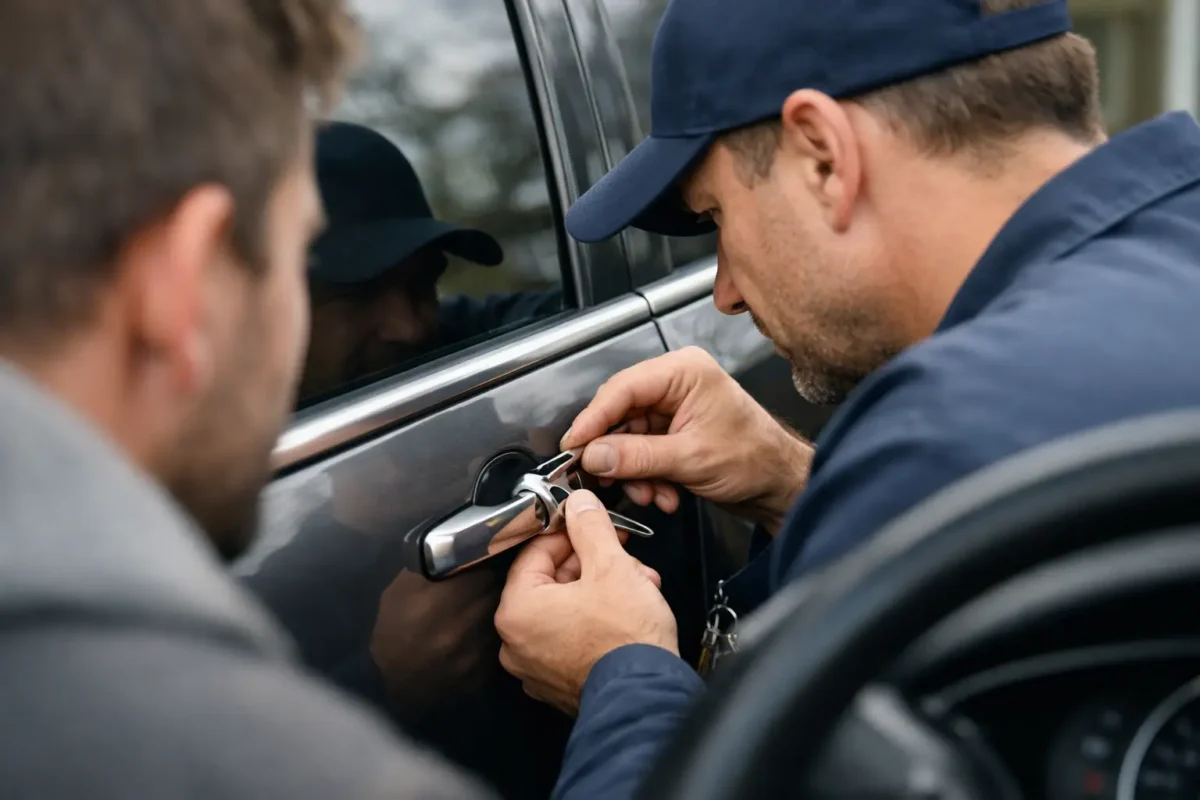
A basic home, apartment, or car lockout is often one of the faster calls. If the lock is in good shape and there are no extra complications, opening the door can be straightforward. Rekeying a lock can also move quickly, especially when the existing hardware is in usable condition and the goal is simply to make old keys stop working.
Other jobs naturally take longer. Car key replacement may involve cutting a new key, programming a chip, or syncing a key fob. Smart lock installation can require removing old hardware, checking door alignment, mounting the new device correctly, and testing app or keypad functions. Commercial work can take longer still because there may be multiple doors, stricter hardware requirements, or access control components involved.
What affects how long a locksmith takes?
The biggest factor is the type of service. An emergency lockout is usually focused on gaining entry without damaging the lock or door. A planned security upgrade is more detailed because it involves setup, fitting, testing, and sometimes customer instruction.
The condition of the lock matters too. If a lock is simply locked, that is different from a lock that is jammed, broken, worn out, or misaligned. A sticky deadbolt or a door that does not close properly can slow down the process because the locksmith is not just opening a door. They are diagnosing a hardware problem.
The number of locks or doors also changes the timeline. Rekeying one front door is one thing. Rekeying a house, changing several locks after a move, or servicing multiple commercial entry points takes more time because each cylinder or device has to be handled correctly.
Vehicle work has its own variables. The year, make, and model of the car can affect both key cutting and programming. Some vehicles have straightforward systems. Others require more steps, more testing, or special programming procedures. If all keys are lost, that is usually more involved than making a copy from an existing key.
Commercial jobs often include another layer of complexity. Panic bars, storefront locks, access control hardware, master key systems, and code requirements all require careful work. The goal is not just to get the door working – it is to make sure the security setup works the way the property needs it to.
Arrival time versus job time
People often combine these into one question, but they are separate. Arrival time depends on dispatch volume, traffic, distance, weather, and whether the call is emergency or scheduled. Job time depends on the lock, the door, the vehicle, the hardware condition, and what needs to be done on site.
That distinction matters because a locksmith may arrive quickly and still need a reasonable amount of time to complete the work properly. Most customers would rather have the problem fixed correctly than rushed. A good locksmith balances speed with careful work, especially when avoiding damage or making sure a new lock, key, or smart device functions the way it should.
How long does locksmith take for lockouts?
Lockouts are usually the calls people worry about most, and they are often among the quicker jobs once the locksmith is on site. House lockouts, apartment lockouts, office lockouts, and car lockouts can all be relatively fast when the lock is functioning normally and there is clear access to work on it.
Still, not every lockout is simple. If a key broke in the lock, if the lock is already damaged, or if there is a secondary lock in play, the process can take longer. The same goes for newer car security systems or doors that have been forced before and no longer align correctly.
For home and business lockouts, verification also matters. A professional locksmith needs to confirm they are opening the property for the right person. That is part of doing the job responsibly, and it can add a few minutes for identification and confirmation.
Rekeying and lock changes usually take longer than people expect
Rekeying sounds simple because the lock often stays in place, but there is still real hands-on work involved. The lock has to be disassembled, adjusted to match a new key, reassembled, and tested. If several locks need to work on one key, there is more setup involved.
Lock changes can take longer because old hardware may need to be removed and replaced fully. If the door prep is older, worn, or not a perfect match for the new hardware, some fitting and adjustment may be needed. The locksmith also needs to make sure the latch, strike, and deadbolt line up correctly so the lock works smoothly over time.
This is one of those areas where doing it too fast can create problems later. A lock that technically installs but binds, sticks, or fails to latch properly is not a finished job.
Car key replacement and programming can add time
Automotive locksmith work is often more than cutting metal. Many modern vehicles use transponder chips, remote fobs, proximity systems, or all three. Replacing a car key can involve verifying the vehicle information, generating or cutting the key, programming the electronics, and testing each function.
If the customer still has a working key, that can make the process more straightforward. If all keys are lost, the job is usually more involved. Some vehicles also have security procedures that require extra steps before the new key will start the car consistently.
That is why automotive service timelines vary more than people expect. Two car key calls can sound similar but be very different once the locksmith checks the vehicle.
Smart locks and commercial hardware need extra setup
Installing a smart lock is not just a swap. The locksmith may need to check door thickness, backset, strike placement, and whether the deadbolt moves cleanly before the smart lock goes on. After installation, the lock has to be tested manually and electronically. If there is a keypad, app connection, code setup, or user training, that adds time too.
Commercial hardware has similar timing issues. Access control devices, panic hardware, and higher-security lock systems require careful alignment and testing. A commercial door that does not latch correctly or an access point that only works part of the time is a security issue, so it makes sense that these jobs are more detailed.
What you can do to help the job move faster
You do not need to know lock terminology to help a locksmith work efficiently. A few details can make the visit smoother. Tell them whether it is a home, car, or business issue, whether you are locked out or need a repair, and whether the lock is damaged. If it is a vehicle, the make, model, and year are useful. If it is a property, mention how many locks or doors are involved.
It also helps to have identification ready if you are locked out, clear access to the door or vehicle, and any existing keys or hardware available if the job is not an emergency. These small details save time because the locksmith can get straight to the actual work.
So, how long should you expect?
A locksmith visit is usually quicker than most people fear, but longer than a TV version of the job makes it look. Some calls are resolved fast. Others take more time because there is more to diagnose, repair, install, or program. That does not mean something is wrong. It usually means the locksmith is handling the real issue instead of applying a quick patch.
If you need mobile locksmith help in Aurora, Denver, Federal Heights, or nearby areas, the best expectation is this: a straightforward job can move quickly, and a more technical one will take the time it needs to be done right. When security is involved, a careful fix is always better than a rushed one.
If you are calling a locksmith, give clear details, ask what kind of service you likely need, and focus on getting the problem solved correctly the first time. That is usually the fastest path that actually helps.