
Rekey or Replace Locks? What to Choose
You get home, look at the front door, and realize your security situation has changed. Maybe you moved into a new place. Maybe a tenant moved out. Maybe a key went missing and now you are stuck asking the question: should you rekey or replace locks? That decision matters because the right fix can improve security fast without paying for work you do not actually need.
For most people, this is not a technical question. It is a practical one. You want the doors secure, you want the work done correctly, and you do not want surprises. The good news is that rekeying and replacing are both valid options. The better choice depends on the condition of your current hardware, how much control you want over old keys, and whether you are solving a security problem or upgrading the lock itself.
Rekey or replace locks: what is the difference?
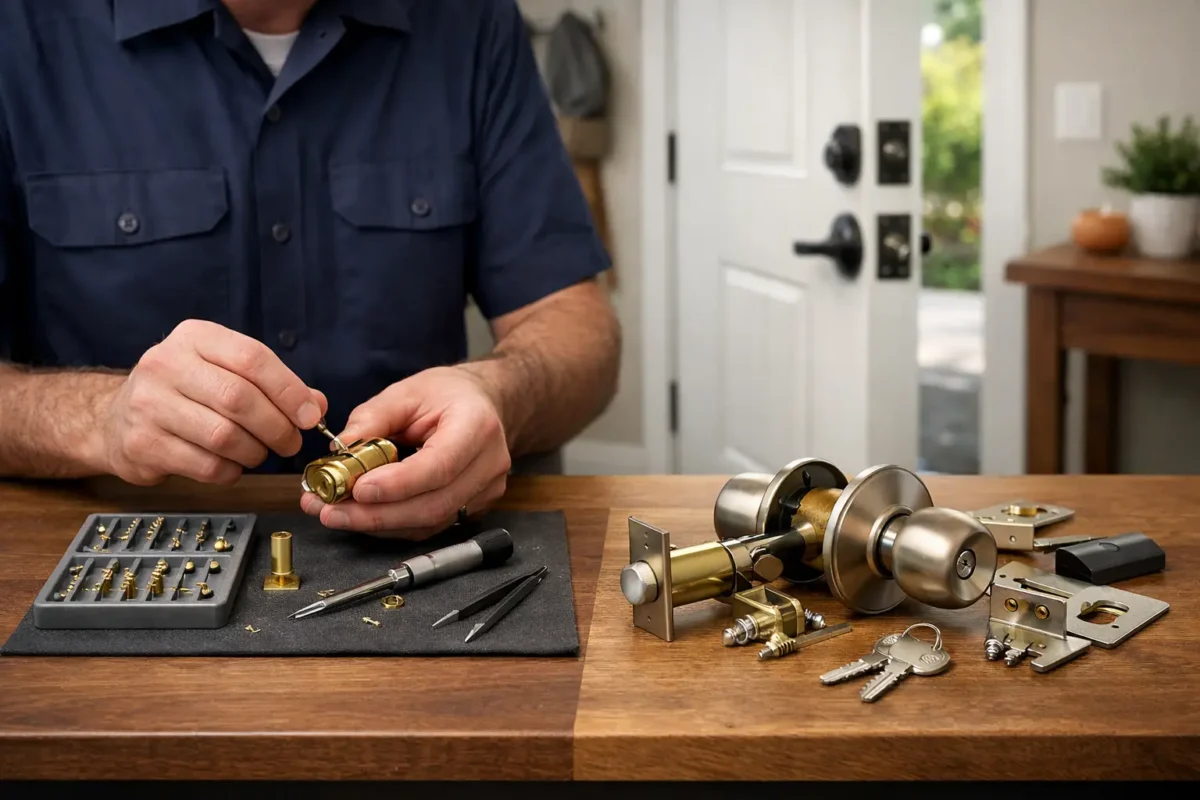
Rekeying changes the inside of the lock so old keys no longer work. The lock stays on the door, but the pins are adjusted to match a new key. From the outside, the hardware usually looks the same. This is often the smart move when the lock is in good condition and you simply need to cut off access from existing keys.
Replacing a lock means removing the existing hardware and installing new hardware. That could mean swapping out a basic deadbolt for another standard deadbolt, or using the opportunity to move to a keypad, smart lock, or higher-security option. If the lock is worn out, damaged, outdated, or no longer fits your needs, replacement makes more sense.
Both options can improve security. They just solve different problems.
When rekeying makes the most sense
Rekeying is often the right call when the hardware itself is still solid. If your deadbolt works smoothly, the latch lines up, and the lock is not loose or failing, there may be no reason to replace it.
A common example is moving into a new home or apartment. Even if the previous owner hands over every key they know about, there is no way to know how many copies are still out there. Family members, contractors, dog walkers, cleaners, neighbors, and former tenants may still have access. Rekeying puts that issue to bed without changing every lock body on the property.
It is also a good fit after staff turnover in a small business, after a roommate leaves, or after losing a key where the address or vehicle information could connect it back to your property. In those cases, the lock is not necessarily bad. Your key control is.
Another reason people choose rekeying is convenience. If you have several doors with compatible hardware, a locksmith can often set them up to work with one key. That means less clutter on your key ring and less frustration for family members, employees, or property managers.
When replacing locks is the better move
Sometimes the lock itself is the problem. If it sticks, jams, spins, has visible wear, or feels loose on the door, rekeying does not fix those issues. You may still end up with a lock that works poorly, even though the old key no longer opens it.
Replacement is also the better option if you want stronger hardware. A basic lock can only do so much. If you are upgrading to a heavy-duty deadbolt, a smart lock, a keypad entry system, or commercial hardware with better control features, you need a full replacement.
There are style reasons too. If you are changing finishes during a renovation or replacing mismatched hardware on several doors, new locks may be the cleaner solution. Security matters first, but appearance and function often go together, especially for front entries and customer-facing business doors.
If a break-in attempt damaged the lock, replacement is usually the safer route. Even if the keyway still turns, internal stress or misalignment can leave the lock unreliable.
Rekey or replace locks after moving?
After a move, many homeowners assume replacement is the safest option. In reality, rekeying is usually enough if the existing locks are good quality and in proper working order. The main risk after moving is unknown key copies, not necessarily defective hardware.
That said, this is one of those situations where it depends. If you just bought a house with cheap builder-grade locks, replacing them can be a smart long-term upgrade. If the doors already have quality deadbolts and they operate well, rekeying can give you the security reset you need without changing everything.
For rental properties, the same logic applies. Property managers often rekey between tenants because it restores control quickly. But if the hardware is beat up from years of turnover, replacement may be the better investment.
Think about the door, not just the key
People often focus only on the lock cylinder, but a secure entry depends on more than that. A lock can be rekeyed perfectly and still underperform if the door frame is weak, the strike plate is loose, or the deadbolt does not extend fully.
This matters when deciding whether to replace. If the issue is a worn cylinder, rekeying may handle it. If the issue is old hardware, poor alignment, or a mismatch between the lock and the door, replacement may solve more than one problem at once.
For businesses, this becomes even more important. A storefront, office, or multi-door facility may need hardware that supports access control, panic hardware, restricted key systems, or code compliance. In those cases, replacing the lock is often less about reacting to a lost key and more about choosing the right security setup for daily use.
Cost is part of the decision, but not the only part
In general, rekeying is usually more cost-effective than replacing because you keep the existing hardware. But lower cost should not be the only reason to choose it. If the lock is old, unreliable, or not meeting your security needs, saving money upfront can lead to another service call later.
The better question is this: are you trying to stop old keys from working, or are you trying to improve the hardware itself? If it is about key control, rekeying is often enough. If it is about durability, features, or a failing lock, replacement is usually the smarter move.
A good locksmith will look at the condition of the lock, how many doors are involved, and what you want to accomplish. That keeps the decision grounded in the actual problem instead of guesswork.
Residential and commercial needs are not always the same
At home, the goal is usually simple. You want to know who has access, make daily entry easier, and feel confident when the door closes behind you. Rekeying works well for many homeowners because it solves the immediate access issue fast.
In a business, the conversation can be more layered. You may need master keying, employee turnover control, better hardware for heavy traffic, or a path toward electronic access. Rekeying can still be useful, especially after staffing changes, but replacing locks may be the better move when the current setup is slowing you down or leaving gaps in accountability.
This is where working with an experienced mobile locksmith helps. The right recommendation should match the property, the traffic, and the level of control you need, whether that is one front door at home or several entry points across a commercial space.
A few situations where the answer is clear
If your keys were stolen with identifying information, replace or rekey right away based on the condition of the hardware. If your locks work well and you just need old keys disabled, rekeying is usually enough. If the lock is damaged, outdated, or you want a different type of entry, replace it.
If you have multiple doors and want one key for all of them, rekeying may be the easiest fix, assuming the cylinders are compatible. If you want to move from standard keyed entry to smart access, replacement is the path.
And if you are not sure whether the lock is worth keeping, that uncertainty is a sign to have it checked instead of forcing a guess.
The best choice is the one that fixes the real problem
There is no one-size-fits-all answer to rekey or replace locks. The right move depends on what changed, what condition the hardware is in, and whether you need a security reset or a real upgrade. For many homes and businesses, rekeying is the fast, practical answer. For others, replacing the lock is the better long-term fix.
If you are standing at that crossroads, focus on the outcome you want. Do you need to cancel old keys, improve convenience, or install stronger hardware? Once that is clear, the next step usually is too. And when security is on the line, getting the right fix now beats dealing with the same door twice.