
Master Key Versus Access Control
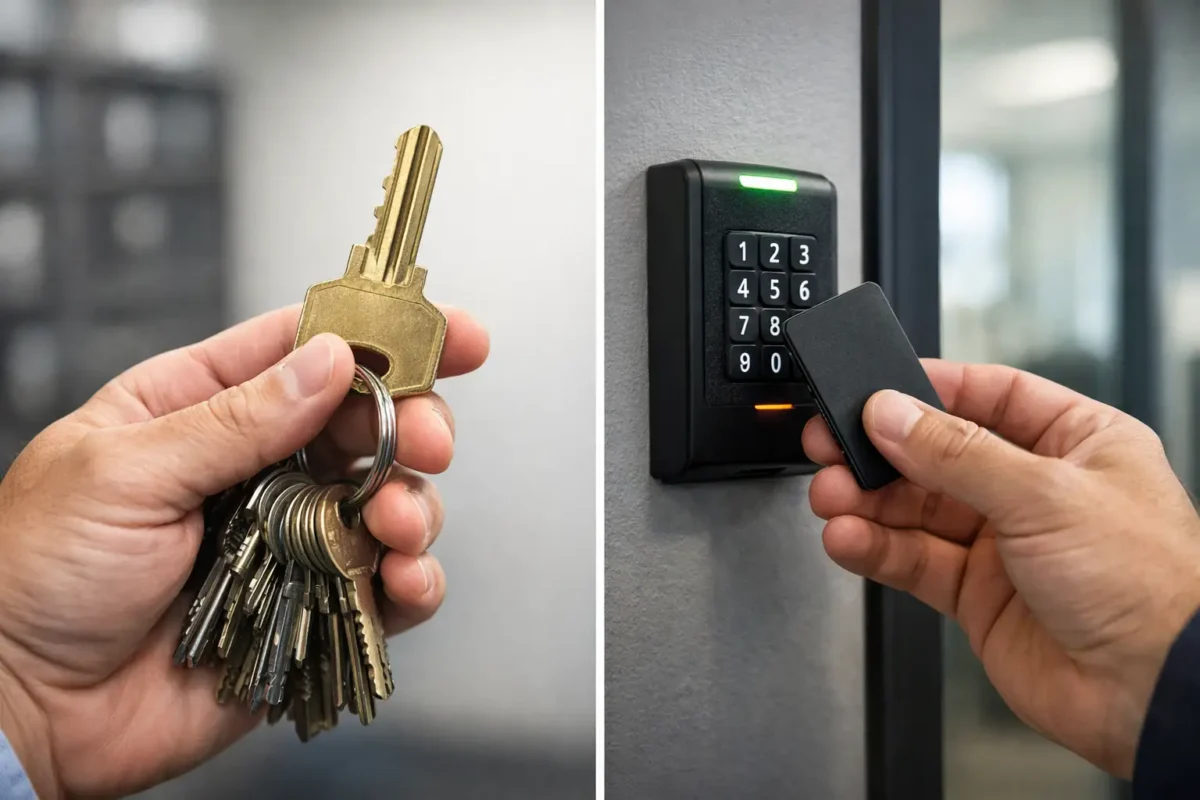
If you manage a building with multiple doors, the question is usually not whether you need better control. It is whether a master key system is enough, or if access control makes more sense. That is the real issue behind master key versus access control, and the right answer depends on how many users you have, how often access changes, and how much visibility you need.
For some properties, a well-planned key hierarchy is simple, affordable, and reliable. For others, physical keys create too many risks because copies circulate, staff changes happen often, or certain areas need tighter oversight. Both options can work well. The difference is in how they handle day-to-day use, lost credentials, and long-term security.
Master key versus access control: what is the difference?
A master key system is a mechanical setup where different keys open different doors, while a higher-level key opens multiple doors within that system. In a small office, that might mean each employee has a key for one door, a manager can open all interior doors, and ownership has top-level access across the building.
Access control replaces or supplements traditional keys with electronic credentials. Depending on the system, users may enter with a key card, fob, PIN code, mobile app, or biometric credential. Permissions can be assigned by person, by door, and by time of day.
At a basic level, the choice comes down to physical control versus digital control. A master key system gives you organized key access. An access control system gives you organized user access.
When a master key system is the better fit
A master key system still makes a lot of sense for many properties. If you have a small staff, low turnover, and a straightforward layout, it may do exactly what you need without adding electronics, software, or power requirements.
This is common in smaller offices, churches, older multi-unit buildings, storage areas, and some residential properties. Property managers also use master key setups when they want maintenance staff to enter specific units or common spaces without carrying a large ring of separate keys.
The biggest advantage is simplicity. Keys do not need batteries, apps, or network connections. There is nothing to program for everyday operation. If the hardware is good and the key system is designed properly, it can be dependable for years.
Cost is another reason people choose it. A master key system usually has a lower upfront cost than a full electronic setup, especially when only a few doors need organized access. For a business trying to improve convenience without changing its entire entry process, that can be the practical move.
But simplicity has a trade-off. If a key is lost, copied, or not returned, you may not know where access exposure begins or ends. In some cases, rekeying one cylinder solves the issue. In others, the structure of the key system means multiple locks need to be updated to maintain security.
When access control is the better fit
Access control becomes more attractive when access changes often or when tracking matters. If you run a business with employee turnover, restricted rooms, after-hours cleaning crews, or shared workspaces, electronic credentials can save a lot of headaches.
Instead of collecting physical keys and hoping every copy comes back, you can remove a user from the system. If someone no longer needs entry, access can be turned off without replacing door hardware across the property. That is a major operational benefit for offices, schools, medical spaces, apartment common areas, and mixed-use commercial properties.
Another big advantage is visibility. Many systems let you see who entered, which credential was used, and when the door was accessed. That is useful for both security and accountability. If there is a question about a storage room, office, or back entrance, you have records to review instead of guesswork.
Access control also gives you more flexibility. One employee can access the front door and break room only during business hours. A manager can have broader privileges. A vendor can be assigned limited access on certain days. That level of control is hard to match with keys alone.
The trade-off is complexity. Electronic systems involve components, programming, maintenance, and in some cases internet connectivity or backup power planning. Not every property needs that. If you only have two doors and three trusted users, access control may be more than you actually need.
Security differences that matter in real life
On paper, both systems control entry. In real life, the security difference often comes down to what happens after something goes wrong.
With a master key system, the weak point is usually the key itself. Keys can be lost, borrowed, copied, or kept after a job ends. Restricted keyways can help reduce unauthorized duplication, but no physical key system offers the same instant response as disabling a digital credential.
With access control, lost cards or fobs are usually easier to deal with because they can be deactivated. That reduces the need to replace hardware after a simple loss. It also gives property owners more control when staffing changes quickly.
That said, electronic systems are only as good as their setup and maintenance. Poorly installed hardware, weak credential policies, or neglected software updates can create problems. Mechanical locks have fewer moving parts from a management standpoint, so some owners prefer them for that reason.
This is why the answer to master key versus access control is rarely just about which one is safer in theory. It is about which system your property can realistically manage well.
Convenience for owners, staff, and tenants
Convenience matters more than many people expect. A system that looks good on paper but frustrates daily users often leads to workarounds, and workarounds create security gaps.
Master key systems are convenient for people who prefer familiar hardware and straightforward use. Turn the key, open the door, and move on. There is very little training involved, which can be helpful in smaller organizations or residential settings.
Access control is more convenient when many users need different permissions. Instead of sorting out who gets which key, you assign credentials. Instead of rekeying after every staffing change, you update the system. For property managers and business owners, that can mean less disruption over time.
For shared buildings, access control can also reduce the number of physical keys floating around. That matters in properties where tenants move in and out, contractors need temporary access, or common areas need to stay secure without constant rekeying.
Cost is not just the installation price
A lot of people compare these options based only on initial cost, but long-term cost matters too.
A master key system is often less expensive to install, especially if the property already has compatible hardware. For many small buildings, that keeps the project manageable. But if keys are lost often, staff changes are frequent, or security incidents lead to repeated rekeying, those costs add up.
Access control usually requires a larger upfront investment. You are paying for hardware, setup, and configuration. But over time, it may reduce labor and replacement costs tied to lost keys, rekeys, and access changes. That is why larger offices and multi-user properties often move in that direction.
The right question is not just what costs less today. It is which system creates fewer problems over the next few years.
Can you use both?
Yes, and many properties should.
A hybrid approach is often the most practical answer. You might use access control on main entrances, employee doors, and sensitive rooms, while keeping mechanical locks with a master key system on lower-priority interior doors. That balances control and budget without forcing every opening into the same model.
This approach is especially useful in buildings that are upgrading in stages. A business may start with electronic access on perimeter doors and keep keyed hardware inside until needs change. A property manager may use controlled entry for shared spaces while keeping unit hardware separate.
A good locksmith can help map out which doors truly need electronic control and which ones can stay mechanical without weakening the overall plan.
How to decide between master key versus access control
Start with a few practical questions. How often do users change? How many doors need different permission levels? Do you need an audit trail? Is lost key exposure a recurring concern? Are you trying to solve a simple access problem or build a more controlled security system?
If your property is stable, small, and easy to manage, a master key system may be the right fit. If your building has multiple users, changing staff, restricted areas, or a need for tracking, access control is usually the stronger choice.
And if you are somewhere in the middle, combining both may give you the best result.
For homeowners, business owners, and property managers, the smartest choice is usually the one that fits daily reality, not just the one that sounds more advanced. Security works best when it matches how people actually use the building. If you are weighing options for a home, office, or managed property, a local locksmith with experience in both mechanical locks and electronic systems can help you choose a setup that is practical, secure, and easier to live with.