
A New Homeowner Rekey Example That Makes Sense
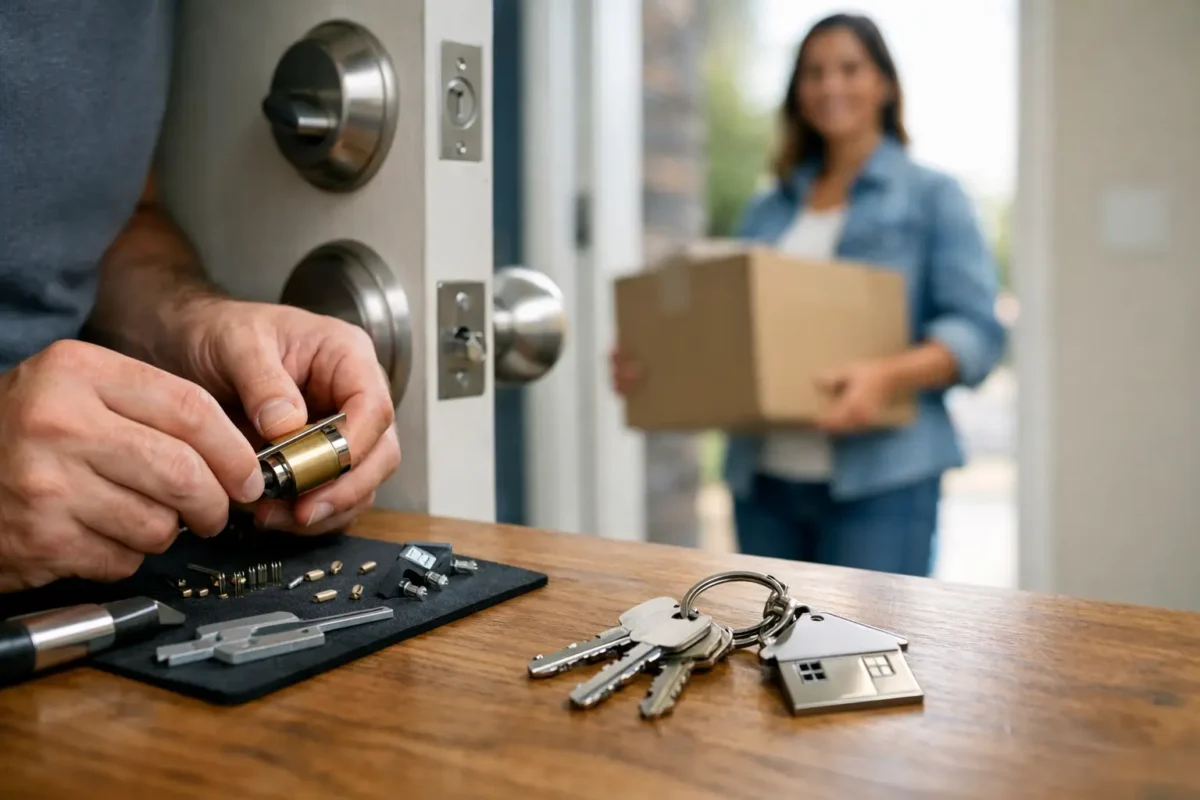
You close on a house, collect a small stack of keys, and start sorting boxes. One key may be for the front door, another for the back, and a third may be a spare from the previous owner. Here is the problem: you do not know who else has copies. A new homeowner rekey example makes the decision simple: reset access to the home before settling into it.
Rekeying lets a locksmith change the internal pin configuration in an existing lock so old keys stop working. The exterior hardware can stay in place, but you receive a new key. For many new homeowners, it is one of the most practical first security projects after moving in.
A New Homeowner Rekey Example in a Typical Move
Consider a family that has just bought a home in Aurora. The home has a front deadbolt, a front knob lock, a back door deadbolt, a garage entry lock, and a side gate lock. At closing, the seller provides two front-door keys, one garage key, and no key for the side gate.
The locks appear to be in good condition. They latch correctly, the deadbolts extend fully, and there are no signs of damage. In this situation, replacing every lock is not automatically necessary. A locksmith can inspect the hardware, rekey the compatible door locks to one new key, and address the gate lock separately if needed.
After the work is done, the family has control again. The previous owner’s keys no longer operate the rekeyed locks, and the household can decide exactly who receives a copy. They might give one spare to a trusted relative and keep another in a secure location, rather than leaving one hidden outside.
That is the value of rekeying after a purchase. It is not about assuming the former owner had bad intentions. Contractors, cleaners, dog walkers, neighbors, relatives, and past tenants may have received a key at some point. There is usually no complete record of every copy that was made.
What a Locksmith Checks Before Rekeying
A rekey is most useful when the existing hardware is functional and appropriate for the door. A professional locksmith checks whether the lock is rekeyable, whether the keyway is in good condition, and whether the door and strike plate align properly.
The lock may work with a new key but still have another problem worth fixing. For example, a deadbolt that only locks when you lift the door can wear out faster and may not secure properly. A loose strike plate or short mounting screws can also weaken an otherwise decent lock. These issues are separate from rekeying, but a move-in service visit is a good time to catch them.
It also helps to look at which doors actually provide entry to the home. The front and back doors are obvious, but do not overlook the door from an attached garage, basement exterior doors, patio doors with keyed locks, or side doors that are rarely used. A locked gate is different from a house entry point, but it can still matter if it protects tools, equipment, or a route to the backyard.
When Rekeying Is Better Than Changing Locks
Rekeying is usually the sensible choice when the locks are in solid condition, fit the home’s needs, and use hardware you are comfortable keeping. It preserves the existing appearance of the door and can simplify key management when several compatible locks can be set to one key.
This is especially helpful when a new homeowner likes the current handles and deadbolts but wants certainty about access. The goal is not to replace good hardware for the sake of it. The goal is to make old keys unusable and ensure the locks operate reliably.
There are limits. Not every lock can be rekeyed, and not every set of locks can be keyed alike. Different brands, keyways, and older hardware may require separate keys or a hardware change. A locksmith can explain the options after seeing the locks rather than guessing based on a photo or a single key.
When It Makes Sense to Replace the Hardware
Some move-in situations call for more than a rekey. Replace the lock when it is damaged, badly worn, difficult to operate, missing parts, or not suitable for the security level you want. A deadbolt with visible corrosion, a loose cylinder, or a latch that sticks should not be treated as a simple key issue.
Hardware changes also make sense when the new homeowner wants a different type of access. For instance, a keypad deadbolt or smart lock may be a good fit for a family that wants individual codes instead of several physical keys. It can be convenient for children, guests, pet sitters, or service appointments, but it still needs to be installed correctly and paired with a dependable mechanical lock setup.
A smart lock is not automatically the best answer for every door. Some homeowners prefer traditional keyed deadbolts because they are simple and familiar. Others want keypad access at the main entry and standard locks elsewhere. The right setup depends on daily routines, the condition of the door, and who needs access.
Make a Plan for Every Key
Once locks are rekeyed or replaced, keep the key plan under control. A common mistake is making extra copies without tracking where they go. That gradually creates the same uncertainty that prompted the rekey in the first place.
Start with the people who genuinely need access. Household members may each need a key, while a trusted emergency contact may keep one spare. If you use a keypad or smart lock, temporary codes can be more practical for short-term visitors than handing out a physical key.
Avoid hiding a spare under a mat, planter, fake rock, or other predictable spot. If a lockout happens, a mobile locksmith can provide help without turning your property into an easy target. For a spare kept outside the home, choose a secure solution that does not advertise where the key is located.
Do Not Forget the Garage, Mailbox, and Outbuildings
New homeowners often focus on the front door and forget the places where access can be just as useful. An attached garage entry door should be treated as a primary entry point. If the garage has a keypad, reset its code and remove any old remotes or vehicle programming you do not recognize.
A mailbox lock may need attention as well, particularly if the previous owner did not provide a key or if the mailbox is used for sensitive documents. Detached sheds, storage rooms, and gates deserve a quick review. They may not require the same lock type as exterior doors, but broken or unknown locks can create avoidable problems after move-in.
For rental properties and homes with former tenants, the need to reset access can be even more urgent. Property managers should use a consistent turnover process so keys, codes, and access credentials do not carry over from one occupant to the next.
Schedule the Rekey Early
The best time to rekey is before the house is fully occupied, but it is still worthwhile if weeks or months have passed. A local mobile locksmith can come to the property, assess the door hardware, and handle the work on site. BS Locksmith serves homeowners across the Denver Metro area with residential rekeying, lock changes, and security upgrades when a new home needs a clean start.
Before the visit, gather every key you received and make a quick note of each exterior door, garage entry, mailbox, and gate. That gives the locksmith a clearer picture of what needs attention and helps prevent overlooked locks.
Your home should feel like yours from the first night you sleep there. Rekeying the doors is a straightforward way to make that true, with access controlled by the people you choose.