
Office Lockout Response Example for Your Team
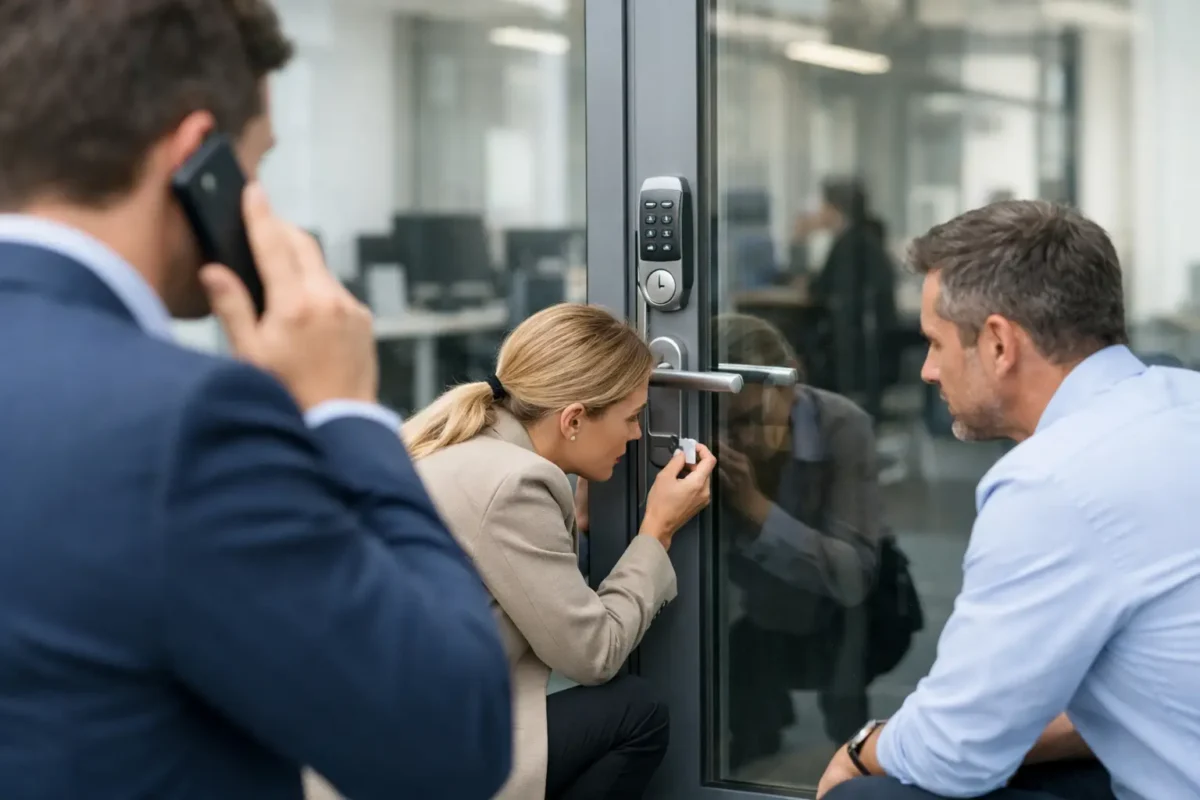
An office lockout can stop a workday at the front door. Employees may be standing outside, a manager may be away from the property, and essential files, equipment, or customer information may be inside. A clear office lockout response example gives your team a practical way to respond without creating a security problem while trying to solve an access problem.
The right response is not simply finding a way inside. It is confirming who is authorized, keeping staff safe, protecting the building, and restoring access through the proper channel. For small offices, medical practices, retail back offices, property managers, and growing Denver-area businesses, a few prepared steps can prevent a stressful situation from becoming a larger disruption.
What a Good Office Lockout Response Should Accomplish
A lockout plan should be short enough that employees can follow it under pressure. It also needs enough structure to prevent someone from making a rushed decision, such as forcing a door, damaging a lock, or allowing an unauthorized person into a restricted space.
First, identify the scope of the lockout. Is one employee locked out of a private office? Is the entire team unable to enter the suite? Has a key broken in the lock, has a card reader failed, or did a staff member simply leave a key ring inside? Those details affect the response. A lost key may require rekeying after entry is restored, while an access control issue may call for credential updates or hardware service.
Next, establish who can authorize entry. A business owner, office manager, facilities contact, or property manager should be named in advance. If that person is unavailable, your plan should specify a backup. This protects the business from an employee, contractor, former staff member, or visitor claiming access without proper approval.
Finally, document what happened. A brief record of the date, cause, person authorizing service, and work completed helps management spot patterns. Repeated lockouts may point to a weak key-control process, unclear responsibility for opening and closing, aging hardware, or an access system that no longer fits the way the office operates.
Office Lockout Response Example
Here is a practical example for an office manager or designated employee to use when the main entrance is inaccessible:
> “The office is currently locked, and authorized staff cannot enter. Do not force the door or attempt to bypass the lock or access system. Please wait in a safe location and keep the entrance clear. I am confirming authorization and contacting a professional commercial locksmith. Once access is restored, we will check whether keys, locks, or access credentials need to be updated.”
That message does several useful things at once. It tells employees what is happening without causing panic, gives a direct instruction not to damage the entry, and shows that a responsible person is handling the issue. It also avoids sharing unnecessary details about the building’s security setup in a public area or group message.
If customers are expected shortly, a manager can send a separate notice that the office is temporarily inaccessible and that appointments may need to be adjusted. Keep that communication simple. There is no need to explain where keys are kept, who has master access, or what type of security system is installed.
When the Lockout Involves One Employee
A single-employee lockout needs a slightly different response. If the employee is locked out of an interior office, supply room, or restricted area, do not assume that their normal job title is enough authorization for entry. The manager should verify the employee’s access level and determine whether the room contains sensitive records, cash, controlled items, or critical equipment.
For a private office, the fastest practical solution may be authorized key access or a locksmith opening the door without damaging it. For records rooms, server rooms, and other controlled areas, management may require a higher level of approval. The trade-off is simple: restoring entry quickly matters, but protecting sensitive areas matters more.
A Safe Response Process for the Person in Charge
When a lockout occurs, the designated contact should take the following actions in order:
- Confirm the location and immediate safety concerns. Make sure no one is trapped inside, no employee needs medication or emergency assistance, and the lockout is not connected to a break-in, damaged door, or suspicious activity. If there is an immediate danger, contact emergency services first.
- Verify authorization before requesting entry. Confirm the identity of the person approving service and be ready to show proof of business occupancy or management authority. A professional locksmith should verify authorization before opening a commercial property.
- Keep the door and surrounding area undamaged. Do not pry, drill, kick, or try improvised methods to open the door. These attempts can damage frames, panic hardware, glass, electronic locks, and weather seals. They can also turn a manageable lockout into a repair and security issue.
- Call a commercial locksmith equipped for the problem. Explain whether the office uses standard keyed locks, high-security cylinders, panic bars, storefront hardware, smart locks, keypads, or card access. Accurate information helps the technician arrive prepared to address the actual issue rather than guessing at the door.
- Decide what must happen after entry. If a key is lost or stolen, rekeying may be the right next step. If an employee left a key inside, a replacement key and better key-control process may be enough. If electronic credentials failed, review the system settings, user permissions, and backup access procedure.
For businesses in Aurora, Federal Heights, Denver, and nearby communities, BS Locksmith can provide on-site commercial lockout assistance and help assess whether the incident calls for entry only, rekeying, lock replacement, or an access control update.
What to Have Ready Before You Call
The locksmith can work more efficiently when the authorized contact has the basic details ready. Provide the business name, the exact address and suite number, the type of door if known, and a clear description of the issue. Explain whether the problem involves a missing key, broken key, malfunctioning lock, keypad, card reader, or door hardware that will not release.
It also helps to have authorization materials available. Depending on the situation, that may include identification, a business card, a lease, a property management contact, or documentation showing your role with the company. This is not unnecessary red tape. Commercial locksmiths need to protect the property owner and business from unauthorized entry.
If your office is in a multi-tenant building, contact the property manager as well. The manager may have building rules for exterior doors, common-area access, key systems, and after-hours service. They may also need to know if a door closer, storefront lock, or shared access point has failed.
Preventing the Next Office Lockout
A lockout response plan works best when paired with a prevention plan. Start with clear key ownership. Know who holds master keys, who can approve duplicates, and what happens when employees leave the company. A sign-out log can be useful for offices with several keys, but it does not need to be complicated. The goal is accountability, not paperwork for its own sake.
Designate at least two authorized contacts who can approve locksmith service and access the office outside normal hours. Relying on one person creates an avoidable single point of failure. For offices with changing schedules or multiple entrances, electronic access control can reduce the need to distribute physical keys and make it easier to remove access when roles change.
Still, electronic systems need a backup plan. Batteries fail, credentials get lost, and networks can go down. Keep approved backup access methods documented for management, not posted where anyone can see them. Review the plan after any real lockout while the details are fresh.
The best office lockout response is calm, authorized, and focused on getting the right people back inside without weakening the security of everyone else.