
Rental Turnover Rekeying Example for Landlords
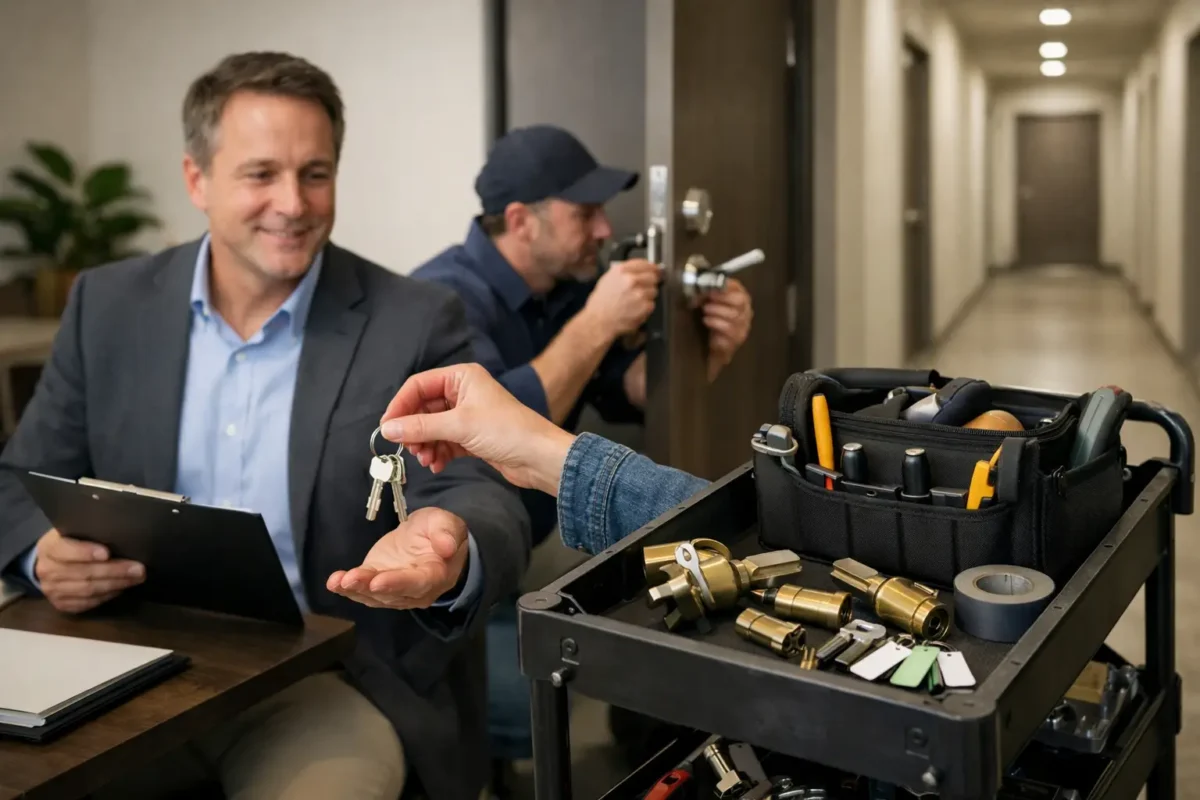
A rental turnover rekeying example makes one point clear: getting a unit ready is not just about paint, cleaning, and repairs. Before a new tenant receives keys, the property manager needs to know exactly who can enter the home and make sure former tenants, guests, contractors, and unreturned key holders no longer have access.
That does not always mean replacing every lock. In many rentals, a professional rekey is the faster, more practical choice. The lock hardware stays in place, but the internal pins are changed so old keys no longer work. It is a simple security reset that can prevent a major headache after move-out.
A Rental Turnover Rekeying Example From Move-Out to Move-In
Picture a two-bedroom Denver-area rental. The departing tenant turns in two house keys, one mailbox key, and a garage remote. The lease originally listed two adults, but the property manager knows a relative stayed in the unit for several months and may have had a copy made. A dog walker also had a key at one point. The manager cannot verify whether every copy was returned.
The front door has a deadbolt and a keyed entry knob that use the same keyway. The back door has a separate deadbolt, the side gate has a padlock, and the garage remote still operates the overhead door. The mailbox key is controlled separately.
Instead of assuming the returned keys are the only keys in circulation, the manager schedules rekeying after the final inspection and before the cleaning crew or new tenant needs access. A locksmith changes the key combination for the front and back exterior locks, confirms the new keys work smoothly, and provides the requested number of copies. The manager also resets or removes the garage remote from the opener’s memory, replaces the gate padlock if necessary, and arranges mailbox key service separately if that lock is part of the rental’s responsibility.
The result is straightforward: the incoming tenant receives a new set of working keys, and the manager has a clean record of what access devices were issued. Old house keys no longer open the unit. That is the purpose of a turnover rekey.
What the Property Manager Should Check First
A rekey is only effective when it covers every access point that matters. Start by walking the property, not by relying only on the original key list. Rentals change over time. A previous owner may have installed a different deadbolt, a tenant may have added a padlock with permission, or a contractor may have been given a code or remote.
Check exterior entry doors, including the front, rear, side, garage-to-home, and patio doors if they have keyed locks. Look at detached garages, storage rooms, gates, shared utility spaces, and mailboxes where applicable. Do not forget nontraditional access, such as keypad codes, smart-lock users, garage remotes, intercom credentials, and fobs for a building entrance.
Inside the unit, most managers do not need to rekey every privacy lock. Bedroom and bathroom locks are generally designed for privacy rather than security. But a lock on an owner closet, maintenance room, or separate storage area should be included in the turnover plan.
Rekeying Versus Changing Locks
Rekeying makes sense when the existing lock is in good condition, fits the door properly, and provides an appropriate level of security for the property. It lets the manager keep functioning hardware while making the previous keys useless. It is often the right move for a standard turnover between tenants.
Changing the lock is the better option when the hardware is damaged, worn out, loose, difficult to operate, or not providing the security the property needs. A lock change may also make sense when the manager wants to upgrade to a deadbolt, a restricted key system, commercial-grade hardware, or a smart lock.
There is a practical middle ground, too. A manager may rekey the exterior doors while replacing only one problem lock, such as a sticky back-door deadbolt. The goal is not to perform the same service on every opening. The goal is to leave the unit secure, functional, and easy for the new tenant to use.
When a Same-Day Turnover Needs Extra Planning
Tight move-out and move-in schedules create more risk. Cleaning crews, repair technicians, inspectors, and movers may all need access within a few hours. If the locks are rekeyed too early, the outgoing tenant may be unable to finish an approved move-out. If it happens too late, the incoming tenant may arrive before the security reset is complete.
For a same-day turnover, plan the order of access. Complete the final inspection, collect keys and remotes, then schedule rekeying as soon as the unit is clear. Give cleaners and contractors temporary access only if they are working after the rekey. Once their work is complete, collect any temporary keys or use a separate controlled access method.
A mobile locksmith can be especially helpful in this situation because the service is performed at the property. For urgent turnover issues in Aurora, Federal Heights, Denver, or surrounding communities, BS Locksmith can handle on-site rekeying and help property managers restore control of access without delaying the next step in the turnover.
Document the New Key Control
A rekey is a physical security step. Documentation is what keeps it effective after the locksmith leaves. Record the date of service, the unit number, the locks that were rekeyed or replaced, and the number of keys, remotes, fobs, or codes issued.
The key handoff should be clear. If two tenants are on the lease and each receives two keys, write that down. If a maintenance team retains an authorized master key, document who controls it and where it is stored. Avoid leaving unmarked spare keys in obvious places, such as under a mat, above a door frame, or in an unlocked exterior lockbox.
For smart locks, remove old users rather than only changing the primary code. Check for temporary codes, app-based access, administrator accounts, and linked property-management accounts. A new tenant should not inherit access settings from a former tenant, and a former tenant should not remain listed as a user after move-out.
Common Turnover Details That Get Missed
The front door gets the most attention, but overlooked access points can defeat the entire effort. Four items deserve a final check:
- Garage remotes and keypad codes, especially when the garage connects directly to the home.
- Mailbox keys, package-room fobs, and building-entry credentials for multi-unit properties.
- Storage cages, sheds, gates, and owner closets that have separate locks.
- Smart-lock users, temporary keypad codes, and copied mechanical keys held by vendors or former occupants.
A quick access audit takes less time than dealing with an unauthorized entry report later. It also gives new tenants confidence that the property was prepared properly before they moved in.
Choosing the Right Key Setup for a Rental
Managers with several units often benefit from a planned key system. Some prefer each unit to have a different key for better separation between tenants. Others use a master-key arrangement that allows authorized maintenance personnel to access units while residents retain individual keys. Either approach can work, but key control needs to be tight.
A master-key system is convenient, yet it requires careful records because one lost master key can affect multiple doors. Individual keys reduce that exposure but can create more keys for staff to carry and track. The right choice depends on the size of the property, who handles maintenance, the number of shared spaces, and the manager’s security procedures.
For smaller rentals, matching compatible exterior locks to one new tenant key can be convenient. The new resident does not need a separate key for the front and back door, and the manager has fewer keys to track. A locksmith can tell you whether the existing hardware can be keyed alike or whether the locks need an upgrade first.
Make Rekeying Part of the Standard Turnover Checklist
Treat rekeying as a fixed turnover task, not something to decide only when keys are missing. The outgoing tenant may return every issued key and rekeying can still be the sensible choice because copied keys are impossible to account for. It also creates a consistent process across units and staff members.
Build the task into the point between final move-out and new key delivery. Confirm the hardware condition, identify every access device, reset the locks or codes, test each door, and document the handoff. That routine protects the property, reduces confusion, and gives the next tenant a better first day in their new home.
A clean unit matters, but controlled access matters just as much. When turnover rekeying is handled before move-in, everyone starts with the right key, the right records, and fewer security questions hanging over the door.