
Smart Home Security Trends That Matter in 2026
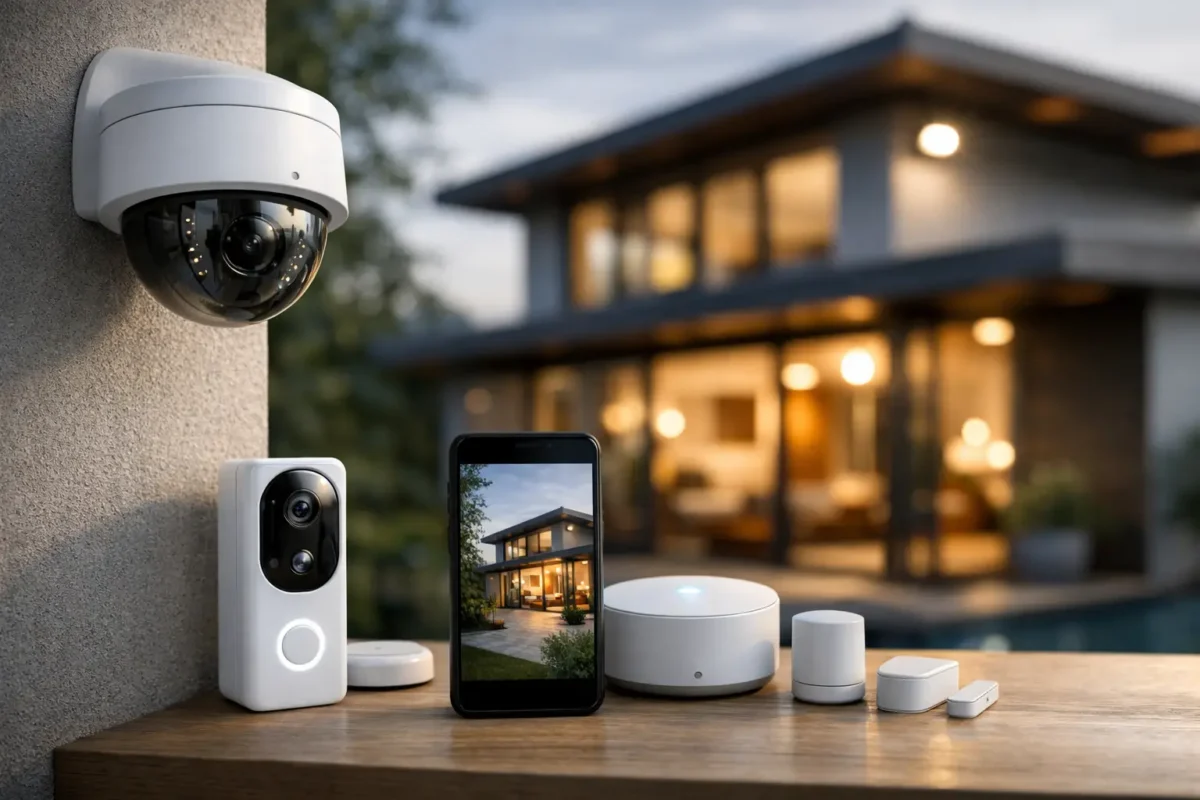
A front door can now send an alert when it is left unlocked, give a dog walker temporary access, and record who arrived while you were at work. Those features are useful, but the smart home security trends worth paying attention to are the ones that improve everyday protection without creating new headaches.
For homeowners, landlords, and small business owners, the goal is not to fill every room with gadgets. It is to control access, know what is happening at key entry points, and keep a dependable physical lock between your property and the outside. Smart technology can help with all three when it is selected and installed with care.
Smart home security trends are moving to the front door
The biggest changes are happening at the main entry points. Smart deadbolts, video doorbells, connected cameras, and app-based access tools are becoming more common because they address practical problems: lost keys, uncertain access, package deliveries, and doors that may not have been secured.
A smart lock lets an owner lock or unlock a door through a phone app, keypad code, fingerprint reader, key fob, or standard key, depending on the model. Many households prefer keypad access because it removes the need to hand out spare keys. A unique code can be assigned to a family member, cleaner, contractor, or guest and removed when it is no longer needed.
That control is particularly useful after a move, tenant turnover, a breakup, or a lost key. Still, a smart lock should not be treated as a replacement for basic lock security. The deadbolt, strike plate, door frame, and installation quality determine how well the door resists forced entry. A connected lock installed on a weak door or loose frame cannot solve the real problem.
Keyless access is useful, not automatically safer
Keypads and mobile access reduce the number of physical keys in circulation. That can make access easier to manage, especially for rental homes and busy families. But convenience depends on good habits. Use separate codes rather than sharing one household code with everyone. Remove old codes promptly, and avoid easy combinations such as an address, birthday, or 1234.
It also helps to choose a lock that still provides a mechanical key option or a reliable backup method. Batteries can run low, phones can be misplaced, and internet service can go out. The right setup gives you options instead of leaving you dependent on one piece of technology.
Cameras are becoming more selective and more useful
Security cameras are no longer just recording devices that save hours of footage nobody has time to review. Newer systems can identify motion zones, distinguish a person from a passing car, and send alerts based on activity near a driveway, side gate, or front porch.
The useful trend is not more notifications. It is better notifications. A camera that sends an alert every time a tree branch moves will quickly get ignored. Homeowners should set activity zones carefully and adjust sensitivity until the system alerts them to events that actually matter.
For many properties, a camera at the front door and one covering the driveway or rear entry are more valuable than multiple cameras pointed at broad areas. Focus on the routes a person would use to approach or enter the building. Good lighting matters just as much as the camera itself. A clear view of an entryway is more helpful than a camera mounted too high, too far away, or aimed into glare.
Privacy is part of the decision. Cameras should protect your property without unnecessarily recording neighbors’ windows, private spaces, or shared areas. Keep account passwords strong, use two-factor authentication when available, and review who has access to the camera app.
Smart locks are joining broader access control systems
Another of the notable smart home security trends is the overlap between residential smart locks and commercial-style access control. Small offices, property managers, and owners of multi-unit properties increasingly want to manage credentials without collecting physical keys from every person who has had access.
For a small business, that may mean assigning individual codes or mobile credentials to staff instead of issuing several copies of the same key. When an employee leaves, access can be removed without changing every lock. For a rental property, a landlord may be able to provide a temporary code between turnovers, then replace it for the next tenant.
This approach works best when the hardware matches the property. A basic keypad deadbolt may be right for a single-family home. A business with multiple doors, employee traffic, storage areas, or restricted records may need a more structured access control system. Fire-code requirements, door hardware, emergency exit needs, and the daily volume of use all affect the right choice.
Smart access is not always the answer. A low-traffic storage room may simply need a properly installed high-security mechanical lock. The best security plan uses technology where it solves a real access problem and keeps the rest straightforward.
Better integration can reduce everyday mistakes
Connected devices can work together in ways that make a property easier to secure. A door sensor can notify you if a door is open. A smart lock can confirm it is locked at night. Exterior lights can turn on when a camera detects activity. These automations are most useful when they prevent common oversights rather than trying to automate every decision.
For example, a reminder that the back door is unlocked after bedtime can be helpful. Automatically unlocking a front door based only on a phone’s location may not be the right fit for every household. Location signals can be inaccurate, and families with children, roommates, or frequent visitors need clear rules about who can control access.
Keep important security functions simple. Make sure every adult who needs access understands the backup entry method, knows where emergency keys are kept if used, and can operate the system without relying on one person’s phone.
Cybersecurity now belongs in home security conversations
A connected lock or camera is also an online device. That means the account protecting it deserves the same attention as the physical hardware. Weak passwords, reused passwords, old user accounts, and skipped software updates can create avoidable risks.
Start with a unique password for each security app and enable multi-factor authentication if the provider offers it. Change default passwords on connected devices and your home Wi-Fi network. Install firmware and app updates when they become available, especially when they address security issues.
Before buying, check whether the device can function locally during an internet outage and what features require a subscription. Some products store video in the cloud, while others offer local storage. Some locks can still operate by keypad or key even if the app is unavailable. There is no single best setup. The right choice depends on how much remote access you need and how comfortable you are managing the system.
Physical security still sets the standard
Smart security works best as one layer of a complete plan. A door should close and latch correctly. The deadbolt should extend fully into a solid strike plate. Exterior door hinges, frames, sliding doors, garage access, and windows all deserve attention.
If you have recently moved into a home, rekeying or changing locks is still one of the most direct ways to control who has access. You do not know how many copies of an old key may exist. The same goes for a business after staff changes or a rental after turnover. Digital codes can be deleted, but physical keys need to be accounted for too.
A professional smart lock installation can help prevent problems that are easy to miss, such as poor door alignment, incorrect bolt operation, or hardware that does not fit the door properly. BS Locksmith can assess whether a smart lock, rekey, lock change, or access control upgrade makes sense for the way you use the property.
Choose upgrades based on the problem you need to solve
Before adding new technology, identify the issue behind the upgrade. If you regularly worry about forgetting to lock the door, a smart deadbolt with status alerts may help. If packages are disappearing, improve lighting and consider a camera focused on the porch. If several people need changing access to a property, separate codes or managed access control may be more practical than more spare keys.
Avoid buying a system based only on features. Consider battery replacement, backup access, internet reliability, privacy settings, and who will manage the app over time. A security setup should be easy enough to use consistently, because a feature nobody understands or maintains does not provide much protection.
The most useful upgrade is usually the one that closes a real gap at your door, driveway, or business entrance. Start there, make sure the physical hardware is sound, and build a system you can depend on when it matters.