
Smart Lock Installation Review for Your Door
A smart lock can make a front door easier to manage, but it is only as dependable as the door, hardware, and installation behind it. Before choosing a keypad, app-controlled deadbolt, or access system, this smart lock installation review focuses on the details that affect daily use: fit, security, power, connectivity, and setup.
For a homeowner, the goal may be key-free entry for family members, guests, or service providers. For a property manager or business owner, it may be controlling who has access without collecting physical keys every time someone leaves. Those are practical benefits, but they do not erase the need for a properly aligned, secure door.
What a Smart Lock Installation Review Should Cover
A good review does not stop at whether the lock looks modern or connects to a phone. The right question is whether the lock works reliably on your specific door. A smart deadbolt still depends on the bolt sliding freely into the strike plate. If the door sags, swells during Colorado weather changes, or has a loose frame, the motor may struggle to lock or retract the bolt.
That issue is easy to miss when a lock is tested only once. A door can appear fine while open, then bind when it is closed. Repeated motor resistance can drain batteries faster, create error alerts, and leave you relying on a mechanical key at the worst time.
The lock also needs to match the existing door preparation. Most residential smart deadbolts are designed for common door thicknesses and standard bore holes, but older doors, custom doors, narrow stile doors, and some commercial doors may need adjustments. Measuring first prevents a new lock from sitting crooked, rubbing the trim, or leaving gaps around the exterior hardware.
Deadbolt condition matters more than the app
Many smart locks replace only the deadbolt. They do not correct a weak strike plate, damaged jamb, or poorly installed handle. If the strike screws are short or the wood around the opening is split, improving the lock alone may not improve the door’s resistance to forced entry.
A professional installation checks the complete assembly: the deadbolt, door alignment, strike plate, screws, jamb condition, and interior clearance. This is especially useful after a break-in attempt, a recent move, storm-related door movement, or years of hard use.
Choosing the Right Type of Smart Lock
Smart locks are not all built for the same situation. The best choice depends on who uses the door, how often access changes, and what happens if the battery or network connection fails.
A keypad deadbolt is often a practical option for homes and rental properties. Users enter a code, and the owner can change or remove codes as needed. It reduces the number of spare keys in circulation and can be convenient for children, housekeepers, contractors, or short-term guests.
Bluetooth and Wi-Fi-enabled locks add app controls, activity notifications, and remote code management. These features can be useful, but they add setup requirements. The homeowner needs a reliable home network, compatible phone settings, and a clear understanding of account access. If more than one person manages the property, decide in advance who is the primary account owner and who should have administrative control.
For a small business, a residential-style smart deadbolt may not be enough. Employee traffic, multiple entry points, door closers, fire code requirements, and higher-use hardware can call for a commercial-grade access control solution instead. The right system should support the way the business actually operates, rather than adding a consumer lock to a door that needs commercial hardware.
Keypad, keyway, or both?
Some smart locks retain a traditional keyway, while others rely mainly on codes, an app, or an emergency power connection. A keyed backup can provide reassurance, but it also means physical keys must still be controlled. If a lost key is a concern, rekeying or changing the key cylinder may be part of the installation plan.
Key-free models reduce key management, yet every authorized user needs to be comfortable with the backup procedure. A lock that is convenient for one household may be frustrating for an elderly relative, a tenant without app access, or an employee who needs a straightforward entry method. Convenience should not come at the cost of reliable access.
Installation Details That Affect Performance
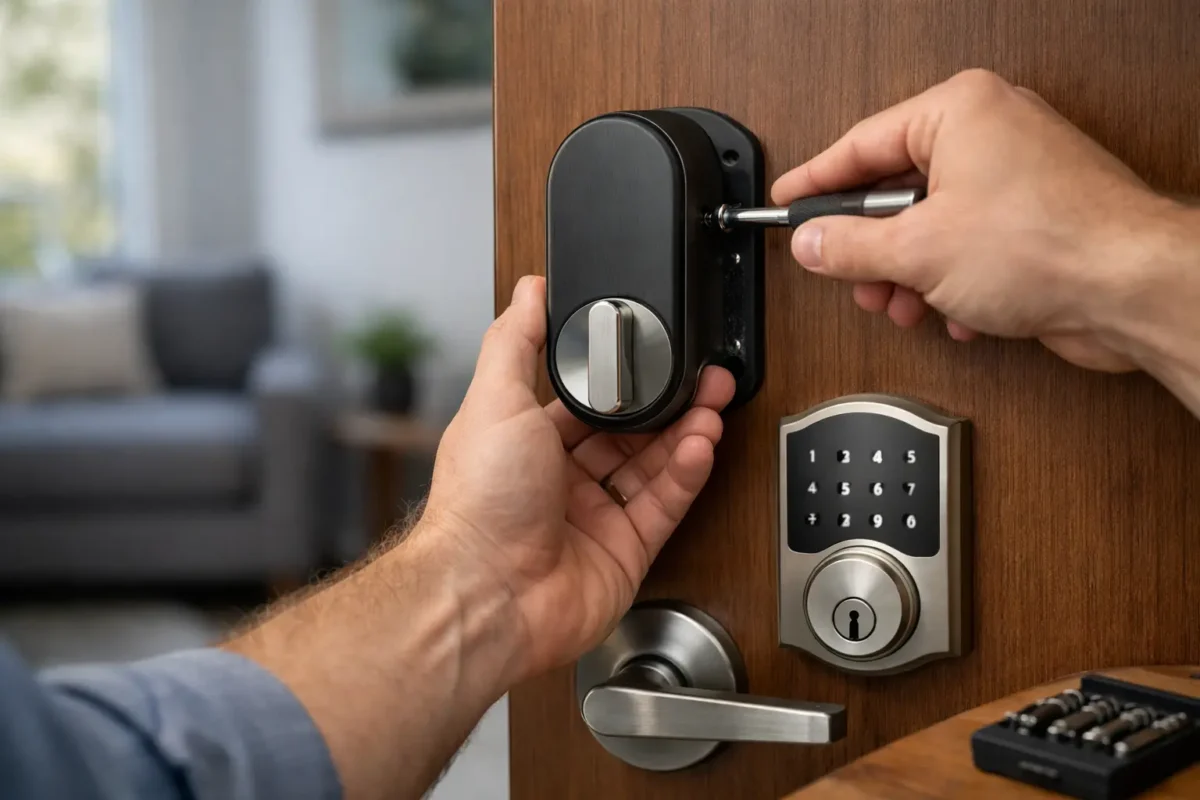
Smart lock installation usually starts by removing the existing deadbolt and inspecting the door. The new exterior keypad or reader must sit flat against the door without pinching wires. Inside, the mounting plate has to be level and secure before the interior unit is attached.
The cable connection is a small but critical detail. Pinched, twisted, or loosely connected wiring can cause intermittent operation. Once the lock is assembled, it needs to be calibrated with the door open and tested again while the door is closed. Both tests matter. Calibration may look successful with no pressure on the bolt, while a misaligned strike creates trouble during normal use.
After the mechanical work is complete, programming comes next. This includes setting the master code, creating individual codes, connecting the app when applicable, confirming auto-lock settings, and testing the key override or emergency power option. Default codes should never remain active after installation.
For properties with multiple users, name codes clearly instead of sharing one common code. Individual codes make it easier to remove access when a tenant moves, a contractor finishes work, or an employee leaves. It also prevents the confusion that comes from everyone using the same number sequence.
Battery Life, Weather, and Backup Access
Most smart locks use batteries, so battery planning is part of ownership. The exact lifespan varies with the model, weather exposure, number of daily uses, door alignment, and wireless features. Frequent warning alerts are not something to ignore. Replace batteries promptly with the type recommended by the manufacturer, and avoid mixing old and new batteries.
Cold weather can affect battery performance, and exterior doors in the Denver Metro area may experience large temperature changes across the year. A protected front entry generally puts less strain on the lock than an exposed side gate or garage entry. If the lock is installed outdoors, confirm that its weather rating fits the location.
Every household or business should also keep a backup plan. That may mean carrying the mechanical key, knowing where it is stored securely, or understanding how the lock accepts emergency power. Do not wait for a low-battery alert at a locked door to learn the process.
When Professional Installation Is the Better Choice
A handy homeowner can install many standard smart deadbolts, particularly when replacing an existing deadbolt on a well-aligned door. Professional help becomes more valuable when the door needs drilling, the existing holes are nonstandard, the frame is damaged, or the lock must work with other security hardware.
It is also the sensible choice for rental turnovers, occupied multi-unit properties, storefronts, offices, and doors with high traffic. A locksmith can assess whether a smart deadbolt is appropriate, correct alignment problems, rekey compatible cylinders, and make sure the physical hardware supports the electronic features.
BS Locksmith provides mobile smart lock installation for homeowners and businesses that want the convenience of modern access without guessing at fit, setup, or door security. The service is particularly helpful when a lock change, rekey, or door hardware repair is needed at the same visit.
Questions to Ask Before You Install
Before buying a smart lock, confirm the door thickness, backset, bore-hole size, and clearance around the interior and exterior hardware. Check whether the deadbolt is separate from the handle and whether the door closes without pushing, lifting, or pulling it into place.
Ask how access will be managed. Will family members use codes, physical keys, or an app? Will guests receive temporary codes? Does a manager need to remove access remotely? The answers should guide the lock choice, not the other way around.
Finally, consider the door’s purpose. A front door for a single-family home, a rental unit, a supply closet, and a busy business entrance each have different security and durability needs. A smart lock works best when it is selected for the door and installed as part of a complete, well-functioning entry.
The right setup should feel simple after it is installed: the door closes cleanly, the bolt moves without resistance, authorized people can enter without confusion, and you still have a reliable backup plan when life gets busy.