
What Causes Key Breakage? Common Reasons
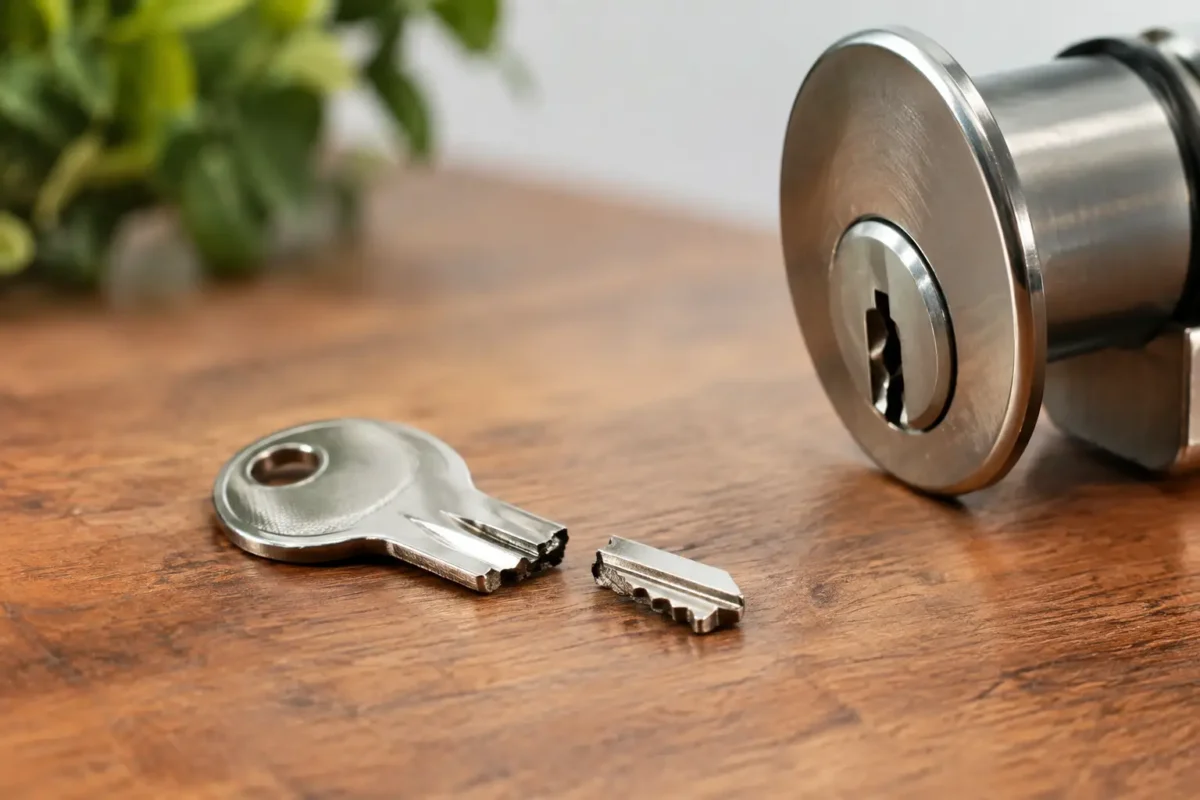
A key usually does not snap without warning. It may start sticking, require a harder turn, or come out with visible wear along the teeth. Understanding what causes key breakage can help you avoid a lockout, prevent damage to the lock, and know when it is time to call a locksmith instead of forcing the issue.
For homeowners, drivers, and business owners, a broken key is more than an inconvenience. If part of the key remains inside the lock, the door, vehicle, mailbox, or cabinet may be unusable until it is removed properly. The good news is that many broken-key situations are preventable with attention to the key and the lock it operates.
What Causes Key Breakage in Everyday Use?
Most key breakage comes down to stress on metal. Keys are thin pieces of brass, nickel silver, steel, or similar metal that are repeatedly inserted, turned, twisted, carried, dropped, and exposed to changing temperatures. Over time, that stress can create weak points.
The key may be the part that breaks, but the lock is often part of the reason. A worn, dirty, frozen, corroded, or misaligned lock can make turning difficult. When someone applies extra force to overcome that resistance, the narrow neck of the key is often the first thing to fail.
A broken key does not always mean the key was poor quality or the lock is ruined. It does mean something needs attention before a replacement key breaks the same way.
Worn or Damaged Keys
Every time a key enters a lock, its cuts and edges make contact with internal pins or wafers. After years of use, the sharp details that allow the key to operate the lock can become rounded. The key may still work, but it can require more wiggling or pressure to turn.
Repeated bending is another problem. A key that has been used to open packages, pry something loose, scrape a surface, or twist a stuck object may have a small bend that is hard to notice. Once weakened, it can snap under normal turning pressure.
Take a close look at keys that are used daily. Replace keys with visible bends, cracks, rough edges, excessive wear, or a loose key head before they fail inside a lock.
Poorly Cut or Worn-Out Duplicate Keys
A duplicate should match the original key accurately. If it was cut from a worn duplicate instead of a clean original, small inaccuracies can multiply. The result may be a key that enters the lock but does not lift the internal components correctly.
People often compensate by jiggling the key or turning it harder. That extra force can break the duplicate or wear the lock faster. A key that only works when held at a certain angle is not a key to keep using.
For car keys, the issue can be more complicated. A mechanical blade may be worn, while a transponder chip or remote fob has separate electronic problems. If a vehicle key is difficult to turn in the ignition or door lock, do not assume a new battery will solve it. The mechanical and electronic parts should be checked separately.
A Dirty, Dry, or Corroded Lock
Locks are exposed to more than most people realize. Exterior door locks collect dust, moisture, road grime, pollen, and debris. Mailbox locks can corrode. Vehicle door locks are exposed to rain, snow, de-icing chemicals, and temperature swings. Interior locks can also collect dust and wear particles over time.
When debris builds up inside the keyway, the pins or wafers may not move freely. A key can feel stuck, scrape on the way in, or resist turning. Pushing and twisting harder may get the lock open once, but it raises the chance of key breakage.
Use a lock lubricant made for locks when needed. Avoid treating a sticking lock with heavy household oil or grease. Those products can attract dirt and create a thicker buildup inside the lock. If proper lock lubricant does not improve the problem, the lock may need service, repair, or replacement.
Door, Deadbolt, or Latch Misalignment
A key is meant to rotate the cylinder, not force a door into position. If a deadbolt is pressing against the strike plate, a door has shifted, or the frame moves with seasonal changes, the lock can bind under pressure.
You may notice that the key turns easily with the door open but is hard to turn when the door is closed. That is a strong sign of alignment trouble. Forcing the key in this situation can snap it, especially with a thin house key or a worn duplicate.
The right fix may be adjusting the door, strike plate, latch, or lock hardware. Replacing the key alone will not correct a bolt that is being pushed sideways every time the door is locked.
Cold Weather and Frozen Locks
Colorado winters can make key and lock problems show up fast. Moisture inside an exterior lock can freeze, and cold metal becomes less forgiving under pressure. A key that seems fine in mild weather may feel unusually stiff on a freezing morning.
Never use a lighter or open flame to heat a key near a lock. Heat can damage finishes, create safety risks, and introduce moisture that freezes again later. Use a product intended for frozen locks, or get professional help if the key will not turn. Trying to muscle a frozen lock open is a common way to leave half a key inside it.
Too Much Force and the Wrong Turning Technique
Keys break most often at the moment someone decides to use more force. That usually happens when they are in a hurry, locked out, carrying groceries, dealing with a stubborn ignition, or trying to secure a business at the end of the day.
A key should insert fully and turn with steady, controlled pressure. If it stops, do not twist it harder. Pull it out, inspect it, and try again gently. For a door lock, take pressure off the bolt by pushing or pulling the door slightly while turning the key. For a vehicle ignition, make sure the steering wheel is not locked tightly against the ignition cylinder.
A large, heavy key ring can also add downward force to a key while it is in an ignition or door lock. Keeping only necessary keys on frequently used rings reduces strain and makes it easier to notice when a key begins to bend.
Signs a Key or Lock Needs Attention
Small warning signs are worth taking seriously. A lock does not need to be completely jammed before it deserves service. Watch for a key that catches during insertion, requires repeated jiggling, turns only from one side of the door, feels loose in the cylinder, or comes out covered in debris.
For businesses, these signs matter even more on doors used by employees, tenants, or customers. A failing key or lock can create an access issue at opening or closing time and may leave a door unsecured. Property managers should also pay attention when multiple residents report the same lock becoming difficult to operate. That points to a hardware issue, not individual key handling.
What to Do If Your Key Breaks in the Lock
First, stop turning the remaining piece. Do not push it farther into the keyway with another key, a screwdriver, or a paper clip. Those attempts can damage internal components and make extraction harder.
If a piece is clearly sticking out and can be gripped without pushing it inward, it may be possible to remove it carefully with pliers. If it is flush with the lock, deep inside, or the lock is still under pressure from a misaligned door, leave it alone. Avoid using glue on a broken key. Glue can bond the fragment to internal lock parts and turn a simple extraction into a larger repair.
A locksmith can remove the broken piece, assess whether the lock caused the failure, and make a properly cut replacement key. For automotive keys, professional service can also address transponder chips, remote fobs, and ignition or door-lock concerns when applicable.
How to Prevent Another Broken Key
Keep a clean, accurate spare key and use it before your everyday key becomes severely worn. If a key starts sticking, address the lock early rather than waiting for a complete failure. Keep exterior locks clean and properly lubricated, and do not use keys as tools.
When a door is hard to lock, check whether the deadbolt works smoothly with the door open. If it does, have the alignment corrected. If your vehicle key sticks in the ignition or door, do not keep forcing it through the same problem. A quick inspection can prevent a more stressful lockout later.
A broken key is often the last warning, not the first. If a key or lock is starting to fight you, treat that resistance as a reason to act now. BS Locksmith can help homeowners, drivers, and businesses in the Denver Metro area get the issue handled correctly before the next turn leaves a key stuck in the lock.