
How to Choose Deadbolt Grade for Your Home
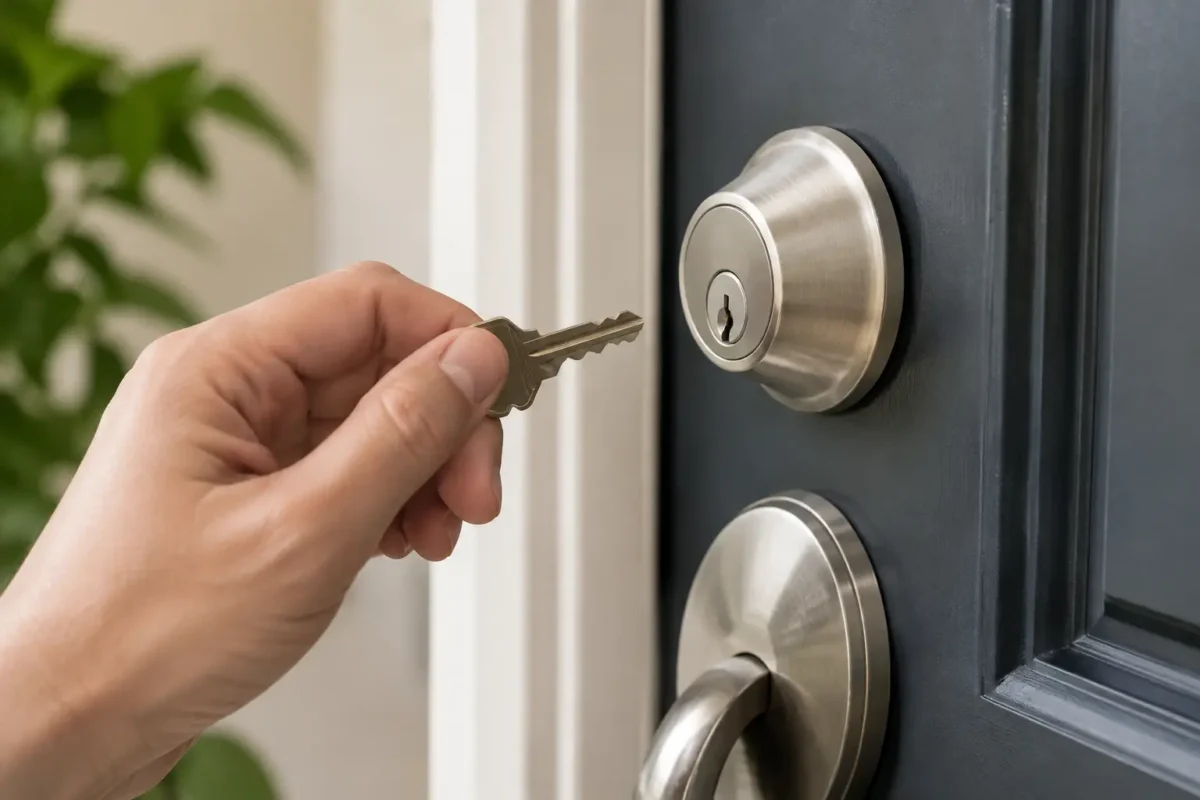
A deadbolt can look solid on the shelf and still be the wrong choice for your door. When homeowners ask how to choose deadbolt grade, the answer starts with more than the lock’s finish or keyway. The grade tells you how the hardware performed in standardized tests for strength, durability, and security. It is a useful starting point, but the door, frame, installation, and who needs to use the lock every day all matter too.
What a deadbolt grade actually tells you
Most residential deadbolts are rated under ANSI/BHMA standards. ANSI is the American National Standards Institute, while BHMA is the Builders Hardware Manufacturers Association. Together, their grading system helps buyers compare lock hardware based on testing rather than packaging claims alone.
Deadbolts are generally assigned one of three grades: Grade 1, Grade 2, or Grade 3. Grade 1 is the highest performance level, Grade 2 is a strong residential and light-commercial option, and Grade 3 is intended for basic residential use.
The testing looks at factors such as bolt strength, forced-entry resistance, finish durability, cycle testing, and how the lock holds up over repeated use. A higher grade does not make a lock impossible to defeat. It means the lock has met more demanding performance requirements under controlled testing.
That distinction matters. A Grade 1 deadbolt on a weak door frame or a strike plate held by short screws cannot deliver the protection the label suggests. Think of the grade as the quality level of one critical part of the system, not a complete security plan by itself.
How to choose deadbolt grade by security need
For many single-family homes, Grade 2 is the practical sweet spot. It offers better durability and forced-entry performance than basic hardware without automatically requiring the highest-duty commercial-grade option. It is often a sensible choice for a front door, garage entry door, or side door that gets regular use.
Grade 1 is worth considering when the door faces a higher-risk area, protects a business, leads to a shared storage space, or is used heavily throughout the day. Property managers may also prefer Grade 1 hardware for common-entry doors or units where durable, consistent hardware reduces repeated service calls. It can be especially useful when paired with a reinforced strike and properly secured frame.
Grade 3 can work on a low-priority residential door, but it is usually not the first choice for the main entrance to a home. A door used as the primary entry point experiences more daily wear and is often the first door someone will try during a break-in. Spending a little more on better hardware for that location is usually justified.
There is no need to put the same grade on every opening. A front entry, rear patio door, attached garage door, and interior storage room do not all face the same exposure. Match the grade to the door’s role rather than buying one lock simply because it is the least expensive or has the most polished appearance.
A simple way to match the grade to the door
Choose Grade 1 when the door is commercial, heavily used, exposed, or needs the strongest available mechanical hardware. Choose Grade 2 for most exterior residential doors where security and dependable daily operation are the priority. Reserve Grade 3 for lower-risk applications only, and avoid relying on it as the sole security upgrade for a vulnerable main entry.
If you are replacing a lock after lost keys, a tenant move-out, or a break-in concern, the right grade may be only part of the decision. Rekeying a quality existing deadbolt can make sense when the lock is in good condition. Replacing it is the better call if the bolt, latch, cylinder, or exterior trim is worn, damaged, or too basic for the door’s current security needs.
Look beyond the ANSI grade label
Two locks with the same grade can still differ in ways that affect security and convenience. Before choosing, check the bolt throw, door compatibility, cylinder type, strike plate, and the lock’s operation from inside the building.
A quality deadbolt should have a substantial bolt that extends securely into the frame. The strike plate should be heavy enough for the application and installed with long screws that reach the structural framing, not just the decorative trim. This is one of the most useful upgrades for a residential entry door because the frame takes much of the force during a kick attempt.
Also measure your door before purchasing hardware. Standard doors commonly use specific bore-hole sizes, backsets, and thickness ranges, but older doors and custom doors can vary. A lock that is technically high grade is not a good fit if it requires awkward modifications, binds against the frame, or leaves the bolt only partly engaged.
The door itself deserves a close look. Hollow-core doors, damaged jambs, split frames, loose hinges, and warped doors limit what any deadbolt can accomplish. If the door does not close squarely, forcing a new deadbolt into alignment can create premature wear and unreliable locking.
Choose the right cylinder and inside operation
A single-cylinder deadbolt uses a key outside and a thumbturn inside. For most homes, this is the preferred setup because occupants can exit quickly without finding a key. It is practical for families, renters, and anyone who wants straightforward emergency egress.
A double-cylinder deadbolt requires a key on both sides. Some people consider it for doors with nearby glass, but it creates a major safety consideration: people inside must have access to a key to get out. Local building and fire requirements may also limit where this style can be used. Before installing one, make sure it is appropriate for the door and occupancy.
Key control is another factor. If several people have had access to the home, a fresh rekey can prevent old keys from continuing to work. For rental homes and small businesses, a system that allows controlled rekeying or restricted key duplication may be more useful than a standard residential keyway.
What about smart deadbolts?
A smart deadbolt can add convenience, but it should still be evaluated as a lock first. Look for a clearly stated ANSI/BHMA grade, reliable manual key backup, and an interior design that lets occupants exit easily. Battery alerts, temporary codes, and activity records can be helpful for homeowners and property managers, but they do not replace a secure door frame or a correctly installed strike.
Smart locks also introduce a practical trade-off. They can simplify access for family, guests, cleaners, or contractors, yet they need battery maintenance and occasional troubleshooting. If you prefer the least complicated setup, a high-quality mechanical Grade 2 deadbolt may be the better long-term fit. If access control is a priority, choose a smart model with hardware quality that matches the door’s security role.
Installation can make or break a good deadbolt
Deadbolt installation is precise work. The bolt must line up cleanly with the strike, the lock must sit flat against the door, and the screws must be tightened without crushing or misaligning the hardware. A lock that requires pushing, lifting, or slamming the door to engage will wear faster and may not provide consistent protection.
Avoid using the deadbolt to pull a warped door into place. Correct the alignment issue first. A locksmith can assess the door, jamb, strike area, and existing hardware together, then recommend whether a rekey, replacement, reinforcement, or adjustment makes the most sense.
For homes and businesses in Aurora, Federal Heights, Denver, and nearby communities, BS Locksmith can help select and install deadbolt hardware that fits the opening and the security need. The goal is not simply to put a higher number on the door. It is to make sure the lock works smoothly, the frame supports it, and the people who rely on that door can use it safely every day.
A deadbolt grade is a smart place to start, but the best choice is the one that matches the door, the level of use, and the real-world risks around the property. When the hardware and installation work together, you get security that is easier to rely on every time you turn the key.