
Why Key Fobs Fail and What to Check First
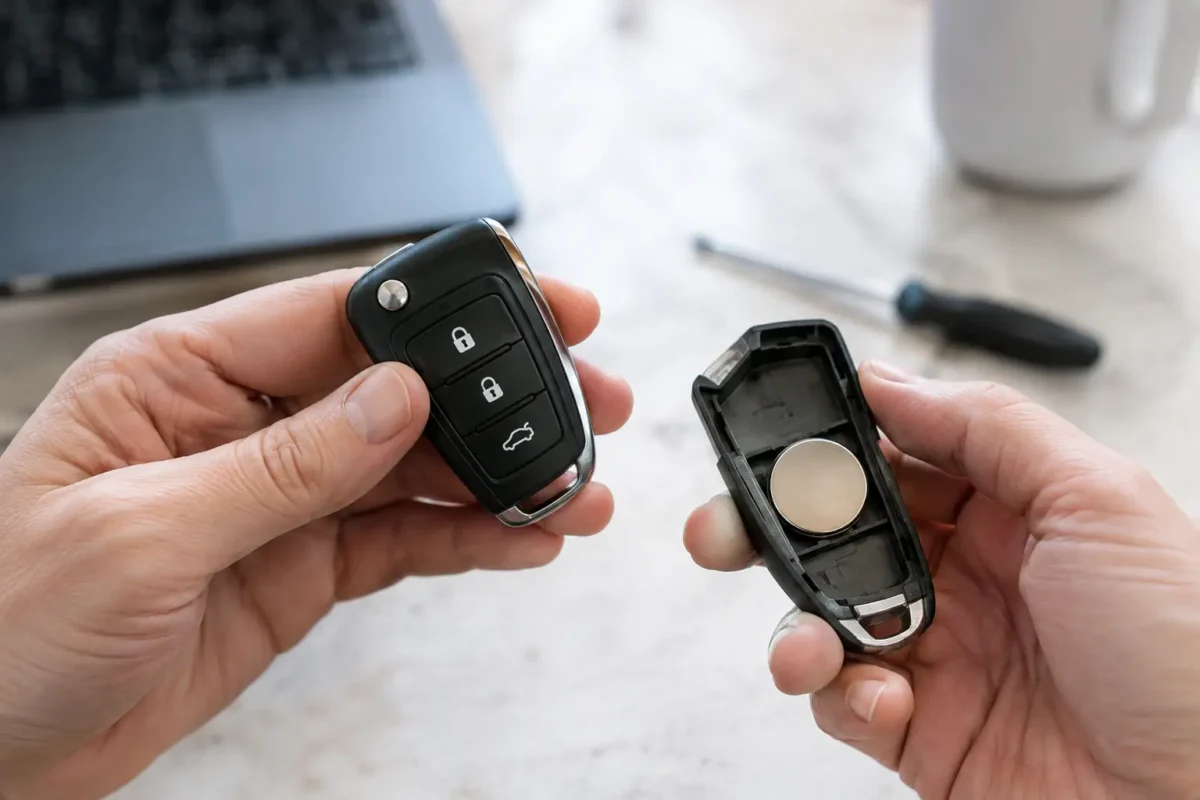
A key fob can work perfectly in the morning and leave you standing beside a locked car that afternoon. That is why key fobs fail is more than a casual question for drivers. Modern fobs handle remote locking, alarms, trunk release, push-button starting, and anti-theft communication. When one part of that system stops working, the cause may be simple, or it may need professional testing and programming.
The good news is that many fob problems have clear warning signs. A reduced operating range, buttons that work only sometimes, or a dashboard message about an unrecognized key can help narrow down the issue before it becomes a full lockout.
Why Key Fobs Fail: The Most Common Causes
A weak or dead fob battery
The small coin-cell battery inside a key fob is the most common reason it stops responding. It can weaken gradually, so you may first notice that you have to stand closer to the vehicle or press a button more than once. Eventually, the locks may not react at all.
A dead fob battery does not always mean the vehicle battery is bad, and it does not automatically mean the fob has lost its programming. In many cases, installing the correct fresh battery restores normal operation. The battery type matters, though. Using the wrong size, installing it backward, or bending the battery contacts while opening the case can create a new problem.
If your car has push-button start, do not assume you are stranded just because the remote buttons quit. Many vehicles have an emergency recognition method, such as holding the fob close to the start button or placing it in a designated backup location. Your owner’s manual can identify the correct procedure for your specific vehicle.
Worn buttons and internal damage
Key fobs take more abuse than most people realize. They ride in pockets, fall on pavement, get pressed under other items, and sometimes go through the wash. Over time, the rubber button pad, internal switches, circuit board, or battery contacts can wear out.
A useful clue is whether only one function has failed. If the lock button works but the trunk button does not, the issue may be a worn switch or damaged button contact rather than a battery. If no buttons work and the fob has a cracked case, loose parts, corrosion, or a history of water exposure, internal damage is more likely.
Avoid forcing a damaged fob closed with tape or glue before it is inspected. A case can often be replaced, but adhesive can make later repair harder and may interfere with the buttons.
Moisture and corrosion
Water damage is a frequent cause of intermittent fob failure. A fob dropped in snow, rain, a puddle, or a washing machine may work at first and then fail after moisture reaches the circuit board. Even light condensation can corrode battery terminals over time.
If the fob gets wet, remove the battery as soon as you can and let the fob dry completely. Do not heat it with a hair dryer on high or place it in an oven. Excess heat can warp the plastic case and damage electronic components. If it still does not work after drying and fitting a new battery, it may need repair or replacement.
Signal interference
Sometimes the fob is working, but the vehicle is not receiving its signal reliably. Radio interference can occur near certain electronic equipment, parking structures, airports, large commercial buildings, or areas with many wireless devices. The problem may disappear once you move the vehicle to a different location.
Interference is usually location-specific. If the fob works normally everywhere except one parking spot, replacing the fob may not solve anything. On the other hand, if it has poor range in multiple places, a weak battery, damaged fob, or vehicle-side receiver issue is more likely.
The car battery or vehicle receiver has a problem
A key fob depends on more than its own battery. The vehicle needs enough electrical power to operate its locks, receiver, immobilizer system, and starting system. A weak or dead car battery can make a perfectly good fob appear defective.
Watch for other symptoms: dim interior lights, slow cranking, warning lights, or locks that do not respond even when using the door switch inside the vehicle. Those signs point toward the vehicle battery or electrical system rather than the fob itself.
There are also cases where the fob transmits normally but the vehicle’s antenna, receiver, wiring, or body control module does not respond. These issues are less common than a dead fob battery, but they require proper diagnosis. Replacing fobs repeatedly will not fix a receiver problem.
Lost programming or transponder failure
Many people use the terms key fob, remote, and transponder key interchangeably, but they do not always perform the same job. The remote buttons lock and unlock the doors. The transponder chip or proximity system communicates with the vehicle’s anti-theft system and allows it to start.
A fob may unlock the doors but fail to start the car, or the car may start with a backup key while the remote functions do not work. That difference matters. It can indicate a programming issue, a failed transponder chip, or a problem with the vehicle’s immobilizer system.
Programming can be lost after certain electrical repairs, module replacement, or a failed attempt to add a new key. Some vehicles allow limited owner programming, but many newer models require professional equipment and security authorization. Guessing through online programming instructions can leave you with a fob that still does not work or erase a working key from the vehicle’s memory.
What to Check Before Replacing a Key Fob
Start with the simplest checks. Try your spare fob if you have one. If the spare works, the problem is likely limited to the original fob. If neither fob works, look at the vehicle battery, receiver, or a shared programming issue.
Next, stand close to the vehicle and test each button. Pay attention to whether the lights flash, whether one button works, and whether the range has changed. Replace the fob battery with the exact type specified for that remote, making sure the contacts are clean and the battery is seated correctly.
Also inspect the fob case. A loose battery cover, cracked shell, sticky button, or greenish corrosion around the battery terminals can explain inconsistent operation. If the fob was recently dropped or wet, say so when requesting service. That information helps a locksmith determine whether repair, replacement, or programming is the practical next step.
Do not keep pressing the buttons over and over when the fob behaves erratically. It rarely fixes the issue, and it can drain an already weak battery. More importantly, do not leave a functioning spare key inside the vehicle as a backup. That can turn a fob problem into an easy theft opportunity.
When a Locksmith Is the Right Call
Call for professional help when the vehicle will not recognize the key, the fob has been lost, you have only one working key, or a new remote needs programming. It is also wise to get help if the fob is physically damaged, both fobs have stopped working, or you are locked out without a mechanical key available.
A mobile automotive locksmith can test the situation on site, cut a replacement key when needed, program compatible fobs, and help determine whether the issue is the remote or the vehicle. For drivers in Aurora, Denver, Federal Heights, and nearby communities, BS Locksmith provides mobile help for lockouts, car key replacement, and key fob programming.
A key fob failure is frustrating, but it does not always mean an expensive or complicated repair. Check the battery, look for damage, compare the behavior of a spare, and pay attention to whether the problem affects locking, starting, or both. Those details make it much easier to get the right fix without wasting time.