Key Safe Review: Is One Secure Enough for You?
A spare key only helps if you can reach it when you need it. If it is hidden under a planter, tucked above a door frame, or left with a neighbor who is away, it can create more trouble than it solves. This key safe review explains what a key safe can realistically protect, where it falls short, and how to choose one that makes sense for a home, rental, or small business.
Key Safe Review: What a Good Model Should Do
A key safe, also called a key lockbox, is a small secured container that holds one or more keys behind a combination dial, push-button keypad, or electronic code. It is commonly used by homeowners who want a backup entry key, property managers coordinating tenant access, and businesses that need controlled access for staff or service providers.
The best key safes are convenient, but convenience is not the same as security. A basic portable lockbox with a shackle may be enough for short-term access at a low-risk location. It is not the same as a properly installed, wall-mounted key safe with a protected metal body and a hardened mounting surface.
For most homes, a key safe should be treated as a backup access option, not the main security feature protecting the property. If someone can easily remove it, pry it open, or guess the code, the fact that the key is technically locked up does not offer much protection.
Security Starts With the Mounting Method
The biggest decision is whether to choose a shackle-mounted or wall-mounted key safe.
A shackle-mounted model hangs from a door handle, fence, gate, or other fixed point. It is quick to set up and easy to move. That can be useful for a temporary situation, such as giving a contractor access while work is underway. The trade-off is visibility and removal risk. A lockbox hanging on a front door handle tells anyone passing by that a key may be inside.
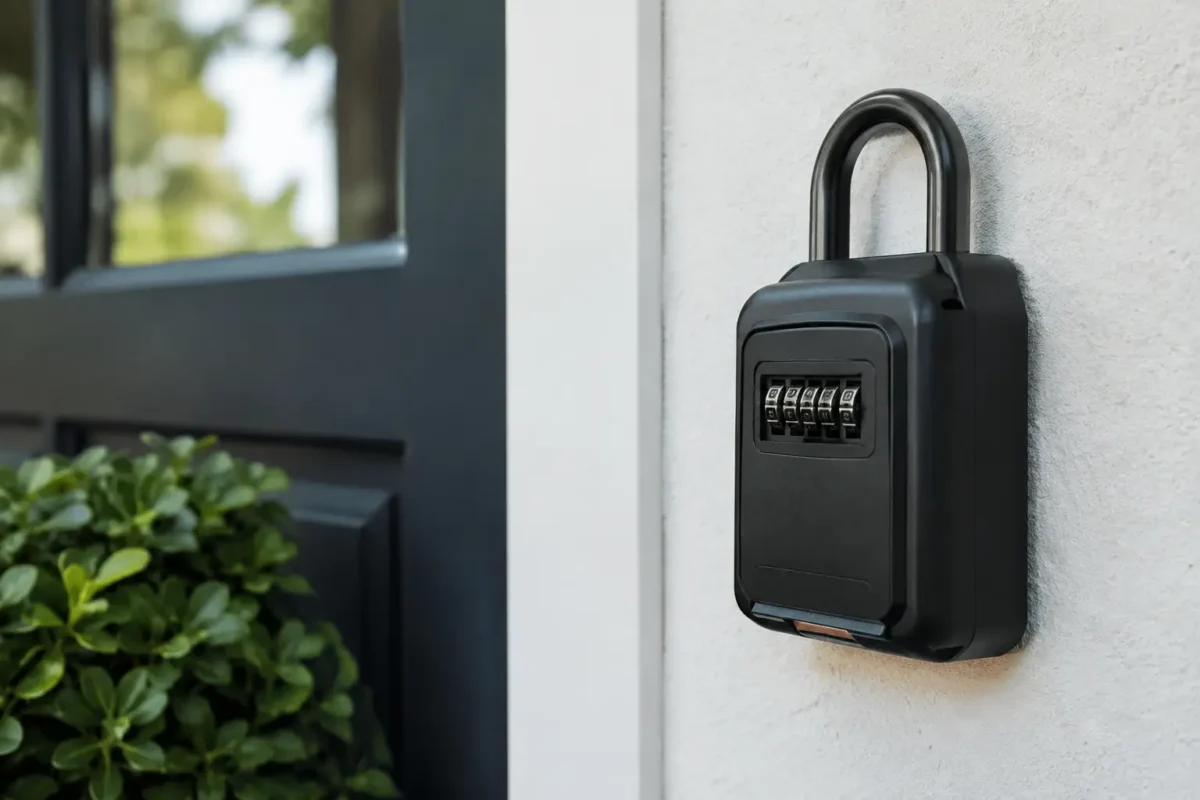
Wall-mounted key safes are generally the better choice for regular use. They should be secured with appropriate fasteners into solid masonry, brick, or structural wood, not merely into trim, siding, or drywall. A strong key safe mounted poorly is still an easy target.
Placement matters just as much. Avoid mounting a box in the most obvious location beside the front door. Choose a spot that is accessible to the people who need it but not visible from the street. Make sure the user can operate the keypad without standing in an exposed area or struggling in bad weather.
What to Look for in the Safe Itself
Not every metal key box offers the same level of protection. Thin materials, loose doors, exposed hinges, and weak locking components can reduce a key safe to little more than a storage container. Look closely at construction rather than relying on a product photo or the word “secure” on the package.
A good key safe should have a solid metal body, a protected locking mechanism, and a cover that helps keep dirt, rain, ice, and dust out of the code area. Outdoor weather in the Denver metro area can be hard on exposed hardware. Moisture can freeze, keypads can collect debris, and moving parts can become difficult to operate if the box is neglected.
Capacity also deserves attention. A single-house-key safe does not need a large compartment, but many people need room for a key ring, mailbox key, garage key, or access card. Do not force a thick key fob into a box that barely closes. Pressure on the door can interfere with locking and make access frustrating when you are already locked out.
If the safe is intended for a rental or business, choose a model designed for repeated use. Frequent code entry, keys being removed and replaced, and exposure to different users can wear down a cheap unit quickly.
Combination, Push Button, or Electronic Access?
Mechanical combination key safes are popular because they do not require batteries. Many use numbered wheels or push buttons and can be reset when access needs change. They are simple, dependable, and a practical option for homeowners who want a straightforward backup key solution.
Push-button systems are often easier to use in low light or with gloves than small combination dials. However, buttons can show wear over time. If the same code is entered repeatedly, frequently used buttons may become more noticeable. Keeping the keypad covered and changing the code periodically can help.
Electronic key safes can offer features such as temporary access codes, app controls, usage records, or remote code changes. Those features can be helpful for property managers and businesses, but they also introduce battery and connectivity considerations. Before relying on an electronic model, confirm how it works if the battery is low, the app is unavailable, or a person using the safe does not have a smartphone.
The right choice depends on who needs access. A homeowner who wants a reliable emergency key may prefer a well-built mechanical box. A manager coordinating cleaners, maintenance staff, and tenants may benefit from controlled code changes and access records.
Code Management Is Part of the Security
A strong key safe can be undermined by a weak code. Avoid addresses, birthdays, anniversary dates, repeated numbers, and anything that a neighbor, former tenant, or social media profile could reveal. Use a code that is easy for approved users to remember but not obvious to someone familiar with the property.
Change the code whenever circumstances change. That includes after a contractor finishes a job, a tenant moves out, a housekeeper no longer works at the home, an employee leaves, or the code has been shared more widely than intended. A key safe is not a “set it and forget it” device.
For rental owners and small businesses, keep a simple record of who has been given the code and why. There is no need to distribute it to every vendor or employee. Limited access is easier to manage and safer over time.
When a Key Safe Is a Good Fit
A key safe can work well when there is a specific access problem to solve. It is especially useful for households with older family members, renters who need scheduled maintenance access, property managers handling multiple units, and business owners who need a controlled backup key for authorized staff.
It is less appropriate when the property has major security concerns, uncontrolled foot traffic, or a history of unauthorized access. In those cases, rekeying locks, upgrading deadbolts, or installing an access control system may be a better starting point. A key safe does not correct a worn-out lock, a door that does not latch properly, or keys that may already be in the wrong hands.
It is also worth considering whether a smart lock better fits the situation. Smart locks can provide keyless entry and temporary codes without leaving a physical key outside. They require proper installation and ongoing battery attention, but they can reduce the need for a key safe in some homes and rentals.
Installation Mistakes That Reduce Protection
Several common mistakes make a good key safe less useful. Mounting it on a flimsy surface is one. Placing it directly beside the main entry is another. Leaving a visible key ring, decorative tag, or label inside can also identify exactly what the key opens.
Do not install a key safe and assume the rest of the entry is secure. Check that the deadbolt extends fully into the strike plate, the door frame is solid, and exterior doors close and lock correctly. If you have recently moved into a home, changed tenants, lost a key, or ended a relationship with someone who had access, rekeying should come before hiding a backup key.
For commercial properties, think beyond the front door. A key safe containing keys for offices, storage rooms, equipment, or restricted areas can create a larger security issue than a single residential house key. Use clear access rules and keep keys inside the box limited to what is genuinely necessary.
A Practical Choice for Backup Access
The best key safe is one that is strong enough for its purpose, mounted correctly, placed discreetly, and managed carefully. It should make a locked-out moment easier without creating an open invitation to the wrong person.
If you are unsure whether a key safe, rekey, deadbolt upgrade, or smart lock is the right answer, a locksmith can assess the entry point and help you choose a practical setup. BS Locksmith helps homeowners, property managers, and businesses across the Denver area improve access and security without making the process complicated. A spare key should give you peace of mind, not a new weak point at the door.