
Deadbolt Grades Comparison: Which Lock Fits?
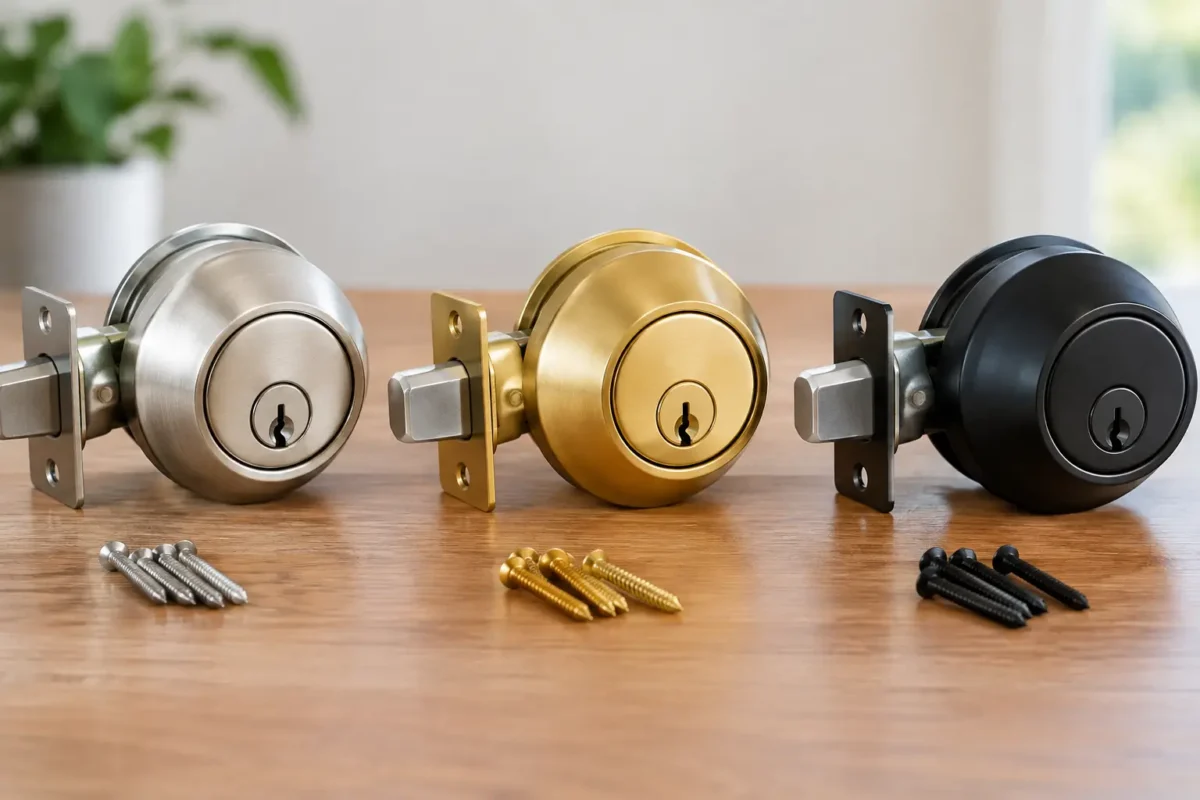
A deadbolt can look solid on the door and still be the weak point in your security. This deadbolt grades comparison explains what the numbers actually mean, where Grade 1, Grade 2, and Grade 3 locks make sense, and why the lock is only as strong as the door and frame holding it.
For homeowners, property managers, and business owners, the goal is not always to buy the highest-rated lock available. It is to choose hardware that fits the property, the door, the level of traffic, and the security concern you are trying to solve.
What Deadbolt Grades Measure
Deadbolt grades are generally assigned through testing standards from ANSI and BHMA, organizations that evaluate residential and commercial door hardware. The grades reflect how a lock performs under tests for strength, durability, operation, impact, and forced-entry resistance.
Grade 1 is the highest rating. Grade 2 is a strong middle option commonly used in homes. Grade 3 is the basic residential rating and is often found on entry-level hardware.
The grade does not mean a lock is impossible to defeat. No mechanical lock can promise that. It means the product met a specific level of testing when installed and used under controlled conditions. A Grade 1 deadbolt usually withstands more force and more operating cycles than a Grade 2 or Grade 3 model, but the rest of the opening still matters just as much.
A weak strike plate, short mounting screws, damaged door jamb, hollow-core door, or loose hinges can reduce the benefit of a high-quality deadbolt. Security works as a system, not as one number stamped on a package.
Deadbolt Grades Comparison: Grade 1, 2, and 3
Grade 1: Best for high-use and higher-security doors
ANSI Grade 1 deadbolts are designed for demanding use and stronger resistance to physical force. They are a practical choice for many commercial exterior doors, offices with sensitive equipment, doors leading into common areas, and residential properties where extra security is a priority.
Grade 1 hardware is usually built with heavier-duty internal components and is tested for significantly more operating cycles than lower grades. That matters on a busy business entrance, a multi-unit property, or any door opened repeatedly throughout the day.
For a house, Grade 1 can be a smart fit for a main entry door, especially if the home has a detached garage, a side entrance that is out of view, or a door exposed to frequent weather. The trade-off is that Grade 1 hardware may be more than a low-traffic interior or secondary door needs. The best choice depends on the opening, not just the rating.
Grade 2: A strong choice for most exterior home doors
Grade 2 deadbolts are a dependable option for many residential front, back, and garage-entry doors. They provide a meaningful step up from basic builder-grade hardware and are built for regular household use.
For a typical single-family home, Grade 2 often hits the right balance between security, durability, and practical everyday operation. It is especially useful when moving into a home, replacing worn locks, or upgrading after a lost key situation. Pairing a Grade 2 deadbolt with professional rekeying or a new key system can address both physical security and key control.
Grade 2 can also work in lighter commercial settings, depending on traffic and the type of business. However, a high-traffic office or storefront may benefit from Grade 1 hardware or a broader access control plan.
Grade 3: Basic protection for low-demand applications
Grade 3 is the minimum commonly recognized residential grade for a deadbolt. It can be suitable for lower-risk applications, doors that receive limited use, or properties where the lock is one part of several security measures.
That does not automatically make Grade 3 a bad lock. A properly installed Grade 3 deadbolt on a solid door with a reinforced strike can perform better than a poorly installed higher-grade lock. Still, it is generally not the first choice for a primary exterior entrance, rental turnover upgrade, or business door where durability and repeated use are concerns.
If you are replacing a lock because the current deadbolt is loose, sticking, or failing to latch consistently, moving from Grade 3 to Grade 2 is often a sensible upgrade.
Grade Is Not the Same as Key Security
A deadbolt grade mainly addresses the physical performance of the hardware. It does not automatically tell you how resistant the key cylinder is to picking, bumping, unauthorized key duplication, or other forms of bypass.
This is where homeowners and business owners can make a more informed decision. A strong deadbolt body is valuable, but the cylinder, keyway, and key-control plan matter too. For example, a property manager may need locks that are easy to rekey between tenants. A small business may need restricted keys or an access control system so former employees cannot retain working credentials.
For a home, key control may be as simple as rekeying after a move and limiting copies of the new keys. For a business, it may mean setting up a clear record of who has access to each door. The right solution depends on who needs access and how often that access changes.
Installation Can Make or Break a Deadbolt
Even a Grade 1 deadbolt cannot do its job if it is installed into weak material or aligned poorly. The bolt should extend fully into the frame without binding. The strike plate needs to sit securely, and its mounting screws should reach solid framing rather than only the decorative trim or thin jamb material.
Door alignment is another common issue. Seasonal temperature changes, settling, and worn hinges can cause a deadbolt to drag or require force to turn. Forcing the thumbturn or key can damage the lock over time. A locksmith can correct alignment issues, reinforce the strike area, and make sure the hardware operates smoothly before a small problem becomes a lockout or broken key issue.
Door material also matters. A quality deadbolt on a solid wood, metal, or properly reinforced fiberglass door generally has a stronger foundation than the same lock on a weak or damaged door. Glass near a door can change the security plan as well. If someone can break nearby glass and reach the interior thumbturn, a double-cylinder deadbolt may seem appealing, but it can create a serious emergency exit concern. Local code requirements and safe egress should always guide that decision.
Choosing the Right Grade for Your Property
Start with the door’s role. A main home entrance usually deserves at least a Grade 2 deadbolt in good condition, installed with a reinforced strike plate. A back or side door that is less visible may deserve the same attention, not less. Burglars do not limit themselves to the front door.
For rental properties, rekeying between occupants should be part of the turnover process. A Grade 2 deadbolt is often a practical standard for exterior residential doors, while a Grade 1 option may be worthwhile for shared entries, high-traffic entrances, or doors with added security concerns.
For offices, retail spaces, and other commercial properties, consider more than the deadbolt itself. Employee turnover, delivery access, emergency exits, ADA requirements, and the number of people entering daily can all affect the best hardware choice. A Grade 1 deadbolt may be appropriate for some doors, while others need panic hardware, a lever lock, or electronic access control instead.
Smart locks add another layer of convenience, but they should still be selected carefully. Look for a quality mechanical foundation, reliable operation, and a backup entry method. Smart features are useful for managing codes and access, but they do not replace a correctly installed strike plate and secure door frame.
When to Replace Instead of Rekey
Rekeying is a good solution when the lock body is in good shape and you simply need old keys to stop working. It is usually the right move after moving into a home, changing tenants, or losing track of a key.
Replacement makes more sense when the deadbolt is damaged, loose, difficult to operate, rusted, outdated, or too low a grade for the door’s purpose. It is also the better choice when you want to move from basic hardware to a stronger grade, upgrade key control, or add a compatible smart lock.
A mobile locksmith can assess the door, frame, existing hardware, and how the property is used before recommending a change. That avoids installing a stronger lock on a door that really needs frame repair or choosing commercial hardware that does not match the opening.
The most useful result from a deadbolt grades comparison is a clear next step: choose hardware that matches the risk, reinforce the full door opening, and keep control of who has the keys. If you are unsure whether to rekey, replace, or upgrade a lock in Aurora, Denver, Federal Heights, or nearby, BS Locksmith can inspect the setup and help you make a practical security decision.