
Master Key System Example for Your Property
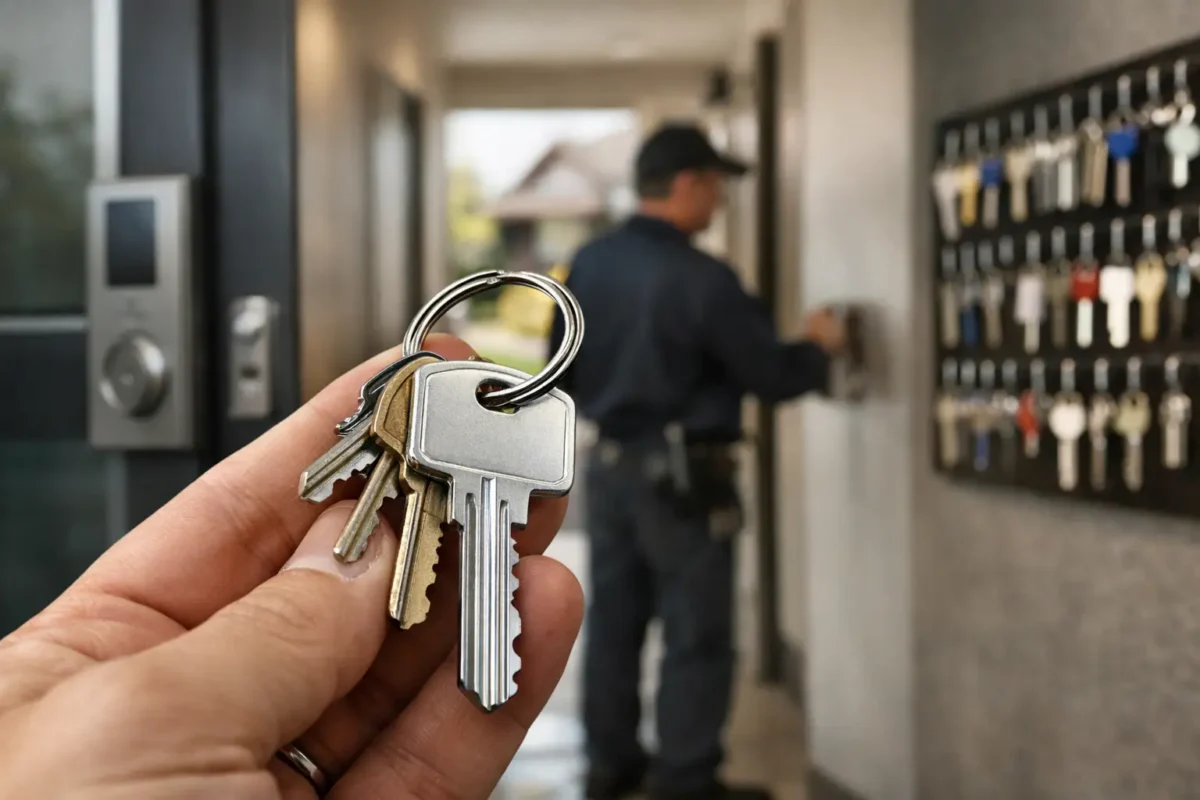
A master key system example is easiest to understand when you picture a small office building: each employee has a key for their own area, a manager can open several work areas, and the owner can access every door. The goal is not to hand out more powerful keys than necessary. It is to give the right people reliable access while keeping private rooms, inventory, and tenant spaces protected.
For homeowners, landlords, property managers, and business owners, a well-planned key system can reduce the number of keys on a ring without sacrificing control. It can also make staff changes, tenant turnover, and emergency access much easier to manage. The details matter, though. A poorly planned system can leave too many people with access to doors they do not need to open.
What a Master Key System Does
A master key system uses compatible locks that are keyed differently at the individual level but can still be opened by a higher-level key. Each lock cylinder contains pins set up to recognize more than one key combination. That allows one door to work with its own change key and a designated master key.
The basic levels are straightforward. A change key opens one lock or one defined group of locks. A master key opens multiple locks within that group. Larger properties may also use a grand master key, which opens multiple master-key groups. A top-level key can be useful in a multi-building property, but it should be tightly controlled because one lost key may affect a large number of doors.
This is different from putting the same key in every lock. When every door uses one key, every key holder has access everywhere. A master key system creates access levels instead of treating all doors the same.
A Practical Master Key System Example
Consider a Denver-area property manager responsible for a four-unit rental building with a shared mechanical room and a small supply closet. The property manager wants residents to have access only to their own unit, while maintenance can enter units for authorized repairs and the owner has full building access.
The system could be organized like this:
| Key holder | Doors the key opens | | — | — | | Tenant in Unit 1 | Unit 1 only | | Tenant in Unit 2 | Unit 2 only | | Tenant in Unit 3 | Unit 3 only | | Tenant in Unit 4 | Unit 4 only | | Maintenance key | All four units, mechanical room, supply closet | | Property manager key | All four units, mechanical room, supply closet | | Owner key | All doors in the system |
In this master key system example, every apartment lock has a separate change key. That protects tenant privacy because a Unit 1 key does not open Unit 2, 3, or 4. The maintenance and management keys work across the building, but only the people assigned those keys should receive them.
The mechanical room may need another restriction. If a contractor only needs access to that room, it is usually better to issue a key that opens the mechanical room only rather than a maintenance master key. This is the central rule of good access planning: give access based on the job, not convenience alone.
How a Small Office System Could Work
A small business can use the same idea with a different layout. Imagine an office with a front entrance, employee workroom, manager office, file room, server closet, and rear exit. Not every employee needs access to the manager office, file room, or server closet.
An employee key might open the front entrance, workroom, and rear exit. A manager key can also open the manager office and file room. The owner or facilities manager may carry a master key for every door. The server closet could remain on a separate key, or it could use an electronic access control credential if access records are needed.
The right choice depends on what is behind the door. A basic storage room may only need a standard lock within the system. Rooms containing customer records, controlled inventory, financial documents, or network equipment deserve a higher level of protection. That may include a restricted keyway, a commercial-grade deadbolt, a keypad lock, or access control instead of a standard keyed cylinder.
Start With Doors and Roles, Not Key Copies
The most common planning mistake is starting with the question, “How many keys do we need?” Start with the doors and the people instead. Walk the property and write down every door that needs to be part of the system, including exterior doors, offices, storage areas, gates, utility rooms, mail rooms, and shared spaces.
Next, identify who needs access and why. A cleaner may need evening access to common areas but not private offices. A maintenance technician may need access to vacant units and mechanical spaces. A business owner may need access everywhere, while an assistant manager may only need access during scheduled shifts.
Once these roles are clear, a locksmith can build a keying schedule. This is the record that shows which keys operate which doors. The schedule should be kept private and current. Avoid labeling a key with the property address, unit number, or words such as “master.” If it is lost, that label gives someone useful information.
When a Master Key System Makes Sense
Master key systems work especially well when a property has multiple doors and several people with different access needs. Rental properties, offices, medical practices, retail businesses, warehouses, churches, schools, and homeowner associations often benefit from a planned hierarchy.
They can also help a homeowner with a detached garage, workshop, gate, and rental suite. Instead of carrying separate keys for every area, the homeowner can carry one master key while other family members or service providers receive keys with narrower access.
A system may be unnecessary for a small home with two exterior doors and one or two trusted key holders. In that situation, rekeying both doors alike may be simpler. The decision comes down to whether you need different people to access different areas.
Protect the System After Installation
A master key system only works as well as the key control behind it. Keep a written record of every key issued, who has it, and the date it was returned. This matters when an employee leaves, a tenant moves out, or a contractor finishes a job.
Do not make extra copies without authorization. For higher-security applications, ask about restricted keyways. These systems limit who can duplicate keys and add another layer of control. They are not necessary for every property, but they are worth considering where key misuse would create a serious security issue.
Rekeying is often the right response after a lost master key or a change in occupancy. In some cases, only one cylinder or one branch of the system needs attention. In other cases, a lost top-level key may require a broader rekey to restore control. The right scope depends on what that missing key could open.
Mechanical Keys and Electronic Access
Mechanical master key systems remain practical because they are familiar, dependable, and do not require batteries or user accounts. They are a strong fit for many small businesses and rental properties. However, they do not create an automatic record of who entered a door or when.
Electronic access control can be a better option for doors with frequent staff turnover, changing schedules, or sensitive areas. Credentials can be removed without physically rekeying a lock, and access can be limited by user, door, and time of day. A mixed setup is common: a master key system for standard doors and electronic access for a server room, main office, or high-value storage area.
BS Locksmith can help property owners in Aurora, Federal Heights, Denver, and nearby communities assess the doors they have, map out access levels, and install or rekey the appropriate hardware. A system should fit the building and the people using it, not force a complicated plan onto a simple property.
Before issuing another key or changing another lock, take a moment to decide exactly who should be able to open each door. That one conversation is where a secure, manageable master key system begins.