
Residential Access Control Options for Safer Homes
A house key can end up in more hands than most homeowners realize: a former roommate, a contractor, a dog walker, a neighbor, or someone who found a lost keyring. Residential access control options give you a practical way to decide who can enter your home, when they can enter, and how quickly you can remove that access when circumstances change.
The right choice is not always the newest lock or the most technical setup. For some homes, rekeying a quality deadbolt is the smartest move. For others, a keypad, smart lock, or connected camera system makes daily life easier without sacrificing security. The best setup depends on your doors, household routine, budget, and how much control you want over entry.
Start With the Doors You Need to Protect
Before choosing hardware, look at how your home is actually used. The front door usually deserves the strongest security, but it is not the only entry point that matters. A door from the garage into the house, a back patio door, a basement entrance, and a side gate may all need attention.
Also consider who needs access. A family that is home at regular hours has different needs than a household with teenagers, caregivers, cleaners, frequent guests, or short-term renters. If several people need to come and go, a system that lets you change access without collecting keys can save a lot of frustration.
Door condition matters, too. A high-quality lock cannot make up for a loose strike plate, a weak door frame, worn hinges, or a door that does not close properly. Access control works best when the door and hardware are installed correctly as a complete system.
Traditional Residential Access Control Options
Mechanical locks remain a dependable choice for many Denver-area homes. They do not depend on batteries, an app, Wi-Fi, or a phone being charged. They are familiar, straightforward, and effective when paired with good installation and key management.
Rekeying Existing Locks
Rekeying changes the internal pins of an existing lock so old keys stop working. It is often the right option after moving into a home, losing keys, ending a tenancy, or when you are unsure who may have copies.
This can be more cost-effective than replacing every lock if the existing hardware is in good condition. It also gives homeowners the opportunity to have compatible locks keyed alike, meaning one key can operate several exterior doors. That is convenient, but it is worth remembering that losing that one key affects every lock it opens.
New Deadbolts and Lock Changes
When a lock is damaged, outdated, hard to operate, or not suitable for an exterior door, replacing it may be the better answer. A properly installed deadbolt adds a separate layer of protection beyond a basic locking doorknob.
Look at the whole assembly, not just the visible lock. The deadbolt should extend fully into a reinforced strike plate, and the screws securing that plate should reach solid framing. A locksmith can help identify whether the issue is the lock itself, the door alignment, or the frame hardware.
Key Control for the Household
Keys are simple, but they require discipline. Keep track of who has copies, avoid hiding spare keys in predictable places, and retrieve keys when a contractor or tenant relationship ends. If a key is missing and you cannot account for it, rekeying is usually a more sensible choice than hoping it does not turn up at your door.
Keypad Locks for Everyday Convenience
A keypad lock lets you enter a code instead of using a physical key. Many models still include a key override, while others are designed around codes or electronic credentials. For busy households, this can reduce lockout problems caused by forgotten keys.
The major advantage is easy code management. You can assign a unique code to a family member, pet sitter, housekeeper, or regular visitor, then remove it when it is no longer needed. Some keypad locks also allow temporary codes for guests.
There are trade-offs. Batteries need to be checked and replaced before they fail, and codes should not be obvious. Avoid addresses, birthdays, or repeating numbers. A keypad lock also needs a door that latches and aligns correctly. If the bolt rubs against the strike plate, the motor may struggle and drain the battery faster.
For homeowners who want convenience without remote app features, a standalone keypad lock is often a practical middle ground.
Smart Locks and App-Based Entry
Smart locks add remote control and activity features to residential access control. Depending on the model, you may be able to lock or check the door from your phone, receive alerts, view access history, and provide temporary digital keys.
This can be useful when you are away from home and need to let in a trusted person, or when you want confirmation that a child arrived home and entered using their assigned code. Some smart locks connect directly through Wi-Fi, while others use Bluetooth, a hub, or an existing home automation system.
Smart locks are not automatically right for every household. Remote features can be helpful, but they also add setup steps and require you to manage accounts, passwords, updates, and battery status. Wi-Fi outages or a dead phone should not leave you without a backup plan. Choose a lock with a reliable manual key override or another clearly understood emergency-entry method.
Privacy should be part of the decision as well. Use a strong account password, enable multi-factor authentication when available, and remove former users from the app promptly. The convenience of digital access only works when account control stays with the homeowner.
Video Doorbells and Cameras as Part of Access Control
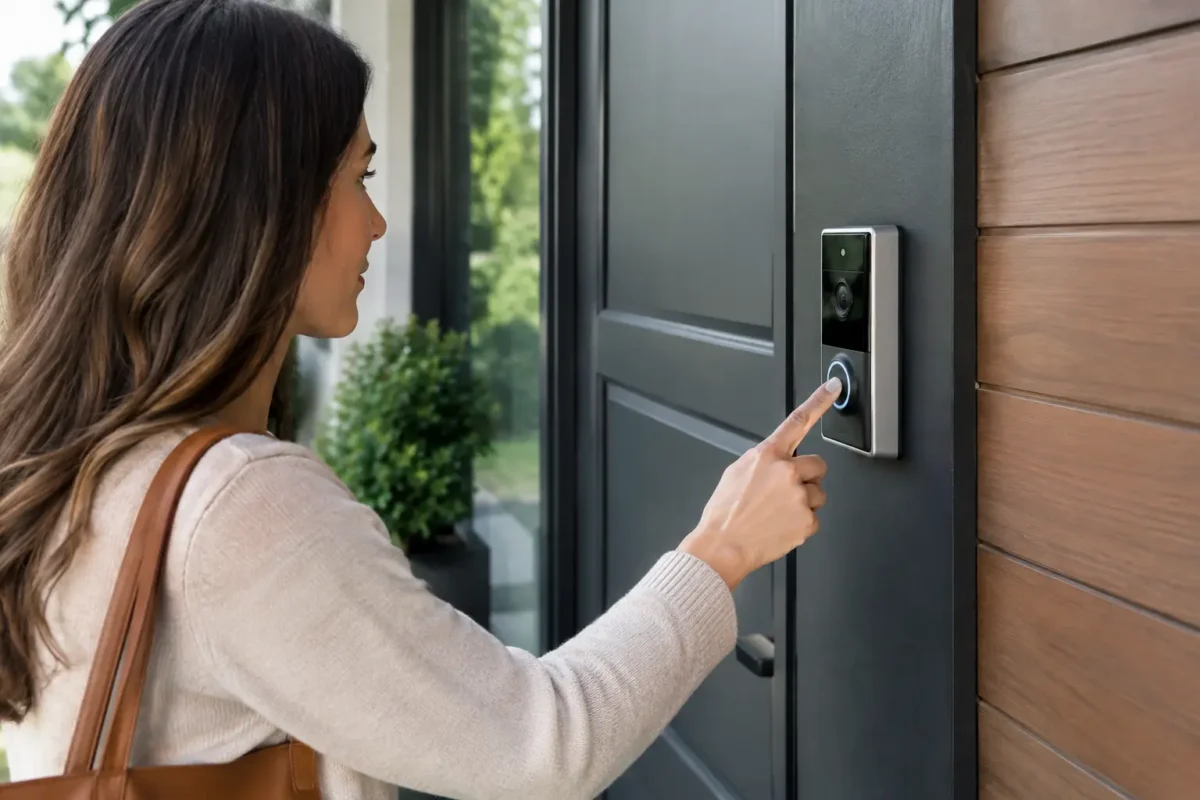
A video doorbell or exterior camera does not physically secure a door, but it can support better decisions about access. It lets you see who is at the door before opening it and can document activity around entry points.
For a family expecting package deliveries, service appointments, or visitors, a doorbell camera paired with a keypad or smart lock can be useful. You can confirm who has arrived and provide access only when appropriate. Still, a camera should not be treated as a replacement for a solid lock, secure frame, and good lighting.
Place cameras where they have a clear view of approaches to the home without intruding on neighbors’ private areas. Check local rules and communicate with household members about how the system is used.
Access for Rentals, Guests, and Caregivers
Homes with changing occupants need flexible access. Landlords and property managers may need a method for changing entry credentials between tenants. Homeowners with caregivers or recurring service providers may need access that can be limited without handing out permanent keys.
In these situations, rekeying between occupants is a strong baseline. A keypad or smart lock can add temporary codes and make it easier to remove access immediately when a service arrangement ends. The right option depends on how frequently access changes and whether the owner is comfortable managing electronic credentials.
For shared homes, set clear expectations. Decide who can create codes, who receives app notifications, and what happens when someone moves out. A lock system cannot solve household communication problems on its own, but it can make access changes easier to enforce.
Choosing the Right Setup for Your Home
A simple decision usually comes down to how much flexibility you need. If your priority is dependable physical security after a move or lost key, rekeying and a properly installed deadbolt may be enough. If several trusted people need regular entry, a keypad can reduce key-sharing. If you need remote management and temporary digital access, a smart lock may be worth the added maintenance.
Do not overlook compatibility. Measure door thickness, check the backset and existing bore holes, and confirm that the lock works with your door style and deadbolt position. Older doors, multipoint locks, storm doors, and misaligned frames may need a professional assessment before new hardware is installed.
A mobile locksmith can also help determine whether your current locks can be rekeyed, whether a door needs adjustment, and which access method fits your routine. BS Locksmith provides residential lock and smart lock service for homeowners in Aurora, Federal Heights, Denver, and surrounding communities.
The goal is not to add technology for its own sake. Choose the access setup that lets your household get in safely, keeps former users out, and remains easy to manage on an ordinary busy day.